
- Cable we install
- Cat6 data cable with RJ45 wall outlets
- Where
- Homes, with cable hidden in the roof, walls and sub-floor
- Testing
- Every point tested and labelled before handover
- Who does it
- Licensed electricians, REC 30925
When a data point beats Wi-Fi
Wi-Fi is convenient, but it weakens with every wall it passes through, and brick, concrete and foil insulation weaken it most. A cabled data point, also called an ethernet or network point, gives a device the full speed of your connection with no dropouts. It is worth cabling:
- A home office, so video calls stop freezing.
- The TV and streaming box, so the picture does not buffer at night when everyone is online.
- A games console or gaming PC.
- The far end of the house, a granny flat, studio or shed where the Wi-Fi does not reach.
- Security cameras and recorders, which work best on cable.
- A ceiling Wi-Fi access point, which gives strong wireless coverage to that end of the home.
We have completed more than 50 data and network jobs around Geelong, most often in Highton, Lara, Drysdale, Bannockburn and Leopold.
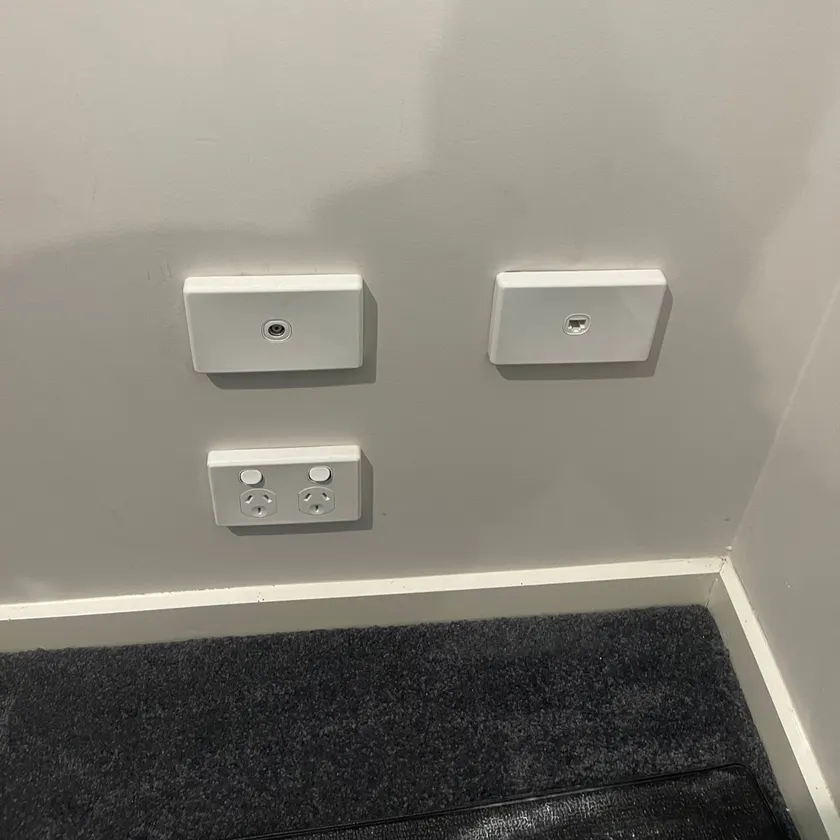
Common data cabling jobs we do
- New data points in bedrooms, studies and living rooms, each cabled back to the modem.
- A data point so the modem can move. If the modem sits in the garage or a back bedroom, a cable to a central spot lets you put the Wi-Fi where the family uses it.
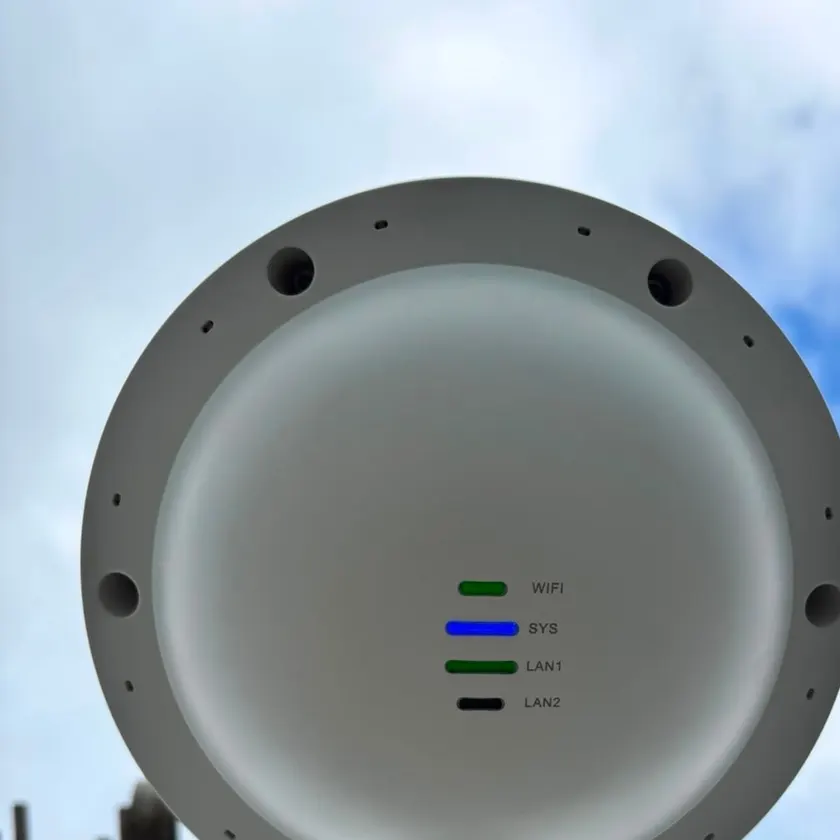
- Cabling for Wi-Fi access points in ceilings and outdoor areas.
- Data behind a wall-mounted TV, often done with TV wall mounting so the power and cables are hidden together.
- Cabling for cameras as part of a CCTV installation.
- Home office cabling: a wired point at the desk and a tidy spot for the modem and network gear.
- Phone points added or moved, and old phone points replaced with data points.
- Fault finding on points that have stopped working or run slowly.
Talk to a licensed Geelong electrician (REC 30925).
Data points and phone points to each room
Put data points where fixed devices live:
| Room | What a data point is for |
|---|---|
| Living room | The main TV, streaming box and games console |
| Study or home office | The computer, a printer, and video calls that do not drop out |
| Bedrooms | A second TV, a gaming PC or a desk |
| Hallway ceiling | A Wi-Fi access point, which spreads strong wireless across that end of the house |
| Where the internet comes in | The modem and a small network switch, with a power point beside them |
Wall plates
Each data point is an RJ45 socket on a flush wall plate that matches your power points and switches. A plate can carry more than one socket, so a TV wall can have two data points on one plate. Where a device needs power, we fit a power point beside the data point.
Phone points
Many homes still have old phone points in the walls. Old phone cable is not made for network speeds, so where you want a data point in the same spot, we run new Cat6 cable and fit a data socket in its place. If you still use a home phone, we can add or move a phone point. For an NBN connection, we install the conduit the NBN provider needs to do their part. We don't install the fibre: that work is regulated and done by the network provider.
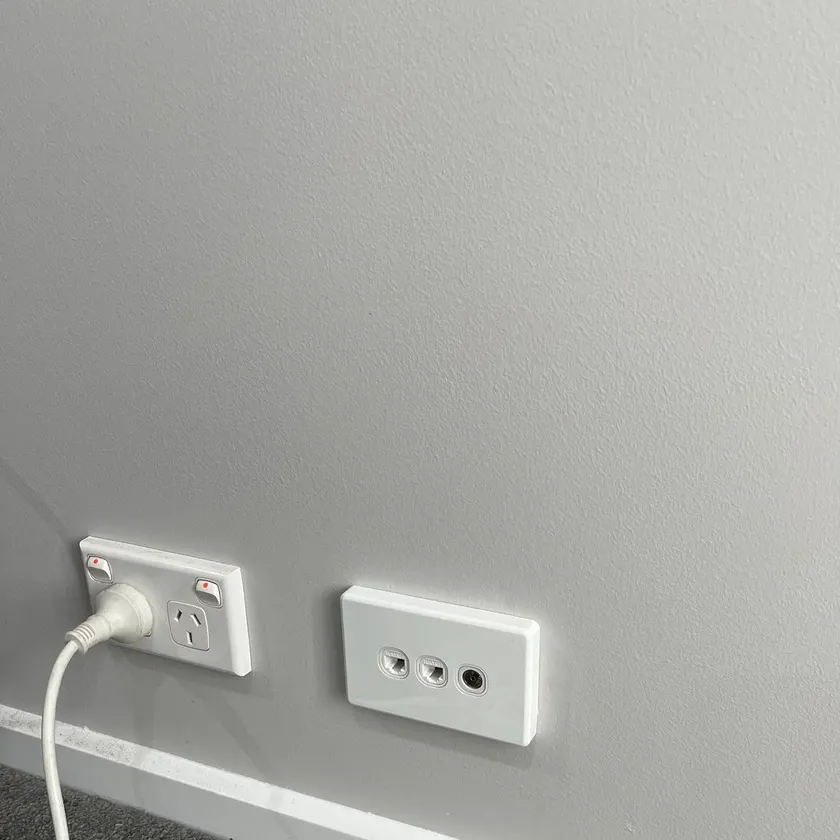
Where the cable runs in an existing home
In a finished home we hide cable in the spaces that are already there, so walls are not opened up:
- The roof space. Cable runs across the ceiling and drops down inside the wall to the outlet. Single-storey homes with a roof space are the simplest to cable.
- The sub-floor. Homes on raised timber floors can be cabled from underneath, coming up inside the wall.
- Wall cavities. Plasterboard walls on timber or steel frames have a cavity the cable can drop through to the outlet.
- Between floors. Two-storey homes take more planning. We look for a path that lines up between the floors, such as stacked cupboards, before anything else.
- Surface conduit. Solid brick internal walls, or a slab home with a flat roof, sometimes leave no hidden path. Then a short length of neat conduit is the only way, and we show you the route before we start.
If walls or ceilings are already open for other building work, that is the easiest time to add data points. If you are building, decide where the modem, TVs and desks will go and cable to those spots. See house wiring and rewiring if the power wiring is being redone at the same time.
Cat6 cable, outlets and where it all meets
We install Cat6 cable as standard. It carries far more data than most home internet plans deliver, so it will not be the slow point in your network for many years. Each run is a single unbroken cable from a wall outlet back to a central point, usually beside the modem. Data cable is kept apart from the power wiring along the way so the signal stays clean.
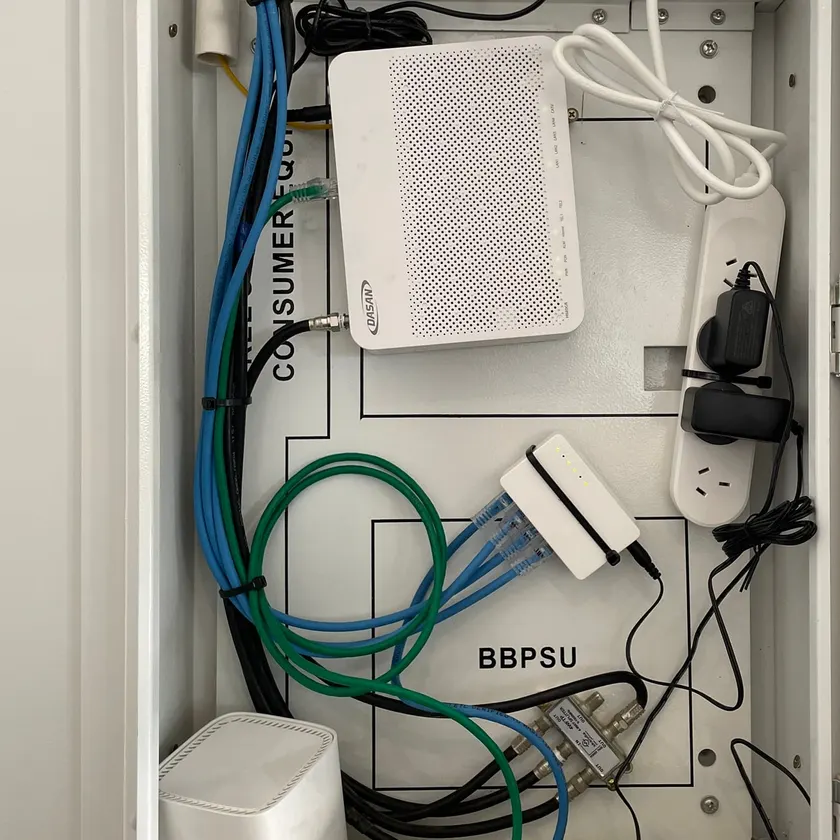
At the wall you get a flush RJ45 outlet that matches your power points and switches. At the central end, a house with a handful of points finishes on a small outlet plate. A home with many points is better finished on a patch panel in a small cabinet, where the modem, network switch and camera recorder can sit together. Every outlet is labelled so you know which point goes where.
Not sure what you need? Tell us what is happening and we will talk it through.
How a data cabling job works
- Plan. We agree where each outlet goes, where the modem and network gear will sit, and the path the cable will take.
- Run the cable. Each run is pulled through the roof, floor or wall cavity and fixed clear of the power wiring.
- Terminate. The cable is fitted to an RJ45 outlet at the wall and at the central point.
- Test. Every point is tested end to end so we know all the wires are connected and in the right order.
- Label and hand over. Outlets are labelled, we show you what plugs in where, and we clean up.
If the network gear needs a new power point, we install it on the same visit. That part is electrical installation work, so you receive a Certificate of Electrical Safety for it.
Home office cabling
Video calls drop out and uploads crawl when the study is at the far end of the house from the modem. A Cat6 point at the desk gives you a steady connection instead. We run the cable to the study or home office, add points for a printer or a second computer if you need them, and bring the cables together at a labelled patch panel or a neat wall plate so the next change is quick. If you are turning a spare room or a garage into an office, it is the right time to add data and power points together.
Why use CabledIN for data & network cabling in Geelong
- One team for the data, the power and the fittings, so nothing is left for a second trade
- Licensed Victorian Registered Electrical Contractor, REC 30925, based in North Geelong
- More than 20 years' experience
- Lifetime workmanship warranty
- 2,000+ five-star Google reviews
Call 1300 025 555 to book a visit.
Recent data cabling jobs around Geelong
Data points, network cabinets and cabling from homes in the region.
Frequently asked questions
Is a data point faster than Wi-Fi?
A cabled point gives a device the full speed of your connection without the drop-off that walls and distance cause on Wi-Fi. It is also steadier, which matters most for video calls, streaming and gaming.
What is the difference between Cat5e and Cat6?
Cat6 is the newer cable and carries more data with less interference. We install Cat6 as standard because it costs little more to put in and will suit faster internet plans in the future.
Can you run data cable in an existing house without damaging the walls?
In most homes, yes. We use the roof space, sub-floor and wall cavities. Where there is no hidden path, such as a solid brick wall, we will show you the options before any work starts.
Can you add a data point so I can move my modem?
Yes. We run a cable from where your internet connection enters the home to a more central spot, so the modem and its Wi-Fi sit where you actually use them.
Can you fix a data point that has stopped working?
Yes. We test the run to find out whether the outlet, a connector or the cable itself has failed, then re-terminate or replace it.
How many data points should I put in a new home?
At a minimum, cable the main TV, the study and anywhere the modem or a Wi-Fi access point might go. It costs far less to add points before the plaster goes on than after.
Do you install cabling for Wi-Fi access points and cameras?
Yes. Both run on the same Cat6 cable as a data point, so they are easy to include in the same job.
Which areas do you cover for data and network cabling in Geelong?
All of Geelong and its suburbs, plus the Bellarine Peninsula, the Surf Coast and Golden Plains. Recent data jobs have taken us to Highton, Lara, Drysdale, Bannockburn and Leopold.
What is an ethernet point?
It is another name for a data point: a wall socket for a network cable, wired back to your modem or network switch. Plug a TV, computer or console into it for a wired connection.
Can you turn an old phone point into a data point?
Usually, yes. Old phone cable is not made for network speeds, so we run new Cat6 cable to the same spot and fit a data socket on a matching wall plate.
Can you install or move a phone point?
Yes, if you still use a home phone. Tell us how your phone connects today and we will cable the new point to suit.
Do you do NBN work?
We install the conduit the NBN provider needs to do their part of the connection. We don't install the fibre, as that work is regulated and done by the network provider.
Still have a question? Ask the CabledIN team.