
- What a breaker protects
- The wiring, against overloads and short circuits
- Inspection
- Replacing a single breaker like for like needs no independent inspection
- Paperwork
- Certificate of Electrical Safety for the work
- Who does it
- Licensed electricians, REC 30925
What a circuit breaker does
Every circuit in your home starts at a circuit breaker or a fuse in the switchboard. Its job is to protect the wiring. If the circuit is asked to carry more current than the cable is rated for, or the active wire touches neutral or earth, the breaker switches off before the cable overheats.
A circuit breaker is not a safety switch. A safety switch (RCD) protects people by detecting electricity leaking to earth. Many modern boards use an RCBO, which combines the two in one device. If the switch that trips has a test button, it is a safety switch or RCBO, and the cause is likely to be different.
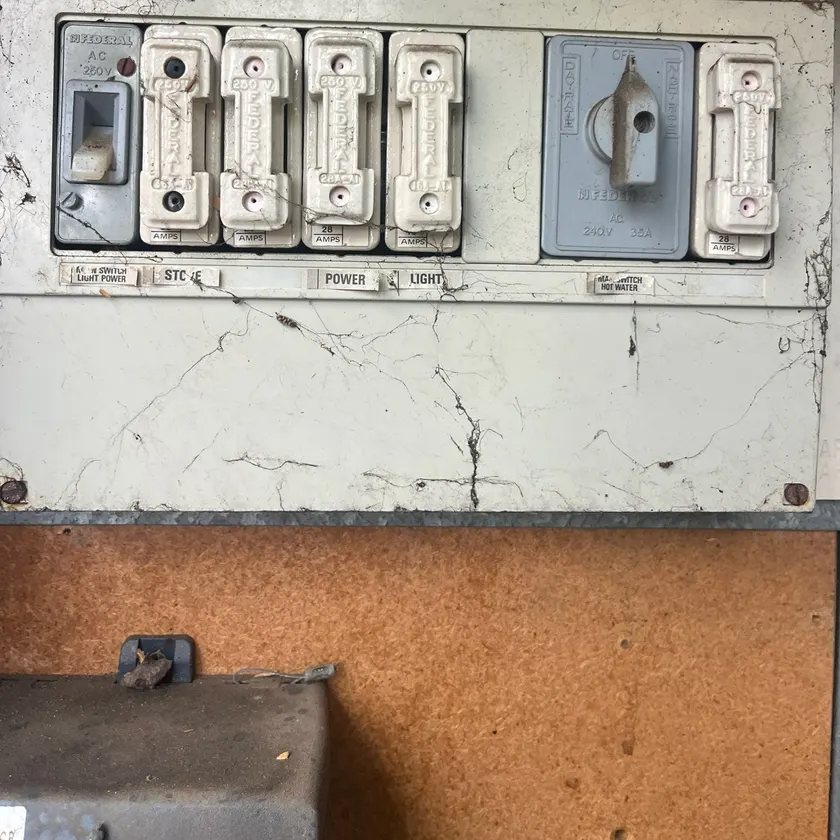
Signs a circuit breaker needs repair or replacement
- It trips again and again on the same circuit.
- It will not reset, or the handle feels loose and does not click into place.
- It is hot to the touch, buzzes or crackles.
- Scorch marks or a burning smell at the switchboard.
- Lights flicker or dim when an appliance starts.
- It never trips, even when the circuit is plainly overloaded. A breaker that has seized is as much of a problem as one that trips too often.
- The board still has ceramic fuses. There are no breakers to repair, and the conversation is about a new board.
Heat, noise, smell or scorching means stop. Do not touch the board, and call an electrician. We take 24/7 emergency call-outs.
Talk to a licensed Geelong electrician (REC 30925).
Why a circuit breaker keeps tripping
| Cause | What you notice | Usual fix |
|---|---|---|
| Overloaded circuit | Trips when several appliances run together, often the kettle, heater and microwave | Spread the load, or add a dedicated circuit |
| Faulty appliance | Trips when one particular appliance is switched on | Stop using the appliance and have it repaired or replaced |
| Short circuit in the wiring or a fitting | Trips straight away, even with everything unplugged | Fault finding and repair of the damaged cable or fitting |
| Loose connection at the board | Heat, buzzing or discolouration around one breaker | Connection remade, damaged parts replaced |
| Worn or faulty breaker | Trips under a light load, or will not latch | New breaker of the same rating |
If it is the switch with the test button that trips, read why does my safety switch keep tripping?
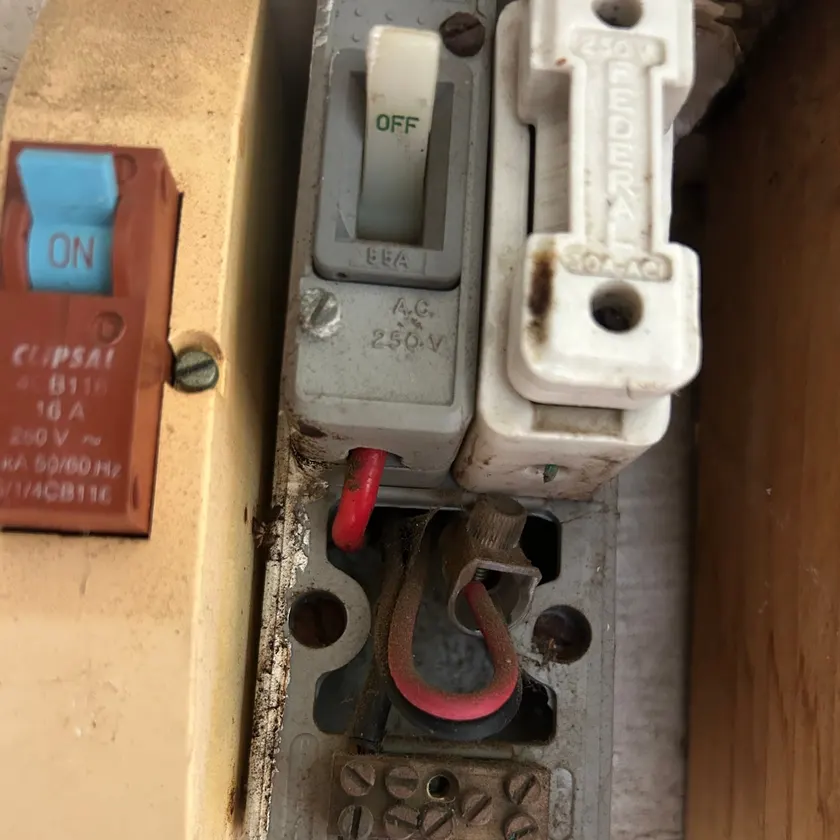
What to do when a breaker trips
These are the safe checks. None of them involve opening anything or touching wiring.
- Switch off and unplug the appliances on the circuit that went off.
- Reset the breaker once.
- If it holds, plug appliances back in one at a time. The one that trips it is the likely culprit.
- If it trips again with everything unplugged, leave it off and call a licensed electrician.
Do not keep resetting a breaker that will not stay on, and never hold or tape one in the on position. If the lights are dim or flickering, or power is out to only part of the house, Energy Safe Victoria's advice is not to touch the switchboard or anything metal, and to call your distributor straight away. In Geelong that is Powercor, on 13 24 12.
How circuit breaker replacement works
- Fault finding first. We test the circuit to find out whether the problem is the breaker, the wiring, a fitting or an appliance. Diagnostic fault finding is a regular item on our switchboard jobs.
- Clear explanation and quote. You hear what we found and what it will take to fix before we go further.
- Repair or replace. A failed breaker is replaced with one of the correct rating for the cable. Where it suits the board, we fit an RCBO so the circuit gains safety switch protection at the same time.
- Testing. The circuit is tested before it is switched back on.
- Certificate. You receive a Certificate of Electrical Safety for the work.
A breaker is never swapped for a bigger one to stop it tripping. The rating is matched to the cable, and a larger breaker would let the cable overheat.
Not sure what you need? Tell us what is happening and we will talk it through.
Repair the breaker or upgrade the switchboard?
One failed breaker on a sound, modern board is a simple replacement. It is worth looking at the whole board when:
- several breakers are worn, hot or discoloured
- the board has no safety switches, or only one
- there is no room for the circuits you need
- the board uses ceramic fuses
In those cases a switchboard upgrade usually makes more sense than repeated repairs. If the real problem is an overloaded circuit, the fix is often extra power points on a new circuit. And if you are worried about electronics after a storm or outage, ask about surge protection while we are at the board.
The Victorian rules for circuit breaker work
- Licensed electricians only. DIY electrical work is illegal in Victoria. That includes replacing a circuit breaker.
- Certificate every time. A Certificate of Electrical Safety must be provided for all electrical installation work, whatever the size of the job. For non-prescribed work your copy is due within 30 days.
- No independent inspection for a single part. Replacing one circuit breaker like for like is not prescribed work, so it does not need an independent inspector. Replacing the whole main switchboard does.
- Check the licence. Energy Safe Victoria advises always asking to see your electrician's licence. Ours is REC 30925.
Fault finding across Geelong
Our job records hold more than 150 fault-finding jobs. The suburbs where we do the most are Bannockburn, Newtown, Lara, Corio, Torquay, Belmont, Geelong West and Ocean Grove. Many end with a new combined breaker and safety switch on the faulty circuit. Others turn out to be an appliance, a damaged power point or a connection that has worked loose.
CabledIN is based in North Geelong, with more than 20 years' experience, a lifetime workmanship warranty and 2,000+ five-star Google reviews.
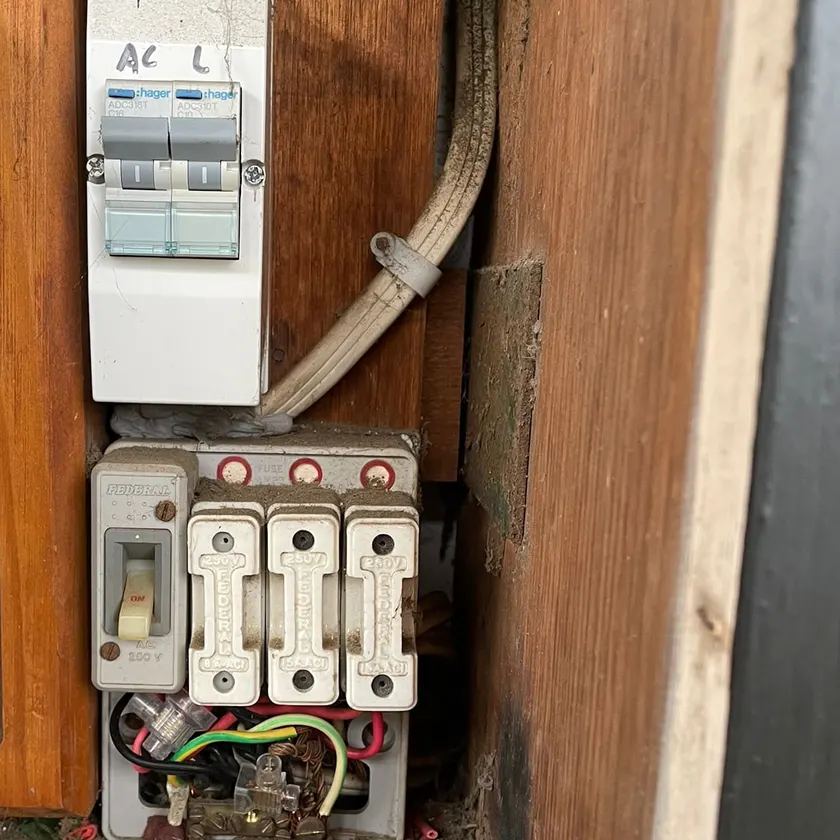
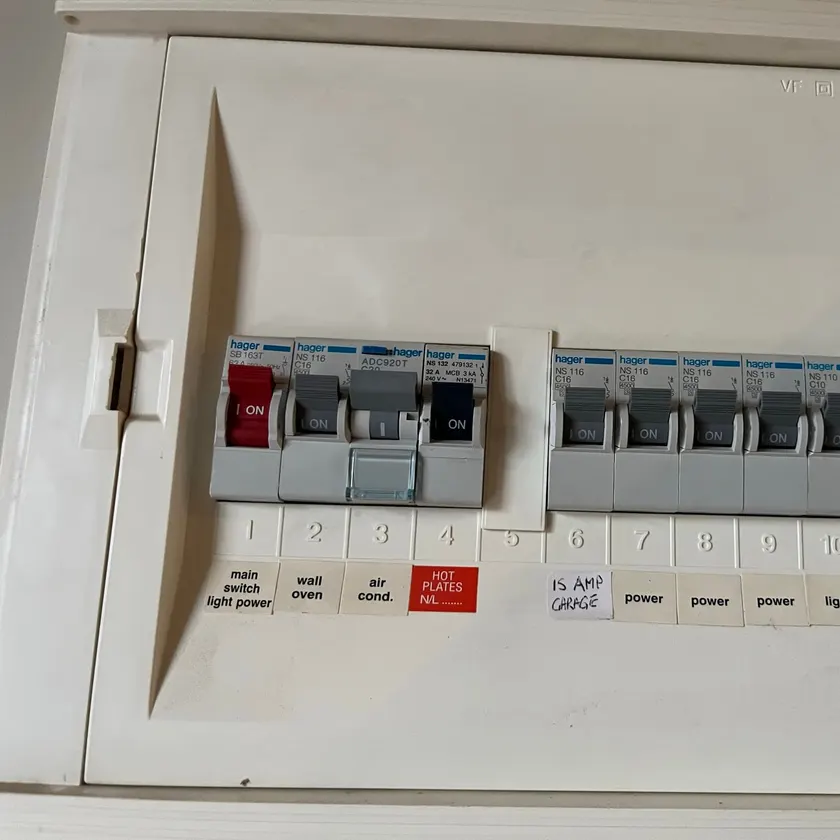
Recent circuit breaker jobs around Geelong
Breakers replaced and faults traced on Geelong switchboards by our electricians.
What customers say
Andrew was fantastic! We were having issues with our fuse and weren’t getting power to certain parts of the house, which was a huge inconvenience. Andrew arrived on time, was lovely and professional, and took the time to properly diagnose and fix the circuit issue without rushing the job.Really appreciate his service and professionalism. Would highly recommend Andrew to anyone needing a technician!
Sera, Google review
Frequently asked questions
Why does my circuit breaker keep tripping?
The usual causes are an overloaded circuit, a faulty appliance, a short circuit in the wiring, a loose connection or a worn breaker. Unplug everything on the circuit and reset it once to narrow it down.
Is it safe to reset a tripped circuit breaker?
Resetting it once after unplugging the appliances on that circuit is fine. If it trips again, or will not reset, leave it off and call a licensed electrician.
Who can do circuit breaker repairs and replacement in Geelong?
Only a licensed electrician. DIY electrical work is illegal in Victoria, and the electrician who replaces the breaker must give you a Certificate of Electrical Safety.
What is the difference between a circuit breaker and a safety switch?
A circuit breaker protects the wiring. A safety switch protects people. Many boards also have RCBOs, which do both on one circuit.
What types of circuit breakers are used in homes?
Most homes have a main switch, single circuit breakers for each circuit, and safety switches. Newer boards use RCBOs, which combine a circuit breaker and safety switch for each circuit.
My circuit breaker is hot or buzzing. Is that dangerous?
Treat it as urgent. Heat, buzzing, scorch marks or a burning smell at the switchboard point to a failing part or a loose connection. Do not touch the board, and call an electrician.
Can a bigger circuit breaker stop the tripping?
No. The breaker rating is matched to the cable it protects. A larger breaker would let the cable overheat. The fix is to reduce the load or add a circuit.
Should I replace old fuses with circuit breakers?
Fuses and circuit breakers both protect wiring, and neither is a safety switch. If your board still has ceramic fuses, the better step is usually a new switchboard with a breaker and safety switch on every circuit.
Do you replace circuit breakers after hours?
Yes. We take 24/7 emergency call-outs across Geelong, the Bellarine, the Surf Coast and Golden Plains, and we answer the phone around the clock.
Still have a question? Ask the CabledIN team.