
- Typical time on site
- About an hour for a like-for-like swap
- Rooms
- Bathrooms, ensuites, toilets, laundries, kitchens
- Paperwork
- Certificate of Electrical Safety for the work
- Who does it
- Licensed electricians, REC 30925
Signs a room needs a new or better exhaust fan
- The mirror stays fogged long after the shower, or water runs down the walls.
- Mould keeps coming back on the ceiling, in the corners or on the silicone.
- Paint is peeling or bubbling on the bathroom ceiling.
- The fan is loud, rattles or hums but moves very little air. Hold a tissue up to it: if it does not pull the tissue, it is not doing much.
- Smells linger in a toilet or laundry with no window.
- The fan only blows into the roof space. That moves the moisture problem above the ceiling.
Our job records show more than 40 exhaust fan jobs, most in Belmont, Geelong West, Corio, Highton and Armstrong Creek. In older homes the job is usually replacing a worn-out fan. In newer estates it is more often a builder's fan that was never strong enough for the room.
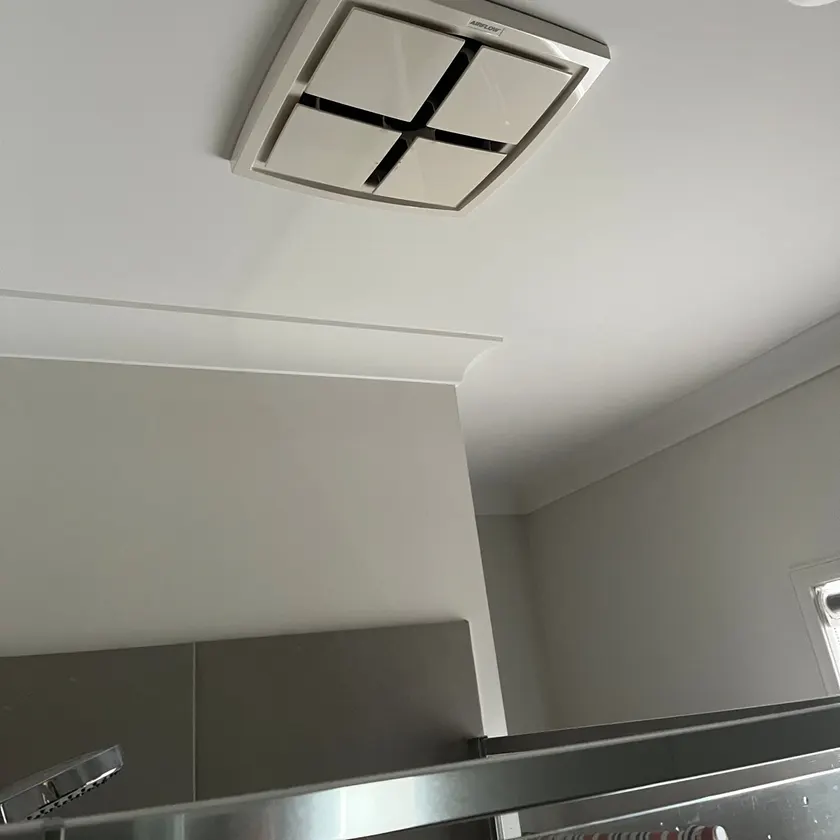
Bathroom, toilet and ensuite exhaust fans
The bathroom is where most exhaust fans go. A fan placed near the shower, with the door undercut or a window slightly open so replacement air can get in, clears steam far faster than one in the middle of the room. Options include:
- Ceiling exhaust fans. The standard choice. The bathroom fans we fit are commonly 200 mm to 250 mm ceiling units, with larger round models for bigger rooms.
- Fans with a light. One fitting, one cut-out, useful in a small ensuite or toilet.
- 3-in-1 units. Heat lamps, exhaust fan and light together. See our bathroom heater page.
- Inline fans. The motor sits in the roof space and connects to a ceiling grille by duct. They are quiet in the room and can move a lot of air.
- Wall and window fans. For rooms with no roof space above, such as a ground floor bathroom or a flat roof.
Talk to a licensed Geelong electrician (REC 30925).
Laundry and kitchen exhaust fans
Laundries. A clothes dryer puts a surprising amount of warm, damp air into a small room. A ceiling or wall exhaust fan stops that moisture settling on walls and inside cupboards, and it helps in a laundry that doubles as a drying room in a Geelong winter.
Kitchens. Over a cooktop, the right fan is a rangehood, which also filters grease. We cover that on our rangehood installation page. A ceiling exhaust fan is still useful in a butler's pantry or a kitchen where a rangehood cannot be ducted.
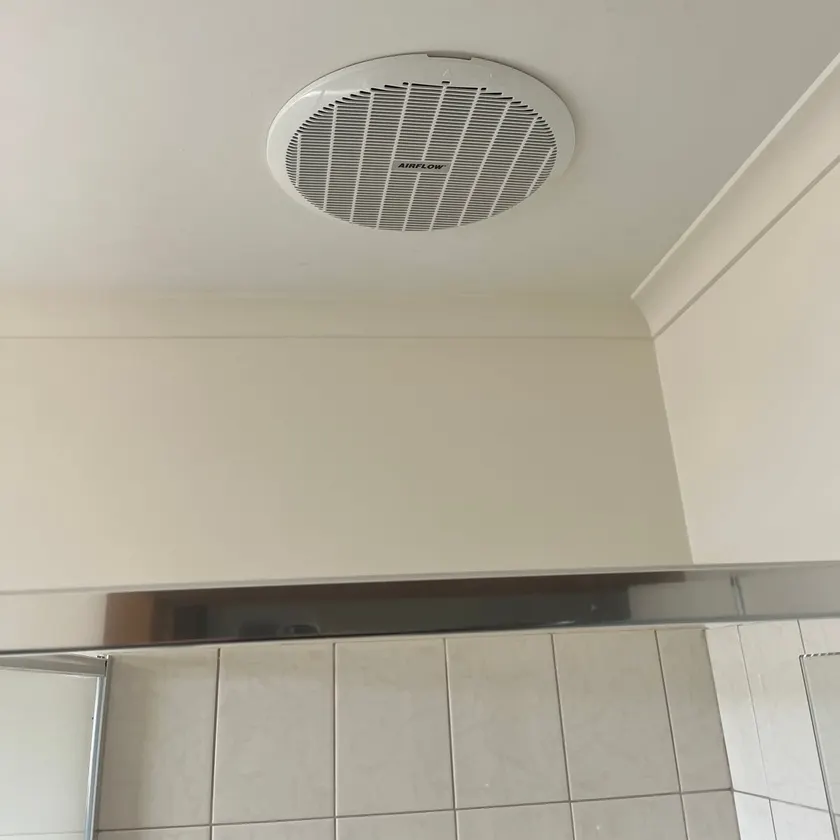
What size exhaust fan do I need?
Fans are rated by how much air they move in an hour, shown on the box in cubic metres per hour. A common 250 mm ceiling fan we install is rated at around 358 cubic metres per hour. What matters is matching that figure to the room:
- Room volume. A large bathroom with a high ceiling needs more airflow than a small toilet.
- How wet the room gets. A family bathroom with back-to-back showers needs more than a powder room.
- Duct length and bends. Every metre of duct and every bend costs airflow, so a ducted fan needs to be stronger than its rating suggests.
- Noise. A bigger fan run gently is often quieter than a small fan working hard.
We measure the room and recommend a size when we quote. You do not need to work it out yourself.
Where the air goes: ducting
A fan that simply blows into the roof space is common in older homes. It gets the steam out of the bathroom, but the moisture then sits above the ceiling, where it can dampen insulation and timber. We recommend ducting the fan to the outside wherever the building allows, through an eave vent, a wall vent or a roof vent.
We install ducting and vents as part of the job. Duct runs are kept short and as straight as possible, and the duct is supported so it does not sag and collect water. If the duct needs a new opening in the roof itself, we cut it, fit the roof vent and seal it so it stays watertight.
Not sure what you need? Tell us what is happening and we will talk it through.
What happens on the day
- Check the room and the roof space. We confirm the fan position, look at what is above the ceiling and plan the duct route.
- Power off. The circuit is switched off and proved dead.
- Old fan out, opening prepared. For a replacement we match the new fan to the existing hole where possible, or neatly enlarge it. For a new fan we cut the opening between the joists.
- Fit, wire and duct. The fan is fixed, wired to its switch or timer, and connected to its duct and vent.
- Test. The circuit is tested and we check the fan is actually drawing air at the grille.
- Clean up and certificate. Dust is cleaned up, the old fan is removed, and you receive a Certificate of Electrical Safety.
Switches, timers and running costs
How a fan is switched decides whether it gets used. The main options are:
- Its own switch. Simple, and it lets you leave the fan on after the light goes off.
- Switched with the light. The fan always runs when the room is in use. Good for toilets and rentals.
- Run-on timer. The fan keeps going for a set time after you leave, then turns itself off. This is the best way to clear a steamy bathroom.
A standard ceiling exhaust fan uses about as much power as an old light globe, around 40 watts for the 250 mm fans we commonly fit, so leaving one running for twenty minutes after a shower costs very little. If you are renovating, it is worth doing the fan, the downlights and any new power points in one visit while the ceiling is open.
Why choose CabledIN for exhaust fans
- Licensed Victorian Registered Electrical Contractor, REC 30925
- More than 20 years in the trade, based in North Geelong
- Lifetime workmanship warranty
- 2,000+ five-star Google reviews
- A Certificate of Electrical Safety with every job
Call 1300 025 555 or request a quote online.
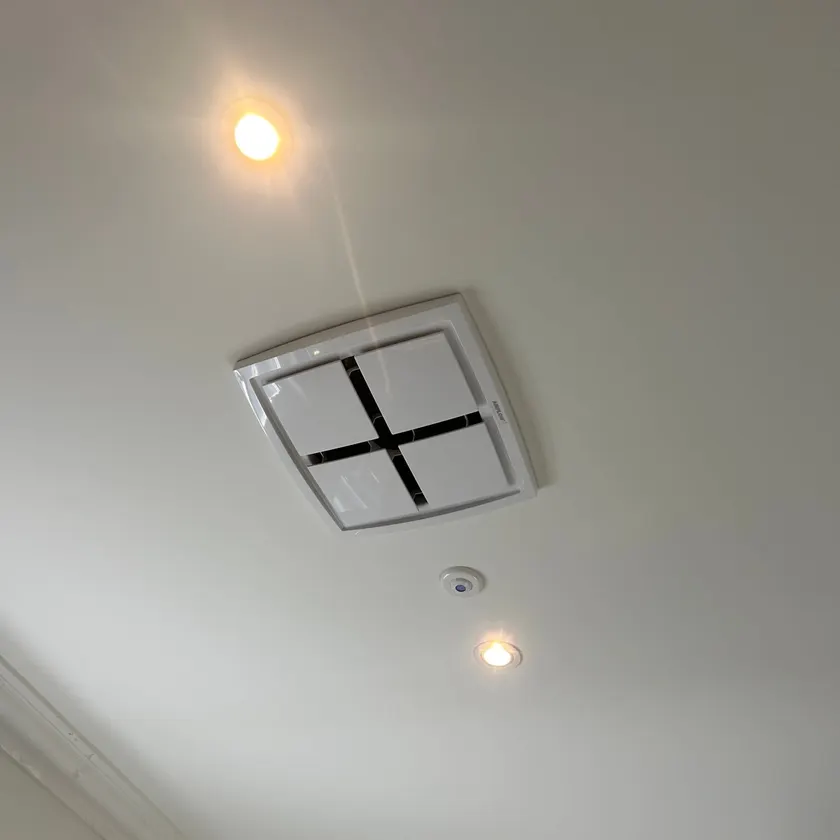
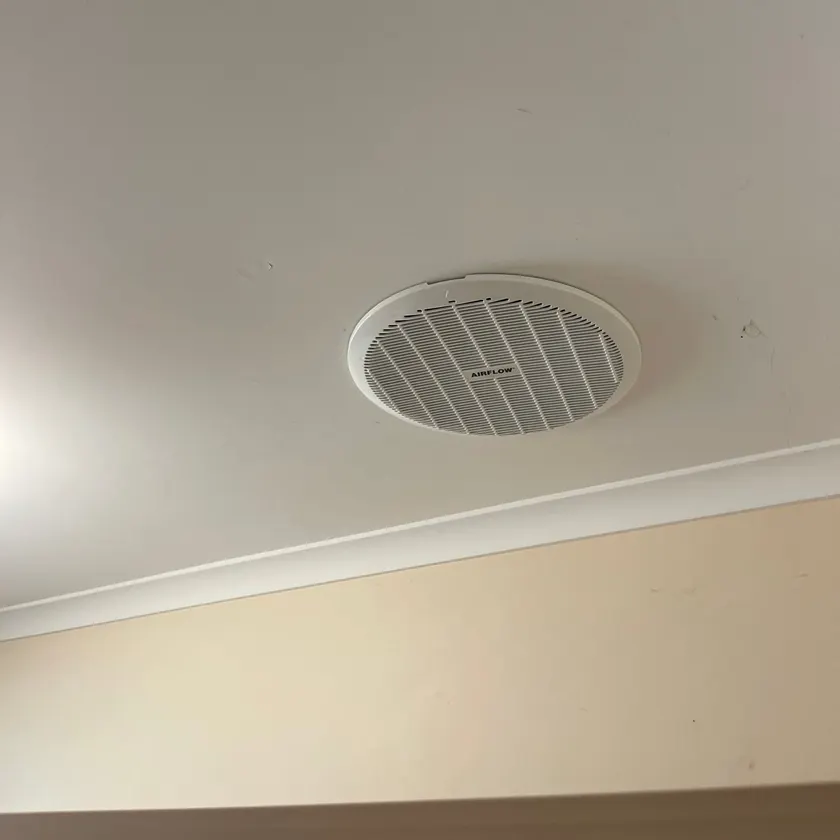
Recent exhaust fan jobs around Geelong
Bathroom, laundry and toilet fans fitted and ducted by our electricians.
Frequently asked questions
Is exhaust fan installation in Geelong a job for a licensed electrician?
Yes. Connecting the fan and adding any new switch, timer or cable run is licensed electrical work in Victoria, even when the new fan goes into the old fan's hole. You should receive a Certificate of Electrical Safety when it is finished.
Do I need an exhaust fan in my bathroom?
If the room steams up, grows mould or has no window that gets opened, a fan is the practical fix. Even with a window, a fan clears steam faster and works in winter when nobody wants the window open.
What size exhaust fan do I need?
It depends on the volume of the room, how much steam it sees and how long the duct is. Most bathrooms suit a 200 mm to 250 mm ceiling fan, and we recommend a size when we quote.
Can you install an exhaust fan where there isn't one already?
Yes. We cut the opening, run a new cable from a suitable circuit, fit a switch or timer and duct the fan to the outside where the building allows.
Can an exhaust fan be installed with a light?
Yes. Fan and light units fit in a single cut-out, and 3-in-1 units add heat lamps as well. The fan and light can be switched together or separately.
How long does it take to install an exhaust fan?
A like-for-like replacement is usually about an hour. A new fan with a new cable, switch and ducting takes longer, commonly a couple of hours, depending on access above the ceiling.
Can an exhaust fan be ducted into the roof space?
It can be, and many older homes are set up that way, but we do not recommend it. The moisture then sits above the ceiling, where it can dampen insulation and timber. We duct the fan to the outside wherever the building allows.
Should an exhaust fan be on its own switch, with the light or on a timer?
Any of the three works. Wiring the fan with the light means it always runs when the room is in use, which suits toilets and rentals. A run-on timer keeps it going for a set time after you leave, and is the best way to clear a steamy bathroom.
Are exhaust fans expensive to run?
No. A typical ceiling exhaust fan uses around 40 watts, similar to an old light globe. A run-on timer keeps running costs low by turning the fan off once the steam has cleared.
Why is my exhaust fan so noisy?
Worn motor bearings, a build-up of dust on the blades, a loose housing or a crushed duct are the usual causes. Replacing a noisy old fan usually makes more sense than repairing it.
Do exhaust fans need maintenance?
The grille and blades collect dust and lint, which cuts airflow, so wipe the grille every few months with the fan switched off. If the fan stops, hums or trips the power, have an electrician check it.
Still have a question? Ask the CabledIN team.