
- Who does it
- CabledIN licensed electricians, REC 30925
- Our records
- More than 55 shed, garage, workshop and granny flat jobs
- Before any trench
- A free Before You Dig Australia (BYDA) enquiry for digging deeper than 300 mm
- Paperwork
- Certificate of Electrical Safety for every job
Shed, garage & granny flat power Geelong: what is included?
Any building away from the house can have fixed power and lighting of its own, instead of a lead across the yard.
- Power points and lights in sheds, garages, carports and workshops, plus outdoor lights on the path.
- A sub-board when the building needs several circuits.
- The cable run: underground, where we dig the trench and lay the conduit, or overhead.
- Safety switches and weatherproof outlets.
- Workshop circuits and an EV charger in the garage.
- Granny flats and studios, smoke alarms included.
Extra outlets in an attached garage are simpler: see power point installation.
Does a detached shed or granny flat need a sub-board?
Often, yes. A sub-board is a smaller switchboard inside the outbuilding, with its own circuit breakers and safety switches, fed from your main switchboard by one larger cable called a sub-main. A garden shed with a light and a couple of power points can usually run from one new circuit. A garage, workshop or granny flat with heavier equipment is usually better served by a sub-board.
- Separate circuits for lights, power points and big loads, so a fault on one is less likely to take the others with it.
- Switching off on site, at the building's own board.
The sub-main starts at your main switchboard, so we check that board first and tell you before any work starts if it has no room. Replacing a main switchboard is prescribed work: an independent licensed electrical inspector must inspect it before power goes back on, and the new board needs safety switch protection on every final sub-circuit (see switchboard upgrades).
Talk to a licensed Geelong electrician (REC 30925).
Underground or overhead: how does the cable reach the shed?
A detached building is fed either underground, in a trench, or overhead, on a cable strung between the house and the building. Which suits depends on the yard, and we agree the route with you before anything is dug or fixed.
| Question | Underground | Overhead |
|---|---|---|
| What you see afterwards | Nothing, once the trench is filled | A cable between the house and the building |
| Main check before work | What is already under the ground | Height and clearance over paths, driveways and trees |
| Later on | Remember the trench line before you dig or build there | Keep ladders and branches away from the cable |
How deep the cable sits and how it is protected depend on the route and the ground, so we design that for your yard. Energy Safe Victoria says that before excavating more than 300 mm deep, on private or public land, you must contact Before You Dig Australia (BYDA) to identify underground cables. The enquiry is free, but its plans do not show private cables, such as an old feed to a shed, so those are traced on site.
What safety switches and outdoor fittings does a shed need?
Every new circuit we run to a shed, garage or granny flat is protected by a safety switch. A safety switch, or RCD (residual current device), watches the current on a circuit and cuts the power within a fraction of a second when it detects leakage that could harm a person. It works alongside circuit breakers, and it only protects the circuits it is connected to. More on safety switch installation.
- Weatherproof outlets made for outdoor use wherever rain, a hose or a sprinkler can reach, not indoor power points under a cover.
- Test every three months. Energy Safe Victoria says to press the test button on each safety switch every three months, the one in the shed included.
Can a garage or workshop run heavy tools or an EV charger?
Yes, when the circuits are planned around what you will run, such as a welder, a compressor or a saw bench. The rating plate on each machine shows what it draws, and that sets the circuits, cable sizes and outlets. Equipment that needs more than a standard 10 amp power point gets a 15 amp or larger outlet, usually on a circuit of its own.
A few large machines need three-phase power: a supply that brings more electricity to the property than ordinary single-phase power, for more or larger equipment. Changing from single-phase to three-phase is a supply alteration a registered electrical contractor lodges with Powercor.
For an EV charger in the garage, we check the switchboard and your supply before choosing the charger. Powercor notes that the higher-capacity home chargers need three-phase power. See EV charger installation.
Not sure what you need? Tell us what is happening and we will talk it through.
What does a granny flat or studio need?
A granny flat or studio is wired much like a small home: its own lighting and power circuits, usually its own sub-board, and a main switchboard with the capacity to feed it. Cooking, heating and hot water all add load, so we look at the house and flat together.
If the building is a dwelling, smoke alarms are part of the wiring. Victorian rules tie them to when a home was built: homes built after 1 August 1997 need mains-powered alarms with a backup battery, and homes built or substantially renovated after 1 May 2014 that need more than one alarm must have them interconnected, so one sets off the others. Hard-wired alarms must be installed by a licensed electrician. Our guide to smoke alarm rules in Victoria has the detail.
Whether the building needs a planning or building permit, and how it is classed, is a question for your council. Check with them before the build starts.
What affects the cost of power to a shed, garage or granny flat?
We price the job once we have seen it, and you know the price before any work starts. What moves it:
- Distance from the main switchboard to the building.
- The route: lawn, garden beds, concrete or a driveway in the way, and whether the cable runs underground or overhead.
- One circuit or a sub-board, and how many circuits the building needs.
- How many power points, lights and weatherproof fittings you want.
- Your main switchboard: whether it has room or needs upgrading first.
- Heavy loads such as workshop machines, an EV charger or a change to three-phase.
- Granny flat circuits for cooking, hot water and hard-wired smoke alarms.
How does the job work, from first look to certificate?
- Call or send the contact form with what the building is, how far away it is and what you plan to run.
- We look at the job: the switchboard, the building and the ground between. We agree the route and whether a sub-board makes sense.
- You know the price before any work starts.
- A Before You Dig Australia enquiry is made first, then our team digs the trench and lays the conduit.
- The cable, sub-board and fittings go in, and each circuit is connected.
- Testing. Before a certificate is issued the work is tested for earthing, insulation resistance, polarity, correct connections, earth fault-loop impedance and safety switch operation.
- Your Certificate of Electrical Safety (COES). A copy goes to you and to Energy Safe Victoria. For non-prescribed work such as circuits, outlets and lights, your copy is due within 30 days. A replaced main switchboard is prescribed work and is inspected before power goes back on.
Where have we wired sheds and garages around Geelong?
Shed and garage wiring is booked with us right across the region. The jobs in our records are spread through places such as Bannockburn, Hamlyn Heights, Drysdale, Highton, Thomson, Bell Park, Belmont, Leopold and Corio. Lights and power points are the most common work in these jobs, then safety switches, EV chargers in the garage and weatherproof outlets, with granny flats and workshops a smaller share.
The same team covers Bannockburn, the Bellarine Peninsula and the rest of our area. CabledIN Electrical Solutions is a family-owned Registered Electrical Contractor (REC 30925) based in North Geelong, with more than 20 years' experience, a lifetime workmanship warranty and 2,000+ five-star Google reviews (read them on our reviews page). We cover greater Geelong, the Bellarine Peninsula, the Surf Coast, Golden Plains and Werribee, and we are open 24 hours, 7 days.
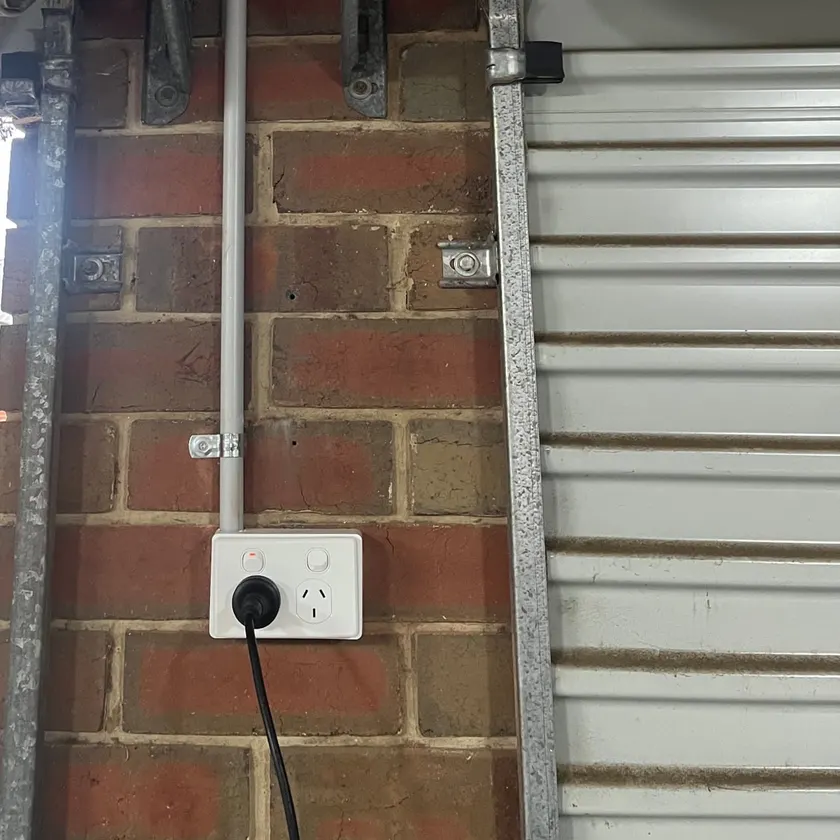
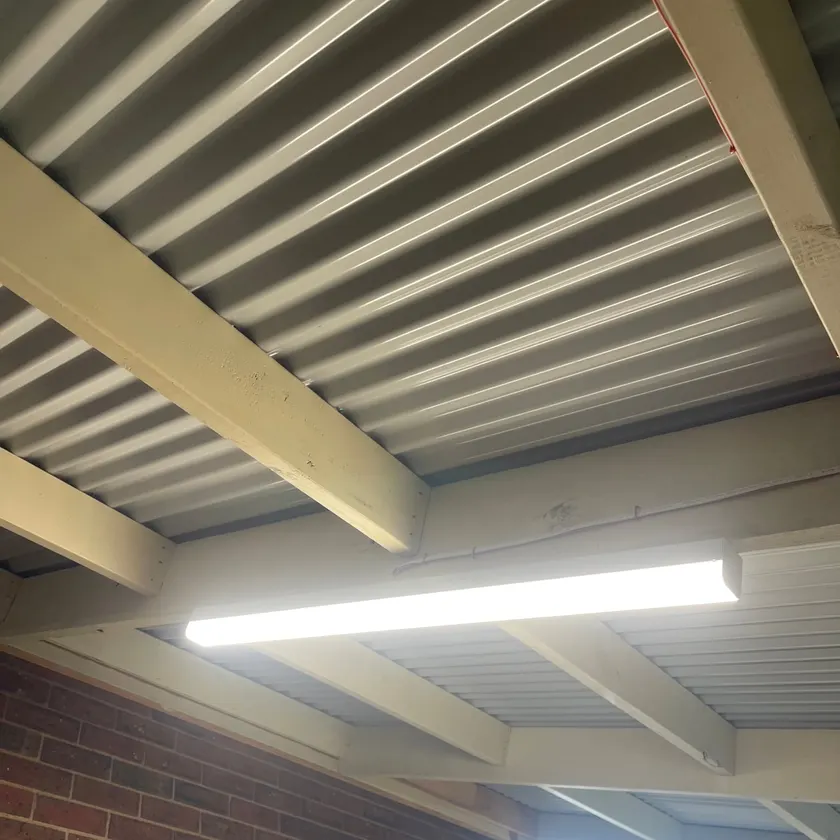
Recent shed and garage jobs
Power, lighting and sub-board work in sheds, garages and outbuildings around Geelong.
Frequently asked questions
Do you do shed, garage & granny flat power Geelong-wide?
Yes. CabledIN wires sheds, garages, workshops and granny flats across greater Geelong, the Bellarine Peninsula, the Surf Coast, Golden Plains and Werribee. Our job records hold more than 55 of these jobs, in places from Bannockburn and Highton to Drysdale and Leopold.
Can I run an extension lead to my shed instead of fixed power?
A lead is a stopgap. Energy Safe Victoria says not to use extension leads or power leads in wet areas unless they are made for that purpose. Fixed wiring on a safety switch is the safer choice for a shed you use often.
Do I need a sub-board in my shed or garage?
Not always. A shed with a light and a couple of power points can usually run from one new circuit. A garage, workshop or granny flat with several circuits or heavy equipment is usually better with a sub-board: a small switchboard in the building, fed from the main switchboard by a sub-main cable.
Do you dig the trench for the cable to a shed?
Yes. Our team digs the trench and lays the conduit for an underground cable run, once a Before You Dig Australia enquiry has been made. We agree the route with you first, around garden beds, paths and driveways.
How deep does the cable to a shed have to be buried?
It depends on the route, the ground it crosses and how the cable is protected, so the electrician designs it for your yard rather than using one figure for every job. Separately, Energy Safe Victoria says anyone digging deeper than 300 mm must contact Before You Dig Australia (BYDA) first, on private land too.
Does power to a shed need a Certificate of Electrical Safety?
Yes. In Victoria a Certificate of Electrical Safety must be provided for all electrical installation work, whatever its size. Circuits, outlets and lights in a shed are non-prescribed work, and your copy is due within 30 days. If the main switchboard is replaced as part of the job, that part is prescribed work and must be inspected.
Can I wire my own shed or garage?
No. DIY electrical work is illegal in Victoria, and Energy Safe Victoria says electrical work is not a DIY job even for small jobs such as changing power points or light switches. Power to a shed, garage or granny flat must be installed by a licensed electrician working for a registered electrical contractor.
Does a granny flat need hard-wired smoke alarms?
If it is built as a dwelling, expect so. Victorian homes built after 1 August 1997 need mains-powered smoke alarms with a backup battery, and homes built or substantially renovated after 1 May 2014 that need more than one alarm must have them interconnected. Ask your council how your granny flat is classed.
Can my switchboard take a shed or granny flat?
It depends on its spare space and the load already on it, so we check it first. If it is full or dated, it may need upgrading, and a replaced main switchboard must be inspected by an independent licensed electrical inspector before power goes back on.
How much does it cost to run power to a shed?
It depends on the distance from the switchboard, the ground the cable crosses, whether a sub-board is needed and how many outlets and lights you want. A switchboard upgrade or a change to three-phase adds to the job. We price it once we have seen it, so you know the price before any work starts.
Still have a question? Ask the CabledIN team.