
- Where it goes
- Inside the switchboard, covering the circuits fed from it
- What it is not
- A safety switch. It does not protect people from electric shock
- Paperwork
- Certificate of Electrical Safety for the work
- Who fits it
- Licensed electricians, REC 30925
What surge protection is and how it works
A power surge is a short spike in voltage, well above what your appliances are built for. It lasts a fraction of a second. A big one can destroy electronics outright. Small, repeated ones wear components down over time.
A switchboard surge diverter sits between the incoming supply and your circuits. At normal voltage it does nothing. When the voltage spikes, it gives the excess an easy path to earth, so far less of it travels on to what is plugged in. Because it is fitted at the board, it covers the circuits fed from that board, including hard-wired appliances that a plug-in surge board can never protect.
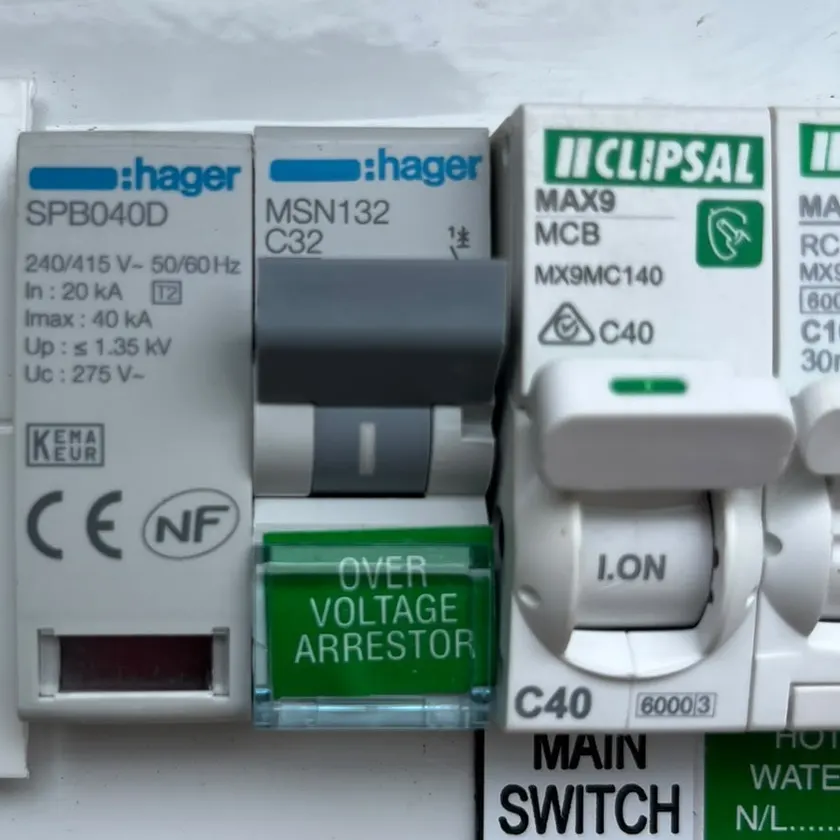
What causes power surges
- Lightning. A strike on or near power lines can send a spike along the network and into homes some distance away.
- Faults and switching on the network. Damaged lines, fallen branches and network switching can all cause spikes.
- Power coming back after an outage. The moment supply is restored is a common time for a surge.
- Large appliances inside the home. Motors and compressors switching on and off create small surges on your own wiring.
You cannot prevent the first three. Powercor runs the network for the Geelong region, and what happens on it is outside your control. What you can control is what stands between the supply and your appliances.
Talk to a licensed Geelong electrician (REC 30925).
What surge protection does and does not protect
It helps protect
- Televisions, computers, modems and home office gear.
- Fridges, washing machines, ovens and other appliances with electronic controls.
- Hard-wired equipment such as EV chargers and smart home controllers.
- LED lighting and drivers.
It does not do this
- Protect people from electric shock. That is the job of a safety switch.
- Stop overloads or short circuits. That is the job of a circuit breaker.
- Guarantee survival of a direct lightning strike on the house.
- Stop surges that arrive on phone, data or antenna cables.
Energy Safe Victoria is clear that surge diverters are not safety switches. A well-protected board has all three devices: circuit breakers for the wiring, safety switches for people and a surge diverter for equipment. A surge diverter also will not stop a safety switch from tripping. If that is your problem, read why does my safety switch keep tripping?
Switchboard surge protection or a surge-protected power board?
They do different jobs, and they work best together.
- Switchboard surge diverter. Fitted by an electrician. Takes the worst of a surge at the point where power enters your circuits. Covers hard-wired appliances as well as everything plugged in.
- Surge-protected power board. Bought off the shelf and plugged in. Protects only what is plugged into it, and adds a second layer close to sensitive equipment.
For most homes we suggest the switchboard device first, then a good surge-protected board at the home office and the television. If those spots already run off double adaptors and extension leads, extra power points are worth doing at the same visit.
Surge protection installation in Geelong: what happens on the day
- We check the board. The device needs space in the enclosure and a sound earthing system to divert surges into. We check both.
- Written quote. You see what is being fitted and why.
- Power off, device in. The surge diverter is fitted in the switchboard with its own protection and connected to the supply side of your circuits.
- Testing. The work is tested before the power goes back on.
- Handover. We show you the status indicator on the device and what it looks like when the device needs replacing. You receive a Certificate of Electrical Safety.
If the board is an old fuse board with no spare room, a surge diverter cannot simply be added. The first step is a switchboard upgrade, and the surge device is fitted as part of it.
Not sure what you need? Tell us what is happening and we will talk it through.
Is surge protection worth it for your home?
It is worth considering if any of these apply:
- You work from home and rely on computers, a modem and network gear.
- You have invested in a large television, audio system or smart home equipment.
- You have an EV charger, an induction cooktop or other appliances with electronic control boards, which cost far more to repair than older, simpler appliances.
- You have already lost an appliance or a modem after a storm or an outage.
- You are getting a new switchboard anyway.
No surge device can promise that nothing will ever be damaged. It reduces the risk and the size of the surge that gets through.
Looking after a surge diverter
A surge diverter wears a little each time it absorbs a surge. It has no fixed lifespan: one large event can finish it, or it can sit for years doing very little. Most devices have a small status window that changes colour when the device has reached the end of its life.
- Look at the indicator after a major storm or a long outage.
- Check it when you do your three-monthly safety switch test.
- If the indicator has changed, call us to replace the device. The rest of the board keeps working, but you no longer have surge protection.
CabledIN is a licensed Registered Electrical Contractor (REC 30925) based in North Geelong, with more than 20 years' experience, a lifetime workmanship warranty and 2,000+ five-star Google reviews.
Frequently asked questions
What is a switchboard surge protector and how does it work?
It is a device fitted inside the switchboard. When the supply voltage spikes, it diverts the excess to earth so less of the surge reaches your appliances.
Do I need surge protection at the switchboard?
It is your choice. It is most worthwhile if you have expensive electronics, work from home, or have appliances with electronic control boards.
What causes power surges?
Lightning on or near power lines, faults and switching on the network, power returning after an outage, and large appliances switching on and off inside the home.
Will surge protection stop lightning damage?
It greatly reduces the surge from a strike on or near the network. No device can guarantee protection against a direct strike on the house.
Is a surge protector the same as a safety switch?
No. A safety switch protects people from electric shock. A surge diverter protects equipment from voltage spikes. Energy Safe Victoria states that surge diverters are not safety switches.
Will a surge protector stop my safety switch from tripping?
No. A safety switch trips when it detects electricity leaking to earth, usually from a faulty appliance, moisture or damaged wiring. A surge diverter does nothing about that leak. The two do different jobs, and a well-protected board has both.
Can surge protection be added to my existing switchboard?
Usually, if the board is modern and has spare space. Old fuse boards and full enclosures need to be upgraded first.
Does switchboard surge protection cover every appliance?
It covers the circuits fed from that switchboard, including hard-wired appliances. It does not stop surges arriving on phone, data or antenna cables.
Are surge-protected power boards enough on their own?
They only protect what is plugged into them, and they do nothing for hard-wired appliances like ovens and hot water units. They work best as a second layer behind a switchboard device.
How long does a surge diverter last?
There is no fixed lifespan. It depends on how many surges it absorbs and how large they are. Most have a status indicator that shows when the device needs replacing.
How long does surge protection installation take?
On a modern switchboard with spare space it is a short job, with the power off for part of the visit. It takes longer if the enclosure needs replacing.
Can I install a surge protector in my switchboard myself?
No. DIY electrical work is illegal in Victoria. A licensed electrician must fit it and give you a Certificate of Electrical Safety. Plug-in surge boards are the only kind you can set up yourself.
Still have a question? Ask the CabledIN team.