
Why does my safety switch keep tripping? Because it is detecting electricity leaking to earth somewhere on the circuits it protects, and it will keep cutting the power until that leak is gone. The causes electricians find most often are a faulty appliance, moisture in a fitting, or wiring that has worn with age.
You can safely narrow it down by unplugging everything, resetting the switch, then plugging items back in one at a time. If the switch will not reset with everything unplugged, stop resetting it and call a licensed electrician.
- What a trip means
- Current is leaking to earth on that circuit
- A common cause
- A faulty appliance
- Safe check
- Unplug everything, reset, plug back in one at a time
- Will not reset
- Call a licensed electrician
What a safety switch does, and why it trips
A safety switch (RCD) watches the electricity flowing out on a circuit and coming back. If some of it goes missing, it is leaking somewhere it should not, possibly through a person. Energy Safe Victoria says a safety switch cuts the power within 0.03 of a second when it detects a leak that could harm someone. You can recognise one at the switchboard by its test button.
So a trip is not the switch being difficult. It is the switch doing its job. A switch that keeps tripping is telling you there is a fault that has not gone away. Powercor's safety advice is that frequent safety switch operation means the wiring and appliances should be inspected.
How the safe unplug-and-reset check works
This check needs no tools and you do not open or touch anything inside the switchboard. Do not do it with wet hands or if there is water on the floor near the board.
- Find the switch that is off. At the switchboard, look for the switch with a test button that has dropped to the off position.
- Turn off and unplug everything on the dead circuits. Switching off at the wall is not enough: pull the plugs out. Include the things people forget: the fridge, dishwasher, washing machine, the garage fridge, outdoor power points, pond or pool pumps and anything in the shed.
- Reset the safety switch by pushing it back to the on position.
- If it stays on, plug items back in one at a time and switch each one on. The item that trips the switch is your suspect. Leave it unplugged and have it repaired or replaced.
- If it will not reset with everything unplugged, the fault is in the fixed wiring, a fitting, or an appliance that is wired in, such as an oven or hot water unit. Leave the switch off and call a licensed electrician. That is also Energy Safe Victoria's advice for a safety switch that has tripped and will not reset.
That is where the safe checks end. Finding a fault in fixed wiring means testing live equipment, and electrical work you do yourself is illegal in Victoria.
Talk to a licensed Geelong electrician (REC 30925).
Why a safety switch keeps tripping: causes and what to do
These are the causes electricians commonly find when a safety switch keeps tripping, with the clue that usually points to each one.
| What we find | The usual clue | What to do |
|---|---|---|
| A faulty plug-in appliance: kettle, toaster, iron, dishwasher, washing machine, fridge | It trips when that item is plugged in or partway through its cycle | Leave it unplugged. Repair or replace it. |
| Water in a fitting: outdoor power points, garden lights, a leak above a light | It trips in wet weather, after hosing, or after a roof or plumbing leak | Leave that circuit off and call an electrician. |
| A wired-in appliance: oven or cooktop element, hot water element, air conditioner | It trips when the oven heats up, or at the same time each day | You cannot unplug these. Leave the appliance off and call an electrician. |
| Damaged leads, extension cords and power boards | Visible damage, or it trips when the lead is moved | Stop using it and throw it out. |
| Worn or damaged fixed wiring: old insulation, rodent damage, a screw or nail through a cable | It trips at random, or will not reset with everything unplugged | Call an electrician for fault finding. |
| Many small leaks adding up on one shared safety switch | No single culprit. It trips when lots of things run at once. | Have the circuits split onto their own devices in a switchboard upgrade. |
| A worn or faulty safety switch | It trips with nothing connected, or the test button does nothing | Have the safety switch replaced. |
More than one of these can be present at once.
Safety switch or circuit breaker: which one tripped?
They sit side by side and look alike, but they protect against different things.
- A safety switch protects people. It trips on a leak of current to earth. It has a test button.
- A circuit breaker protects the wiring. It trips on an overload or a short circuit. It has no test button.
- An RCBO is both in one device, on a single circuit. It has a test button and can trip for either reason.
Energy Safe Victoria is clear that circuit breakers and fuses are not safety switches. If the device that tripped has no test button, the usual cause is too much load on one circuit or a short. Our circuit breaker repairs page covers those causes and how we fix them.
One limit worth knowing: a safety switch only protects the circuits it is connected to. In many older homes that is the power points only.
Why resetting it over and over is not a fix
Each trip is the switch finding the same fault again. Resetting it repeatedly puts power back onto a circuit that is leaking current.
- Reset it once to run the unplug check above. If it trips again and you have not found the cause, leave it off.
- Never tape, wedge or hold a safety switch in the on position.
- Never ask anyone to remove or bypass it so the power stays on.
- The circuits on other switches are unaffected, so the rest of the house can stay on while you wait for an electrician.
Not sure what you need? Tell us what is happening and we will talk it through.
When a tripping safety switch is an emergency
Treat these as urgent:
- A tingle or shock from a tap, showerhead or appliance. Do not touch it again and keep everyone out of the area. Call Powercor on 13 24 12 straight away, then have a registered electrical contractor investigate.
- A burning smell, smoke, scorch marks or buzzing at the switchboard or a power point. Turn the power off at the main switch if it is safe to reach. Never use water on an electrical fire. If there is fire, get out and call 000.
- Water through the house from a flood, burst pipe or roof leak. Do not restore power until the wiring has been tested by a licensed electrician. Switches that will not stay on are a sign the wiring has been affected.
- Lights that flicker or dim, or power to only part of the house. Do not touch the switchboard or anything metal, and call Powercor on 13 24 12.
- The test button does nothing. If the power stays on when you press it, the switch may have failed. Call a licensed electrician immediately.
Our emergency electrician line is answered around the clock on 1300 025 555.
How an electrician finds the fault
Fault finding and safety switch work are two of the most common jobs in our records: more than 200 safety switch jobs and more than 150 fault-finding jobs across Geelong and its suburbs. The method is the same each time.
- Ask what you have noticed. When it trips, what was running, and whether weather plays a part.
- Separate the circuits. We isolate each circuit on the tripping switch to find the one carrying the fault.
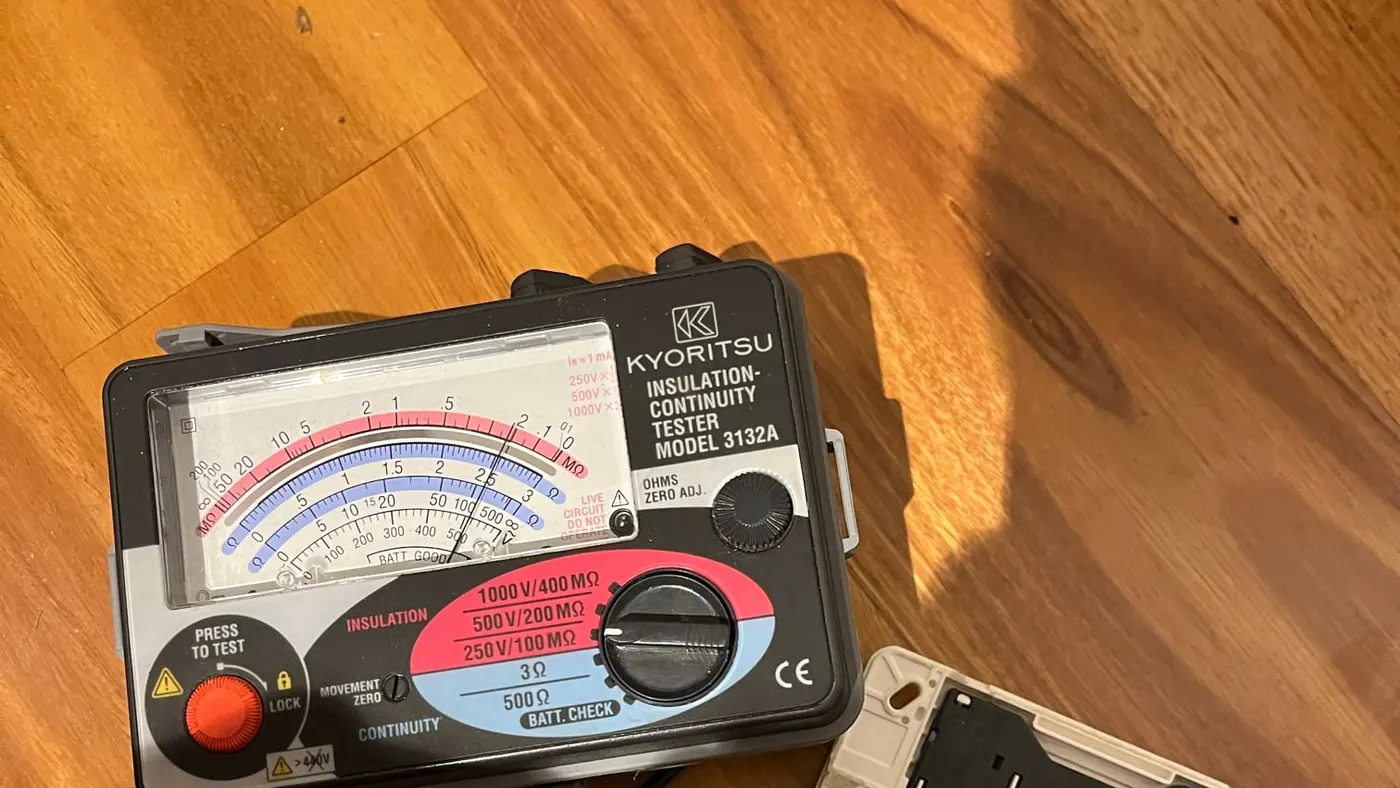
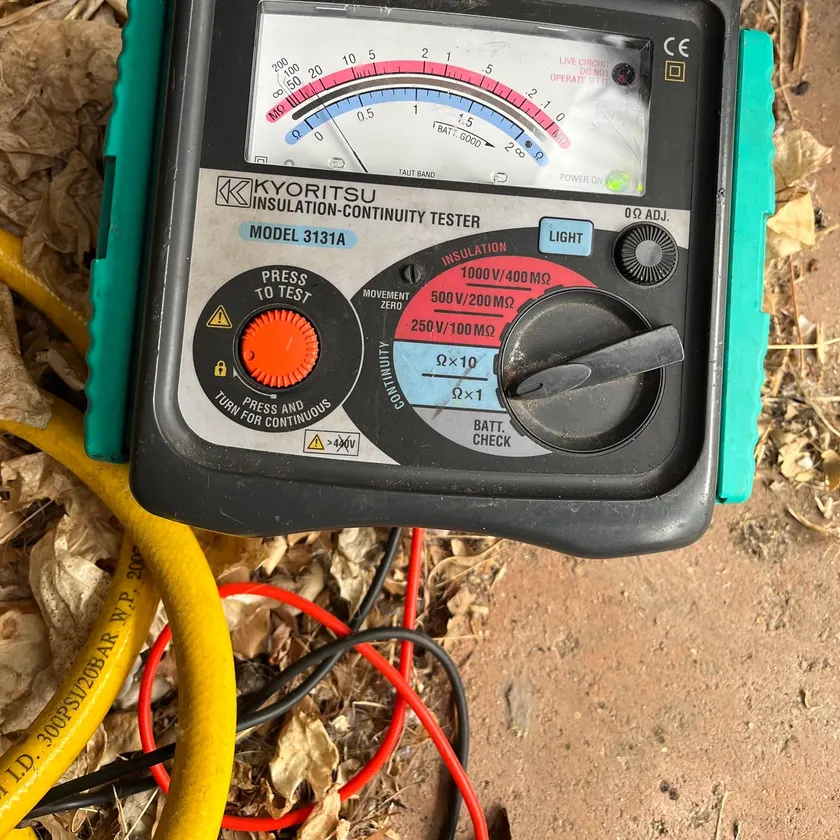
- Test the insulation. An insulation resistance test shows whether current is leaking from the cable or a fitting to earth.
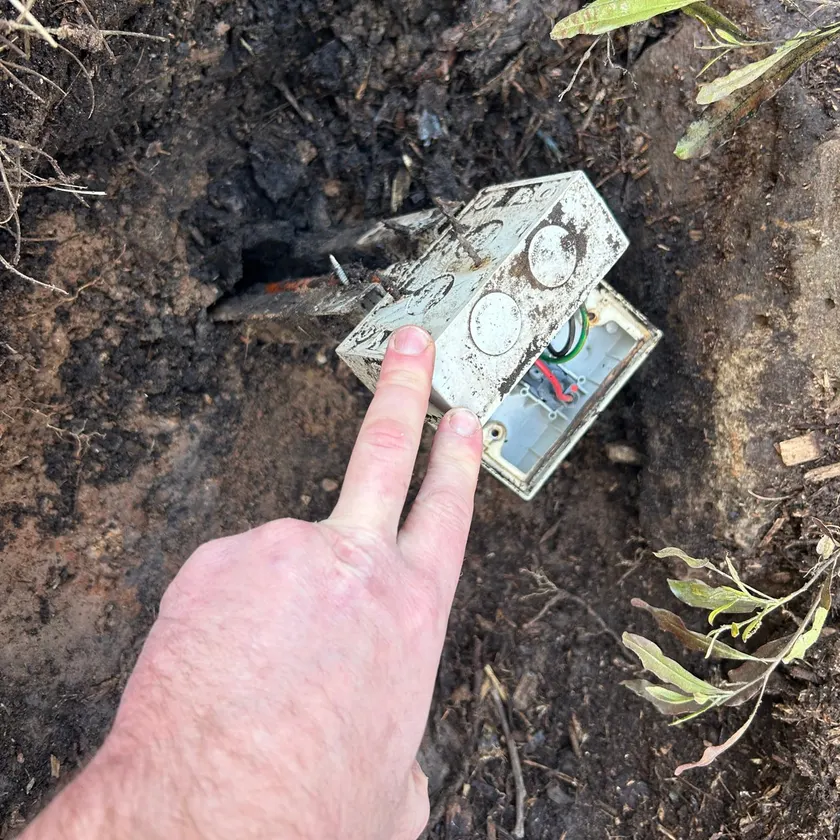
- Narrow it to a section. We work along the circuit, fitting by fitting, until the leak is found.
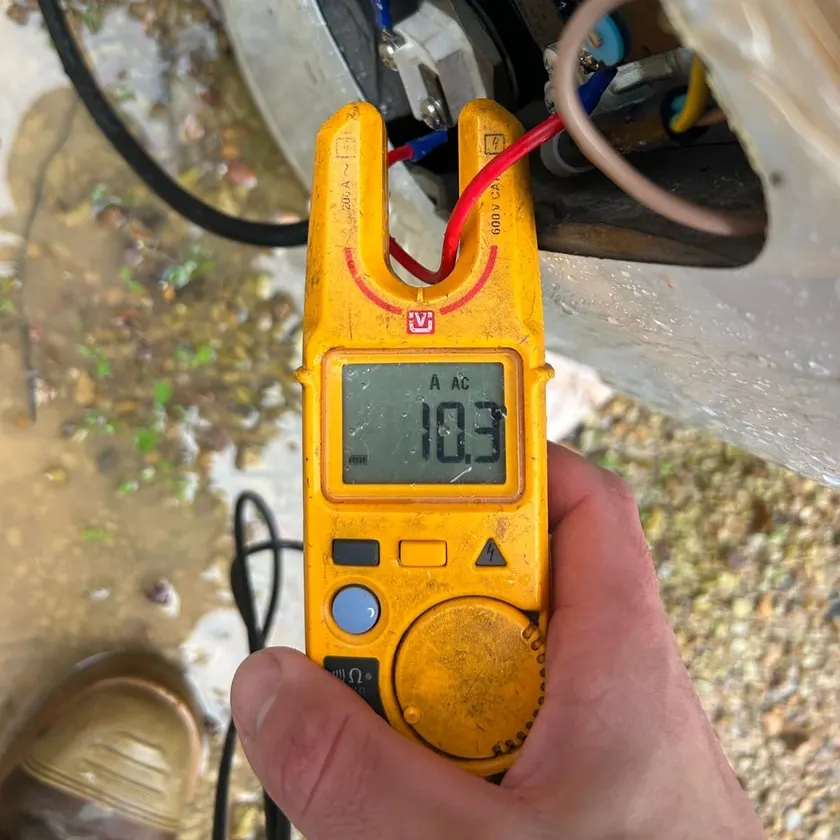
- Test the safety switch itself with a meter that measures how quickly it trips.
- Repair and retest. You receive a Certificate of Electrical Safety for the repair work.
How to prevent trips, and what to do next
- Test your safety switches every three months, as Energy Safe Victoria recommends. Tell the household, press the test button on each switch, confirm the power is off on that circuit, then reset it.
- Replace damaged appliances and leads.
- Keep outdoor power points and lights weatherproof.
- Have older wiring checked. Energy Safe Victoria suggests a check by a licensed electrician if a house is more than 30 years old.
If your safety switch keeps tripping and the unplug check has not found the cause, call CabledIN on 1300 025 555. We are licensed electricians (REC 30925) based in North Geelong, and you can read about testing, replacement and new installations on our safety switch service page.
Photos from our jobs
Frequently asked questions
Why does my safety switch keep tripping?
It is detecting current leaking to earth on a circuit it protects. The causes electricians find most often are a faulty appliance, moisture in a fitting, damaged wiring, or a worn safety switch.
Why does my safety switch trip when nothing is plugged in?
The fault is likely in the fixed wiring, a fitting, a wired-in appliance such as an oven or hot water unit, or the safety switch itself. Leave it off and call a licensed electrician.
Is it safe to keep resetting a safety switch?
No. Reset it once to run the unplug check. If it trips again and you have not found the cause, leave it off, because each reset puts power back onto a faulty circuit.
Why does my safety switch trip when it rains?
Water is usually getting into something on that circuit, most often an outdoor power point, a garden light or a fitting below a roof leak. Leave the circuit off and have it checked.
Can a faulty appliance trip a safety switch?
Yes, it is one of the most common causes. Appliances with heating elements or water inside them, such as kettles, irons, dishwashers and washing machines, are frequent culprits.
What is the difference between a safety switch and a circuit breaker?
A safety switch protects people by tripping on a leak of current to earth, and it has a test button. A circuit breaker protects wiring from overloads and short circuits. They are not interchangeable.
How do I know if my safety switch is faulty?
Press the test button. If the power on that circuit does not cut out, the switch may have failed and you should call a licensed electrician immediately. A switch that trips with nothing connected should also be tested.
Still have a question? Ask the CabledIN team.