
- Where we install
- Garages, carports and driveways
- Supply
- Single-phase and three-phase chargers
- Paperwork
- Certificate of Electrical Safety for the work
- Who does it
- Licensed electricians, REC 30925
Home EV charger installation in Geelong: what is involved
A wall charger is a fixed appliance that draws a large load for hours at a time, so it is wired differently from a power point. We install them regularly in Mount Duneed, Highton, Hamlyn Heights, Lara, Armstrong Creek, Manifold Heights, Ocean Grove and Newtown, and a typical home install includes:
- Its own circuit run from the switchboard to the charger, with nothing else on it.
- Its own protection at the switchboard: a combined circuit breaker and safety switch (RCD) for that circuit.
- An isolating switch next to the charger, weatherproof where it is outdoors.
- Cable in conduit where it runs along a wall or outside, kept as neat and as short as the house allows.
- Set-up. The charger is connected to your Wi-Fi and its app where it has one, and the charge rate is set to suit your supply.
- Testing with the car plugged in where it is available.
Which EV charger is right for you?
There are three broad ways to charge a car.
| Type | What it is | Suits |
|---|---|---|
| Portable lead on a power point | The lead that comes with most cars, plugged into a standard power point | Short daily trips and overnight top-ups. Slow. |
| Wall charger | A fixed charger on its own circuit, single-phase or three-phase | Most homes. Much faster than a power point. |
| DC fast charger | A large commercial unit that needs a substantial supply | Public sites, fleets and service stations, not homes |
Within wall chargers, the choices that matter are:
- Tethered or socket only. A tethered charger has the lead attached. A socket-only charger uses the lead you carry in the car.
- Single-phase or three-phase. A three-phase charger can charge faster, but only if the house has three-phase supply and the car can accept it.
- Smart features. Scheduling for off-peak times, usage tracking, and load management that slows the charger when the rest of the house is drawing heavily. Some smart chargers can also be set to favour power from a rooftop solar system when it is available.
- Bring your own or supplied. We can supply a charger or install one you have already bought, including the unit that came with the car.
If you only want a better option for the portable lead, a dedicated power point in the garage is a smaller job.
Talk to a licensed Geelong electrician (REC 30925).
Will my switchboard and supply cope?
This is the question that decides the job, so we check it first.
- Room on the board. The charger needs space for its own circuit breaker and safety switch. An old fuse board or a full board usually means a switchboard upgrade first.
- Capacity. We add up what the house already draws, such as the oven, cooktop, hot water and air conditioning, to see what is left for the car. Where it is tight, a charger with load management can share the supply instead of overloading it.
- Single-phase or three-phase. Many homes are single-phase, and a single-phase wall charger suits most drivers. If you want three-phase charging and the house does not have it, that is a supply upgrade.
Powercor, the electricity distributor for the Geelong region, lists EV chargers among the common reasons households upgrade their supply. A change to capacity or phases is an application that only a Registered Electrical Contractor can lodge with Powercor, and high-capacity charging may need a network upgrade. We handle those applications: see mains and supply upgrades.
How installation works, step by step
- Tell us the basics. The car, the charger you have in mind, where you park, and a photo of your switchboard with the door open.
- Site check and quote. We confirm the cable route, the board and the supply, and give you a written quote.
- Install. We fit the protection at the switchboard, run the cable, mount the charger and the isolating switch, and connect it. The power is off for part of the job while we work in the board.
- Set up and test. The charger is commissioned, the charge rate is set and the circuit is tested.
- Handover. We show you how to start, stop and schedule a charge, and where the isolating switch is.
- Certificate. You receive a Certificate of Electrical Safety. Keep it with the house papers.
Where to put the charger
A few minutes on position saves years of annoyance.
- Match the car's charge port. Front, rear, left or right. If you have two cars with ports in different places, pick a spot the lead reaches for both.
- Keep the lead off the path. A lead across a walkway is a trip hazard and wears quickly.
- Think about the next car. A position that works for a second car later is worth a slightly longer cable run now.
- Outdoors is fine. Wall chargers made for outdoor use can go on an external wall or a post. We fit a weatherproof isolating switch beside them.
- Add light. Plugging in after dark is easier with a sensor light over the spot.
Not sure what you need? Tell us what is happening and we will talk it through.
Apartments, units and shared car parks
Charging at an apartment, a unit or a shared car park takes more planning than a house:
- Apartments and units. The cable usually crosses common property, so speak to your owners corporation before you ask for a quote. We can provide a written scope for them to consider.
- Several chargers on one supply. Load management shares the available power between cars, so the building's supply is not exceeded.
- Access and billing. Chargers can be set so only approved residents can start a charge, and so usage is recorded per user.
We also install chargers at workplaces.
Why choose CabledIN for your EV charger
- Licensed Victorian Registered Electrical Contractor, REC 30925
- More than 20 years' experience, based in North Geelong
- Single-phase and three-phase installs, including switchboard and supply upgrades where needed
- Lifetime workmanship warranty
- 2,000+ five-star Google reviews
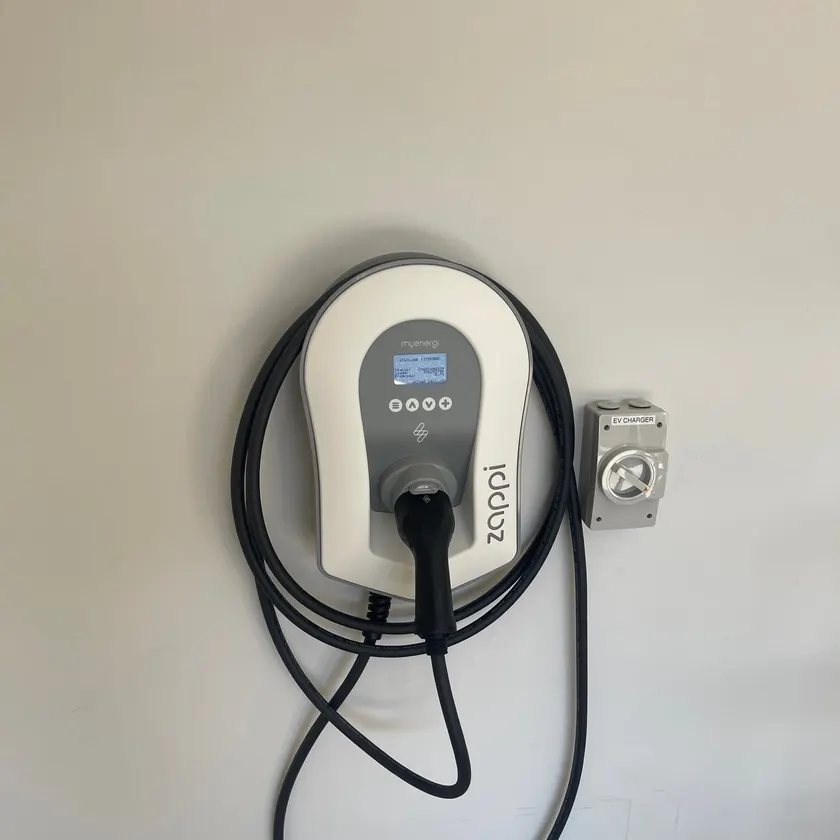
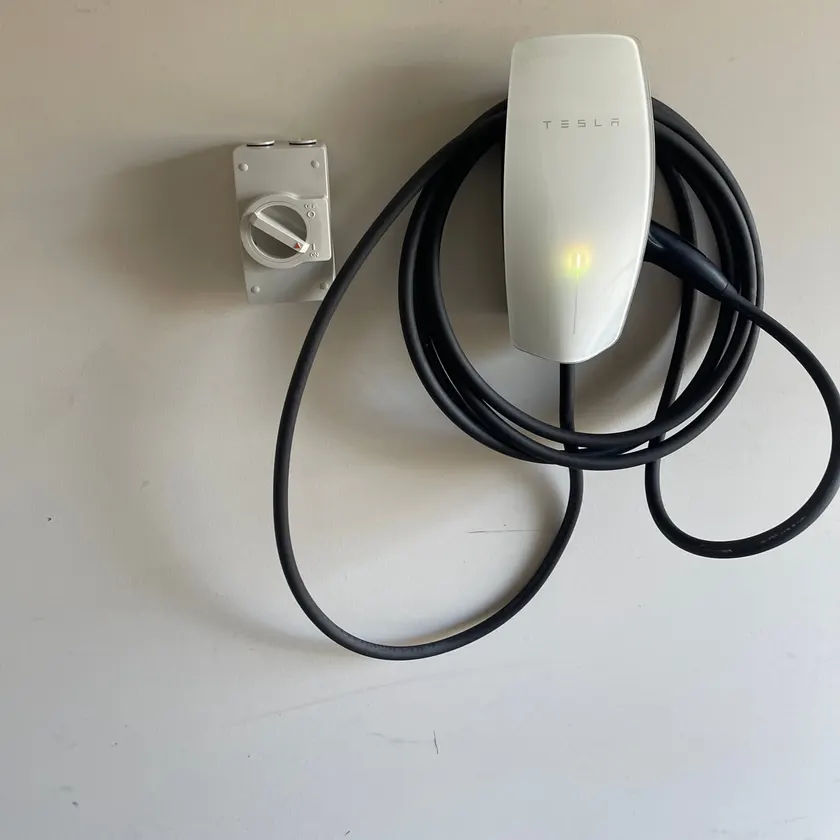
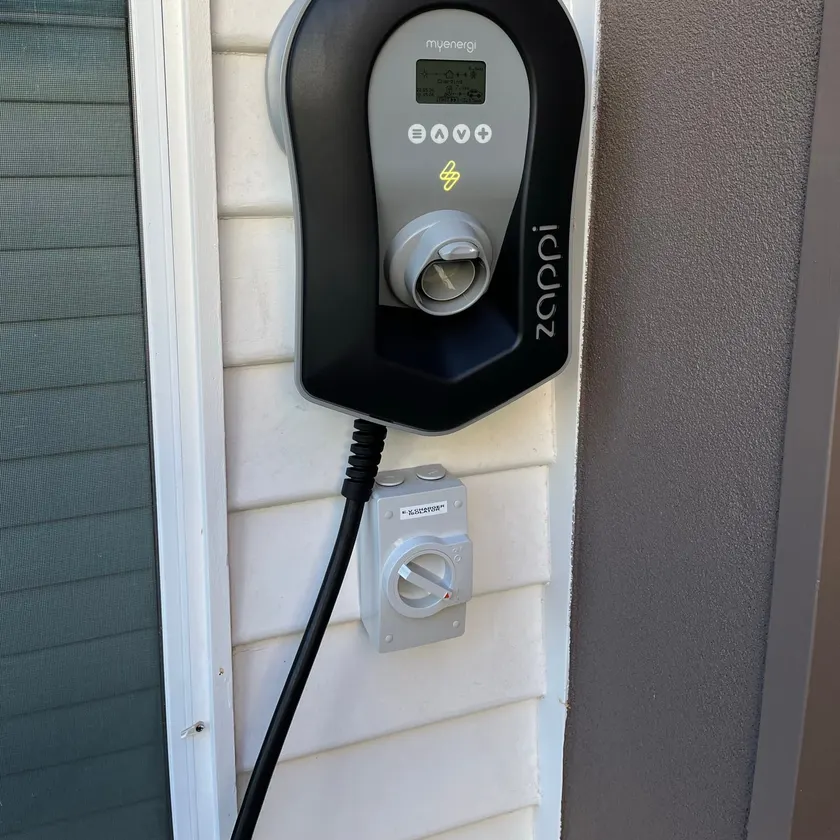
Recent EV charger jobs around Geelong
Wall chargers, isolating switches and switchboard work from our own installs.
Frequently asked questions
Can a normal electrician do EV charger installation in Geelong?
It has to be a licensed electrician working for a Registered Electrical Contractor, and the work needs a Certificate of Electrical Safety. It is worth choosing one who installs chargers regularly, because sizing the supply is the important part.
Can you install a charger I bought myself?
Yes. Tell us the make and model before we quote, so we can check it suits your supply.
Do I need to upgrade my switchboard for an EV charger?
Only if the board has no room for another circuit, still uses fuses, or has no safety switches. We check this from a photo of the board or at the site visit.
Do I need three-phase power to charge an electric car at home?
No. A single-phase wall charger suits most drivers. Three-phase allows faster charging if your home has three-phase supply and your car can accept it.
Can I just charge from a normal power point?
Yes, with the portable lead supplied with the car. It is slow, which suits short daily trips. A wall charger on its own circuit is much faster and is made for the job.
How long does it take to install an EV charger?
Most home installs are done in a single visit. Long cable runs, trenching, switchboard upgrades or a supply upgrade through Powercor add time.
Can an EV charger be installed outside?
Yes. Chargers rated for outdoor use can be mounted on an external wall or a post, with a weatherproof isolating switch next to them.
Does Powercor need to approve my EV charger?
We check your supply when we quote. If the supply capacity or number of phases has to change, that is an application to Powercor, and we lodge it for you.
Can I install an EV charger myself?
No. Do-it-yourself electrical work is illegal in Victoria. A wall charger has to be installed and connected by a licensed electrician.
Still have a question? Ask the CabledIN team.