
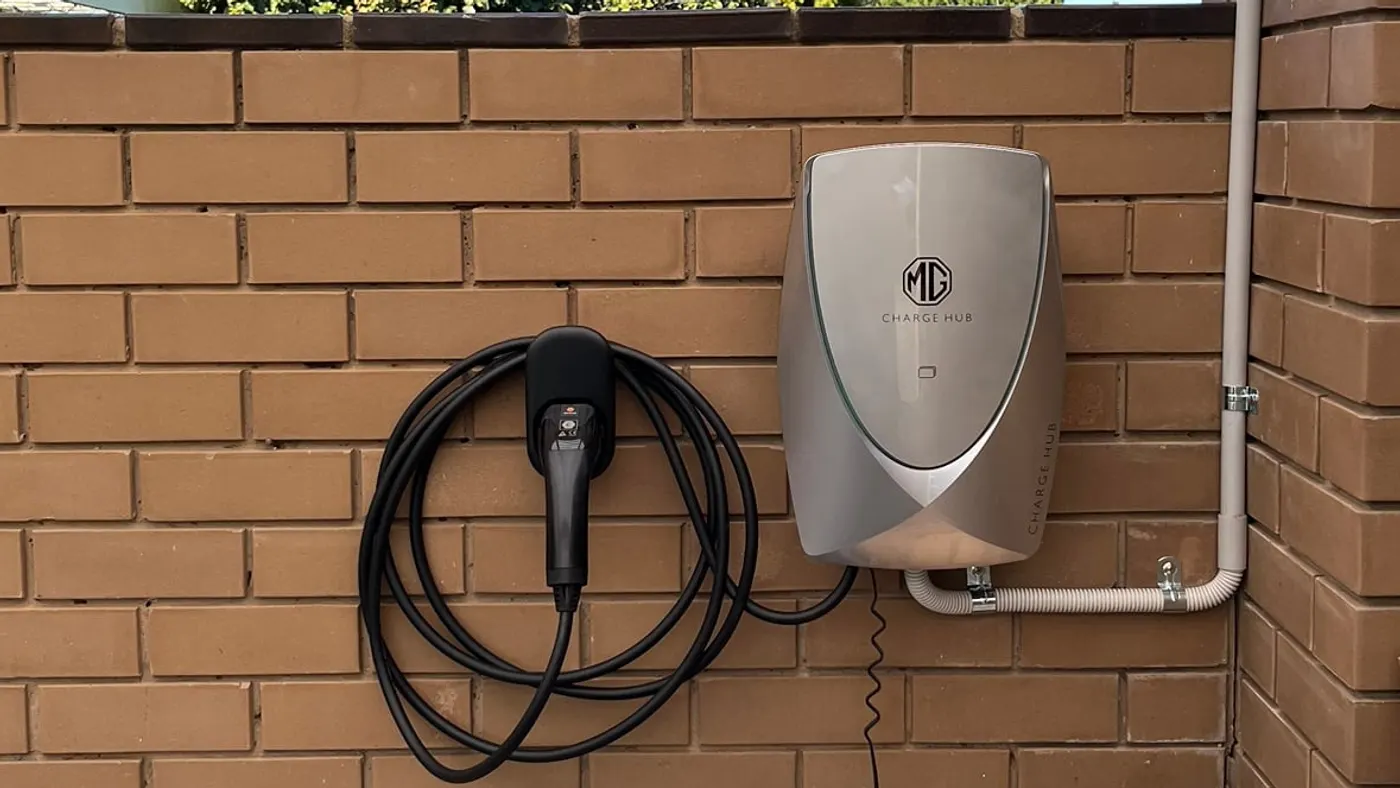
Can a normal electrician install an EV charger? Yes. In Victoria any licensed electrician working for a registered electrical contractor (REC) can install a home EV charger. None of the licence types Energy Safe Victoria lists is an EV charger licence: a wall charger is fixed electrical installation work, so it needs a licensed electrician, a REC and a Certificate of Electrical Safety, like any other wiring job.
The Victorian Government's EV-ready home advice adds that it is best to choose an electrician with experience installing EV chargers. Experience matters most for the parts that decide the job: the switchboard, the power supply and where the charger goes.
- Who can install it
- A licensed electrician working for a registered electrical contractor
- EV charger licence
- Not among the licence types Energy Safe Victoria lists
- Paperwork
- A Certificate of Electrical Safety
- Changes to your supply
- Lodged with Powercor by a REC
What a "normal electrician" means in Victoria
A "normal" electrician, for this job, is a licensed one working for a registered electrical contractor. That is the standard Victorian law sets for all electrical work for a customer, and it is the standard a home EV charger has to meet.
- The licence. An A Grade licence allows electrical installation work without supervision, as an employee. It does not allow the holder to contract for profit or reward.
- The registration. To take your job, the electrician must work for a registered electrical contractor, or be one. A REC must show its registered number in its advertising.
- The certificate. A Certificate of Electrical Safety must be provided for all electrical installation work, whatever the size of the job.
The Victorian Government's EV-ready home advice says EV chargers can be installed by any electrician, though it is best to choose one with experience with EV chargers. Read with Victoria's licensing law, "any electrician" means any licensed electrician working for a REC. Even where a charger maker arranges the install, the person who wires it in must meet that standard.
Is there a special EV charger licence?
No. The licence types Energy Safe Victoria lists are the A Grade licence, the registered electrical contractor's licence, the electrical inspector licence and the switchgear worker's licence. None is specific to EV chargers, so the general rules apply. Our guide on how to find a licensed electrician in Geelong shows how to check a licence and a REC number.
Charging from a normal power point vs a wall charger
Powercor, the distributor for Geelong and the surrounding region, describes three ways to charge at home:
| Option | Powercor's description | Range added for each hour of charging |
|---|---|---|
| A regular power point, using the lead that came with the car | Suitable if you use your car occasionally or for short trips | About 10 to 15 km |
| A single-phase home charging unit | Suits people who drive their EV regularly | About 30 to 40 km |
| A higher-capacity home charging unit | Needs three-phase power, so not suitable for all customers | Faster again |
Plugging the car's portable lead into an existing power point is like plugging in any other appliance. Fixing a charger to the wall and wiring it into the switchboard is electrical installation work, which is where the licensed electrician, the REC and the certificate come in.
If you plan to charge from a power point most nights, have an electrician look at the power point and the circuit it is on before you rely on it. If there is no power point where you park, a new power point installation in the garage or carport is a licensed job too.
Talk to a licensed Geelong electrician (REC 30925).
Single-phase or three-phase: which do you need?
Most decisions about a home charger come back to your supply. Powercor's own descriptions set the choice: a single-phase home unit suits people who drive regularly, while a higher-capacity unit needs three-phase power and is not suitable for all customers. The Victorian Government's EV-ready home advice notes that an electrician can tell you what charging level your home supports.
If you want three-phase charging and the house is single-phase, the supply has to change, and that is Powercor's process:
- Changing between single-phase and three-phase, changing capacity, or upgrading the meter or meter panel is an alteration request, lodged with Powercor through its eConnect portal. Only a registered electrical contractor can lodge it.
- Powercor says most alterations take 3 to 8 weeks, longer with missed appointments or retailer delays.
- Powercor's charges are separate from the electrician's price.
- If the existing network cannot support the change, for example high-capacity EV charging, it becomes a network upgrade applied for through Powercor.
Our mains and supply upgrades page covers that side of the work.
What an experienced EV installer checks first
This is where the "experience" in the official advice earns its keep. Before you buy a charger, an experienced installer looks at:
- The switchboard. Is there space, and is the board in a condition to take a new circuit? An old fuse board, or a board with no safety switches, may need work first. Our guide do I need to upgrade my switchboard? explains the signs and the standard a replaced board must meet.
- The supply. What the house already draws, from the oven and cooktop to hot water and heating, and what is left for the car. Powercor lists EV chargers among the common reasons homes upgrade their supply.
- The charger's needs. The circuit and protection the charger needs, designed to the Wiring Rules. Ask your electrician what they will fit at the switchboard for the charger, and why.
- The location. Where you park, which side the car's charge port is on, and how the cable reaches the spot.
- The paperwork. A Certificate of Electrical Safety at the end, and any Powercor application at the start.
These checks are why a photo of your switchboard with the door open is the most useful thing to send when you book.
Does Powercor need to approve my EV charger?
It depends on the charger and on your supply. What Powercor's pages set out is this:
- If the job changes your supply, such as a move from single-phase to three-phase, more capacity, or a new meter or meter panel, a REC lodges an alteration request with Powercor.
- If the network cannot support what you want, such as high-capacity EV charging, it becomes a network upgrade through Powercor.
Whether your particular charger and supply need either of those is something your registered electrical contractor works out at the quote, and lodges if needed. Ask the question directly: "Does this job need anything from Powercor, and who arranges it?" A good answer names the process and the lead time.
Not sure what you need? Tell us what is happening and we will talk it through.
What affects the cost of installing an EV charger in Geelong
Every EV charger installation is quoted after the site has been seen, because these factors change the work:
- The charger. Single-phase or three-phase, and whether you have already bought it.
- The distance and route. How far the parking spot is from the switchboard, and whether the cable runs through a roof space, along a wall or outdoors.
- The switchboard. Room for the new circuit, or a switchboard upgrade first.
- The supply. A change to three-phase or more capacity adds Powercor's alteration process, with Powercor's own charges and a lead time of weeks.
- The mounting spot. Inside a garage, on an outside wall or on a post.
How an EV charger installation works
- Quote request. Tell the electrician the car, the charger you have in mind and where you park, with a photo of the switchboard.
- Site check and written quote. The switchboard, the supply and the cable route are confirmed.
- Powercor first, if needed. Any supply alteration is lodged by the REC and booked before the charger goes in.
- Switchboard work, if needed. If the main switchboard or consumer mains are replaced as part of the job, that part is prescribed work and is independently inspected before the power goes back on.
- Install and test. The charger is mounted and connected, and the electrician carries out the mandatory tests before any certificate is issued.
- Certificate. You receive your copy of the Certificate of Electrical Safety. Keep it with the house papers.
For how we run each step, see our EV charger installation page.
Can I install an EV charger myself?
No. DIY electrical work is illegal in Victoria, and any equipment in an installation that runs above extra-low voltage must be installed and connected by a licensed electrician. A home wall charger is wired into the switchboard at mains voltage, so it is licensed work. Under the Electricity Safety Act 1998, carrying out, or offering to carry out, licensed electrical work without a licence carries up to 50 penalty units.
You can choose and buy the charger yourself. The installation is the electrician's job, and so is the certificate. Our guide is DIY electrical work legal in Victoria? explains where the line sits for other jobs around the home.
What to do next
Before you buy a charger, gather three things: a photo of your switchboard with the door open, where you park and which side the car's charge port is on, and how you drive (short trips or long daily runs). That tells an electrician whether a power point, a single-phase unit or a three-phase unit suits you, and whether your board and supply are ready.
CabledIN is a registered electrical contractor, REC 30925, based in North Geelong, with more than 20 years' experience and a lifetime workmanship warranty. We install single-phase and three-phase home chargers across Geelong, the Bellarine Peninsula, the Surf Coast and Golden Plains, including the switchboard work and Powercor applications where a job needs them. See our EV charger installation service or call 1300 025 555.
Frequently asked questions
Can any electrician install an EV charger?
Any licensed electrician working for a registered electrical contractor can. The Victorian Government's EV-ready home advice says it is best to choose one with experience installing EV chargers.
Do I need a special licence to install an EV charger?
No. None of the licence types Energy Safe Victoria lists is specific to EV chargers. The general rules apply: a licensed electrician, working for a REC, who provides a Certificate of Electrical Safety.
Can I charge my EV from a normal power point?
Yes, using the lead that came with the car. Powercor says it suits occasional use or short trips and adds about 10 to 15 km of range for each hour of charging. If you will rely on it most nights, have an electrician check the power point and its circuit.
Do I need three-phase power for an EV charger at home?
Not for a single-phase home unit, which Powercor says suits people who drive regularly. Higher-capacity units need three-phase power, which not every home has. Changing to three-phase is an alteration a REC lodges with Powercor.
Does Powercor need to approve my EV charger?
It depends on the job. A change to your supply, such as three-phase or more capacity, is lodged with Powercor by a REC, and high-capacity charging may need a network upgrade. Your electrician tells you at the quote whether either applies.
Will I need a switchboard upgrade for an EV charger?
Not always. The charger needs space and protection on the board, and an old fuse board may need work first. An electrician checks the board before you buy the charger.
Do I get a certificate for an EV charger installation?
Yes. Installing a wall charger is electrical installation work, so you receive a Certificate of Electrical Safety. Keep your copy with the house papers.
Can I install an EV charger myself?
No. DIY electrical work is illegal in Victoria. A wall charger wired into the switchboard must be installed by a licensed electrician working for a registered electrical contractor.
Still have a question? Ask the CabledIN team.