
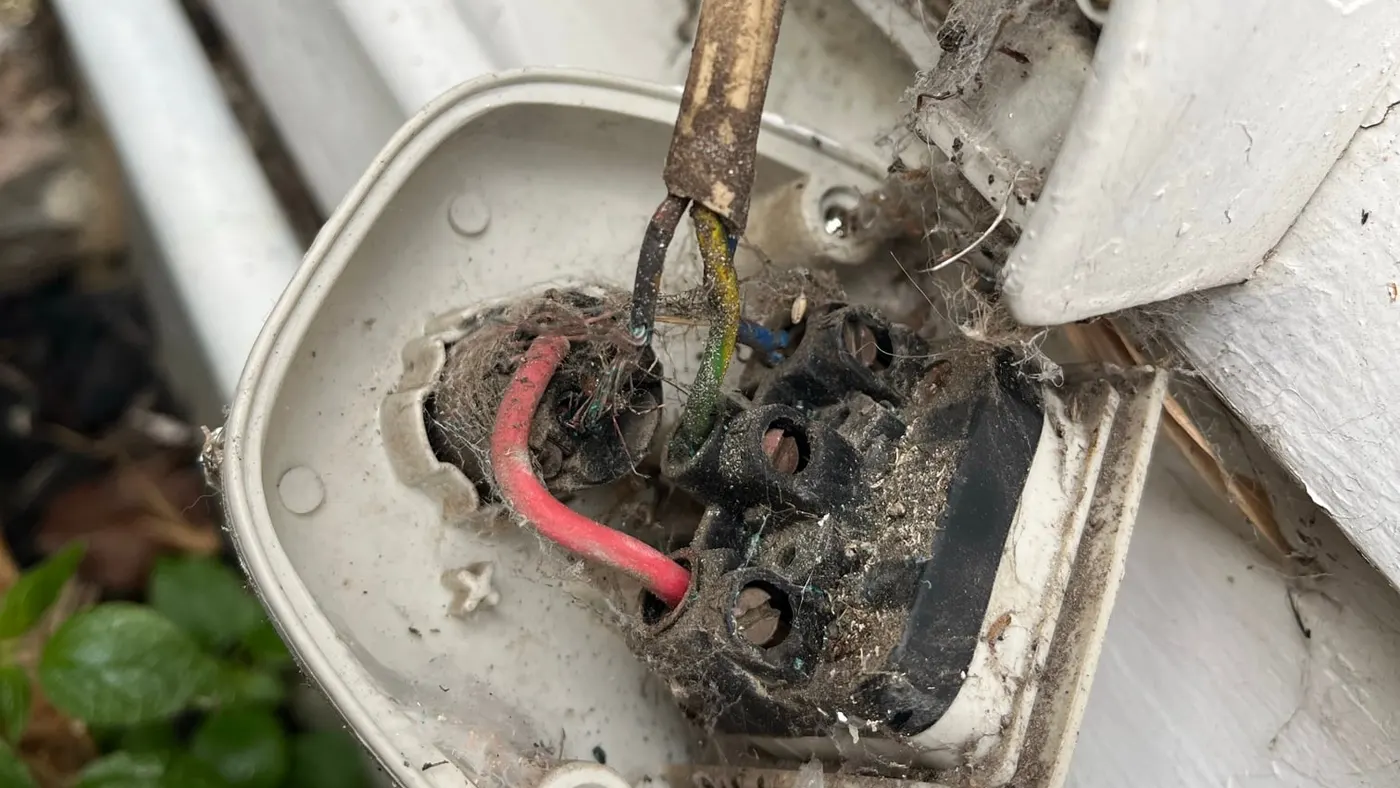
Is DIY electrical work legal in Victoria? No. Energy Safe Victoria (ESV) says doing unqualified electrical work "isn't only extremely dangerous, it's also illegal". That includes small jobs such as changing a power point or a light switch, and there is no general exemption for home owners.
ESV's published exemptions include changing a light globe and plugging in an appliance or lamp that came with a plug and cord. Jobs such as moving a power point or replacing a light fitting need a licensed electrician, who must give you a Certificate of Electrical Safety. Unlicensed prescribed electrical work carries up to 50 penalty units under the Electricity Safety Act 1998.
- Short answer
- No. DIY electrical work is illegal in Victoria
- What you can do
- Change a light globe, plug in appliances, reset a tripped safety switch
- Maximum penalty for unlicensed work
- 50 penalty units (Electricity Safety Act 1998, s 38)
- Proof the job was done legally
- A Certificate of Electrical Safety
What the law says about doing your own electrical work
Victoria's Electricity Safety Act 1998 says a person must not carry out, offer to carry out, or hold themselves out as willing to carry out any prescribed class of electrical work unless they hold the right licence. The regulations set which classes of work are prescribed. ESV's message to home owners is simpler: on its don't do it yourself page it says electrical work "isn't a DIY job, even for small jobs such as changing power points or light switches".
The Act defines electrical installation work broadly, as the installation, alteration, repair or maintenance of an electrical installation. So adding, moving, repairing and swapping all count, not just running new wiring.
Owning the house does not change this. The exemptions ESV publishes contain no general exemption for home owners working on their own homes, so DIY wiring is not made legal by the fact that the house is yours.
What a home owner can legally do
The Electricity Safety Exemptions Order 2020, which ESV lists on its electrical safety legislation page, sets out a short list of jobs that do not need a licence. Two of them matter in a home:
- Changing a light globe. ESV's published exemptions include inserting or removing a light globe. Switch the light off first and let the globe cool. This covers the globe only, not the light fitting or its wiring.
- Plugging things in. Plugging an appliance or lamp that the manufacturer fitted with a plug and cord into an existing power point is not licensed work. The examples in the Order include a rangehood supplied with a cord and plug.
Even these come with a catch. The Act's offence of knowingly installing unsafe electrical equipment still applies, so a damaged lead, a cracked plug or an appliance that has been in water is not fine just because it plugs in.
ESV also expects every household to do a few safety tasks that are not electrical work at all:
- Reset a tripped safety switch (RCD). If it will not reset, call a licensed electrician. Our guide why does my safety switch keep tripping? covers the safe way to narrow down the cause.
- Test your safety switches every three months with the test button, then reset them.
- Change smoke alarm batteries and test the alarms. Anyone can change a battery, but a hard-wired 240 V alarm must be installed and replaced by a licensed electrician. Our guide to smoke alarm rules in Victoria has the detail.
- Stop using a faulty appliance or lead. If it sparks, smells hot or trips the power, switch it off at the power point if it is safe to do so, unplug it and have it repaired or replaced.
Talk to a licensed Geelong electrician (REC 30925).
Electrical jobs that need a licensed electrician, however small
These are the jobs home owners ask about most. Apart from the first two rows, all of them are electrical installation work, so they need a licensed electrician and come with a Certificate of Electrical Safety.
| Job | Can you do it yourself? | Why |
|---|---|---|
| Changing a light globe | Yes | Covered by ESV's published exemptions |
| Plugging in an appliance or lamp with a factory-fitted plug | Yes | Covered by ESV's published exemptions |
| Replacing a power point or light switch, even like for like | No | ESV names these as jobs that are not DIY |
| Adding or moving a power point | No | Installation or alteration work |
| Replacing a light fitting or a downlight that is wired in | No | Work on the fixed wiring |
| Replacing a hard-wired smoke alarm | No | Must be installed and replaced by a licensed electrician |
| Replacing a circuit breaker or safety switch | No | Installation work that needs a certificate |
| Running a new circuit or extending the wiring | No | Installation work |
| Replacing the switchboard | No | Prescribed work, independently inspected before the power goes back on |
Planning extra outlets? Our guide can an electrician install a power point anywhere? explains where they can go. For fans, see ceiling fan rules in Victoria.
Penalties for DIY and unlicensed electrical work in Victoria
Victorian law sets these penalties in penalty units, not dollars, and the value of a penalty unit changes each financial year. These are the maximums in the Electricity Safety Act 1998 that bear on DIY and unlicensed work:
| What the Act prohibits | Section | Maximum penalty |
|---|---|---|
| Carrying out, or offering to carry out, prescribed electrical work without the right licence | s 38 | 50 penalty units |
| Electrical contracting without being registered, or a contractor employing an unlicensed worker | s 30 and s 36 | 50 penalty units for a person, 250 for a company |
| Knowingly installing unsafe electrical equipment, or knowingly doing work that makes equipment unsafe | s 43 | 240 penalty units for a person, 1,200 for a company |
| An owner who is told by the occupier that electrical equipment is unsafe, and does not have it removed or made safe | s 43(3) | 240 penalty units for a person, 1,200 for a company |
| Failing to complete and give a Certificate of Electrical Safety | s 45A | 60 penalty units |
Many of these maximums rose on 21 May 2025. The unsafe-installation offence, for example, went from 40 to 240 penalty units for a person.
Why the rules are this strict
Electrical work that looks finished can still be dangerous. ESV's warning is blunt: DIY electrical work is illegal "and it can also be deadly". It records that two Victorians were killed in early 2016, both doing DIY electrical work on farms.
The hidden part is the testing. Before a licensed electrician issues a Certificate of Electrical Safety, they must test the work: earthing continuity, insulation resistance, polarity, correct circuit connections, earth fault-loop impedance and safety switch operation. A job can appear to work and still fail those tests, and you cannot see the difference by looking.
The certificate is also the record. The electrician gives a copy to you and a copy to ESV, so there is an official record that the work was done and certified, and you should keep yours. DIY work has no certificate and no record that anyone tested it. ESV's advice is to never do your own electrical work, and to insist on a Certificate of Electrical Safety when the job is done.
Not sure what you need? Tell us what is happening and we will talk it through.
Hiring help: handymen, friends and the electrician you book
The law covers the person doing the job, not only the home owner. Section 38 makes it an offence to offer to carry out prescribed electrical work, or hold yourself out as willing to, without the right licence. A handyman, a friend who "knows electrics" or a tradesperson from another trade cannot legally do electrical work in your home unless they hold that licence.
In Victoria an electrician must work for a registered electrical contractor (REC) to do work for a customer, and a REC must include its registration number in its advertising. Before you book anyone:
- Ask to see the licence. ESV advises always asking.
- Check the register. ESV's public registers let anyone check a contractor or a licensed electrician.
- Expect a certificate. Electrical installation work, however small, comes with a Certificate of Electrical Safety.
Our guide on how to find a licensed electrician in Geelong walks through each check. CabledIN's registration is REC 30925.
Found DIY wiring in your home?
Many people find DIY work after the fact: a power point added by a previous owner, an extra light in the shed, or a switchboard with additions nobody can explain. ESV's tell-tale signs of faulty wiring are old switchboards (particularly those without a safety switch), old or broken switches and power points, flickering lights, and sparks from a switchboard, switch or power point.
- Do not touch anything damaged. ESV says not to touch or try to repair a loose, cracked or broken power point or switch. Cover it, stop using it and have a licensed electrician replace it.
- Do not undo it yourself. Removing or altering wiring is electrical work too.
- Have it checked. An electrical safety inspection checks and tests the switchboard, wiring and fittings and gives you a written report, with urgent items listed first. Any repairs come with their own Certificate of Electrical Safety.
If you own a home that someone else lives in, remember the duty in the penalty table: once the occupier tells you electrical equipment is unsafe, you must have it removed or made safe. ESV also suggests having the wiring checked by a licensed electrician in any house more than 30 years old.
What to do next
If you are not sure whether a job is one you can do yourself, in Victoria the answer is almost always no. Change your own light globes, plug in your own appliances, test your safety switches and change your smoke alarm batteries. Call a licensed electrician for everything else.
If you suspect DIY work in your home, or you have just bought an older house, book an electrical safety inspection with CabledIN on 1300 025 555. We are licensed electricians (REC 30925) based in North Geelong, and the electrical installation work we do comes with a Certificate of Electrical Safety.
Frequently asked questions
Is DIY electrical work legal in Victoria?
No. Energy Safe Victoria says unqualified electrical work is illegal and there is no grey area, even for small jobs such as changing power points or light switches. The exceptions are tiny: changing a light globe and plugging in appliances.
Can I change a light globe myself in Victoria?
Yes. ESV's published exemptions include changing a light globe. Turn the light off and let the globe cool first. Replacing the light fitting itself is licensed work.
Can I replace a power point or light switch myself?
No, not even with an identical one. ESV says electrical work isn't a DIY job "even for small jobs such as changing power points or light switches".
What is the fine for unlicensed electrical work in Victoria?
Under the Electricity Safety Act 1998, carrying out or offering to carry out prescribed electrical work without a licence carries a maximum of 50 penalty units. Knowingly installing unsafe electrical equipment carries up to 240 penalty units for a person.
Can I do electrical work on my own house?
No. The exemptions ESV publishes contain no general exemption for home owners, so owning the house does not make DIY electrical work legal.
Can a handyman do electrical work?
Only if they hold an electrical licence and work for a registered electrical contractor. The Act makes it an offence to carry out, or even offer to carry out, prescribed electrical work without one. Ask to see the licence and check ESV's public register.
Can I replace a hard-wired smoke alarm myself?
No. A hard-wired 240 V smoke alarm must be installed and replaced by a licensed electrician. Anyone can change a smoke alarm battery.
What should I do if I find DIY wiring in my home?
Do not touch it or try to undo it. Have a licensed electrician look at it. An electrical safety inspection checks the switchboard, wiring and fittings and reports anything unsafe.
Still have a question? Ask the CabledIN team.