
- Typical time on site
- About one to two hours per fan for a straight swap
- What we fit
- AC and DC fans, fans with lights, wall controls and remotes
- Paperwork
- Certificate of Electrical Safety for the work
- Who does it
- Licensed electricians, REC 30925
Ceiling fan installation in Geelong homes: what we do
Our job records show more than 40 ceiling fan jobs, most often in Lara, Belmont, Geelong West, Bell Park, Mount Duneed and Leopold. The work falls into a few clear types:
- New fan, new position. A fan in a bedroom or living room that has never had one, with new cable run through the roof space and a new wall control.
- Fan in place of a light. The centre light comes out and a fan with a built-in light goes in, so the room keeps its lighting.
- Replacing an old fan. A noisy, wobbling or dead fan swapped for a new one on the existing wiring.
- Several fans at once. Every bedroom done in one visit, often with new LED downlights or switches at the same time.
- Outdoor fans. Fans under an alfresco or verandah roof, using a fan made for outdoor use.
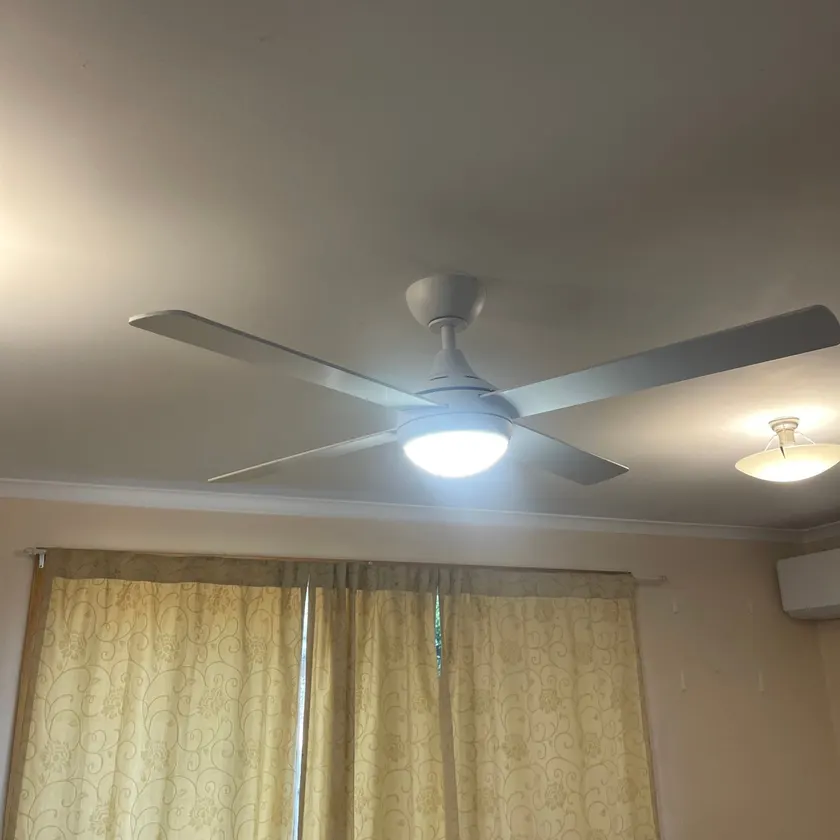
You can buy the fan yourself or we can supply one. A fan we fit often is a white 48 inch DC ceiling fan with four blades, often with a dimmable light kit that switches between warm, neutral and cool white.
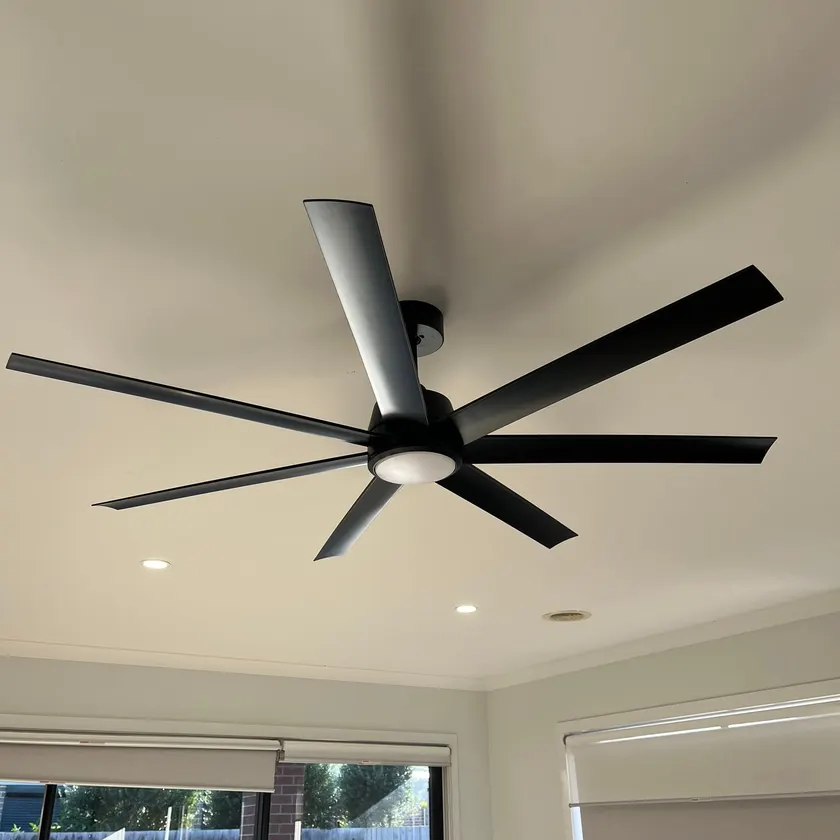
Types of ceiling fans we install
| Type | What it suits | Worth knowing |
|---|---|---|
| AC fan | Living areas and budget installs | Usually three speeds from a wall control. Simple and proven. |
| DC fan | Bedrooms and rooms used all day | Quieter, uses less power and has more speeds. Usually run by a remote. |
| Fan with light | Rooms with one centre light point | One fitting gives air and light. Many have a dimmable, colour-adjustable LED. |
| Low-profile fan | Lower ceilings | Sits close to the ceiling to keep the blades well above head height. |
| Fan on an extension rod | High or raked ceilings | Drops the fan to a height where you can feel it. Needs an angled mount on a sloped ceiling. |
| Outdoor fan | Alfresco areas and verandahs | Has to be rated for damp or coastal air, which matters on the Bellarine and the Surf Coast. |
Wall controls and remotes both work well. A wall control never goes missing. A remote gives more speeds, a timer and reverse without getting out of bed. If you want fans on a phone app or a voice assistant, see our smart home page.
Talk to a licensed Geelong electrician (REC 30925).
Choosing the right size and position
A fan that is too small stirs the air directly underneath and nothing else. As a guide, a 48 inch (about 122 cm) fan suits most bedrooms, and a 52 inch or larger fan suits a living room or open-plan area. Long rooms often work better with two fans than one large one.
- Bedrooms: centred over the bed, not over the doorway.
- Living areas: centred over the seating, clear of pendant lights and tall cupboard doors.
- Downlights: a light directly above the blades makes a flicker on the walls. We check the layout before fixing the fan.
- Fixing point: the fan needs solid timber above it. Plaster alone will not hold a spinning fan, so we fit a timber support between the joists where there is none.
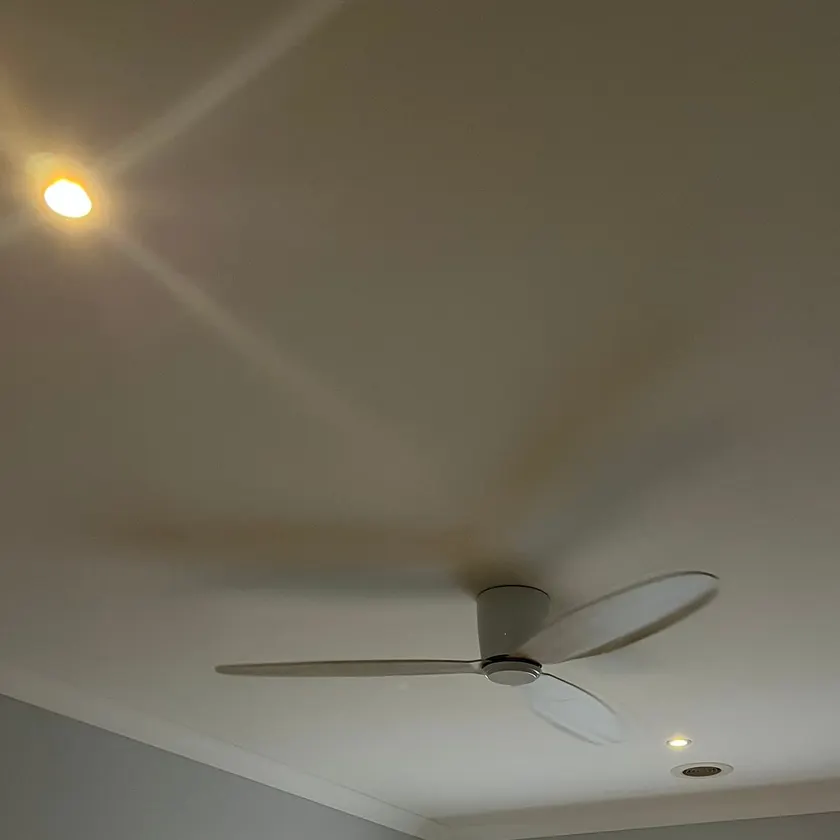
Replacing a light with a ceiling fan
This is the most common request. The light point already has power and a switch, so the fan can often use the same cable. Two things decide how simple it is:
- How you want to control it. A remote-controlled fan with a light can run from the existing single switch wire. If you want separate wall switches for the fan and the light, an extra cable usually has to be run down to the switch.
- What is above the ceiling. The old light was probably screwed to plaster or a light batten. The fan needs its own support.
Many of our fan jobs include a new two or three gang switch plate and an electronic fan controller at the wall, so the fan, its light and the other room lights sit neatly on one plate. If the room needs more light as well, we can plan the lighting around the fan.
What happens on the day
- Confirm the position. We mark the spot with you, check the ceiling height and look in the roof space for framing, insulation and cable routes.
- Power off and make safe. The circuit is switched off and proved dead before anything is touched.
- Support and wiring. We fit the mounting bracket to solid timber, run or adapt the cable, and fit the wall control or the remote receiver.
- Assemble and balance. Blades and any light kit go on, then the fan is run at every speed to check for wobble and noise.
- Test and hand over. The circuit is tested, we show you the controls including the summer and winter setting, and take the packaging and the old fitting away if you want it gone.
- Certificate. You receive a Certificate of Electrical Safety for the work.
Not sure what you need? Tell us what is happening and we will talk it through.
Ceiling fan repairs and replacements
Fans that hum, wobble, click, run at one speed only or will not start are usually worth a look before you buy a new one. Common causes are a failed wall controller or capacitor, a remote receiver that has stopped responding, loose blade screws or a mounting that was never fixed to solid timber. A wobble that keeps getting worse should be checked soon, since the fan is working loose.
If the motor itself has failed, replacing the whole fan is normally the sensible fix, and the existing wiring and switch can often be reused.
Summer and winter: getting the most from a fan
In summer a fan does not cool the air. It moves air across your skin, which makes the room feel cooler, so it only helps while someone is in the room. Used with air conditioning, a fan lets many households set the thermostat a little higher and stay just as comfortable. Our guide to keeping a ceiling fan working well through a Geelong summer has more on this.
In winter, most fans can run in reverse at low speed. That gently pushes the warm air that collects at the ceiling back down the walls without a draught. The reverse setting is a button on the remote for DC fans and a small switch on the motor housing for many AC fans.
Why choose CabledIN for your ceiling fans
- Licensed Victorian Registered Electrical Contractor, REC 30925
- More than 20 years in the trade, based in North Geelong
- Lifetime workmanship warranty
- 2,000+ five-star Google reviews
- A Certificate of Electrical Safety with every job
Call 1300 025 555 or request a quote online.
Recent ceiling fan jobs around Geelong
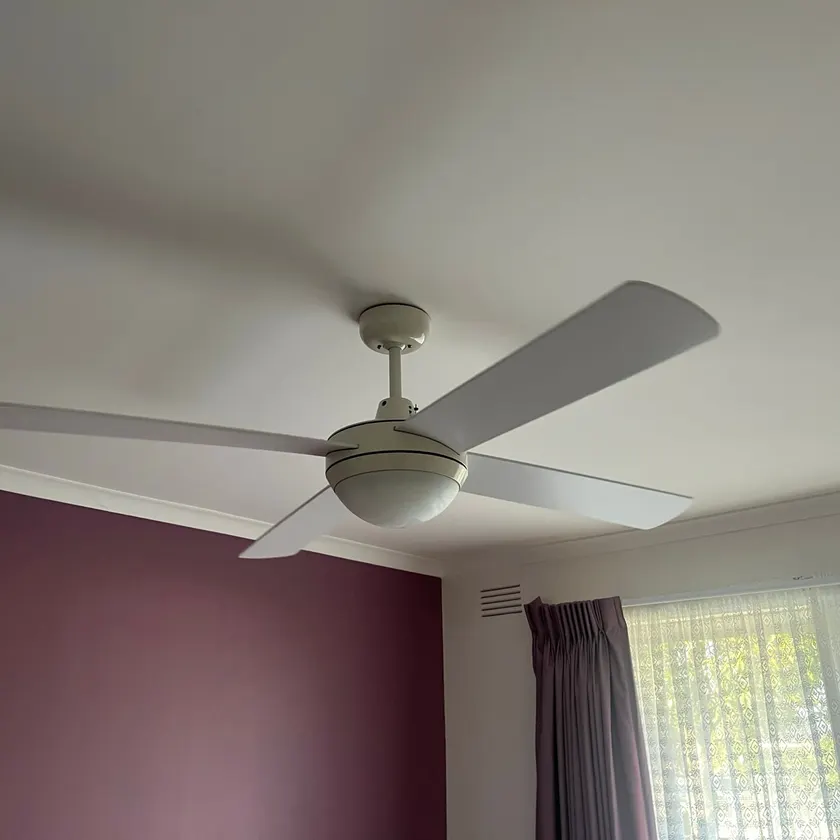
Fans fitted in bedrooms, living rooms and alfresco areas by our electricians.
What customers say
A big thankyou to Daniel from cabledin electrical solutions for installing my ceiling fan and doing some other electrical work he was very friendly and great communication
Des, Google review
Frequently asked questions
Do I need an electrician for ceiling fan installation in Geelong?
Yes. A ceiling fan is fixed wiring, and in Victoria that work must be done by a licensed electrician. DIY electrical work is illegal here, and you should receive a Certificate of Electrical Safety when the job is finished.
Can you replace a light with a ceiling fan?
Yes, it is the most common fan job we do. The fan uses the power already at the light point, we add a solid support above the ceiling, and a fan with a built-in light keeps the room lit.
Can you install a ceiling fan where there is no existing wiring?
Yes. We run a new cable through the roof space from a suitable circuit and fit a wall control or remote. It takes longer than a swap, and access above the ceiling is the main thing that affects the price.
How long does it take to install a ceiling fan?
A straight swap at an existing fan or light point is usually about one to two hours per fan. A new position with new cabling takes longer, and we tell you what to expect when we quote.
Is an AC or DC ceiling fan better?
DC fans are quieter, use less power and have more speed settings, which makes them a good choice for bedrooms. AC fans cost less to buy and work well with a simple wall control.
Can I supply my own ceiling fan?
Yes. We install fans you have bought, and we can also supply one. If you are buying your own, check the blade size suits the room and that the fan suits your ceiling height before you open the box.
Can a ceiling fan go on a sloped or high ceiling?
Usually, yes. Most fans can be fitted to a raked ceiling with the right mount, and an extension rod brings the fan down to a useful height. Check the maximum ceiling angle listed for the fan before buying.
Why is my ceiling fan wobbling or making noise?
The usual causes are loose blade screws, blades out of balance, a worn controller or a mounting that is not fixed to solid timber. A wobble that is getting worse should be checked by an electrician, since the fan may be working loose.
Still have a question? Ask the CabledIN team.