
- Typical time on site
- One to two hours for a like-for-like ceiling unit
- What we fit
- 3-in-1 units, heat lamps, wall heaters, heated towel rails
- Paperwork
- Certificate of Electrical Safety for the work
- Who does it
- Licensed electricians, REC 30925
Types of bathroom heaters we install
| Type | How it heats | Best for |
|---|---|---|
| 3-in-1 heat, fan and light | Two or four infrared heat lamps in the ceiling, with an exhaust fan and a centre light | Most family bathrooms. One fitting does three jobs. |
| Heat lamp unit | Infrared lamps only | Bathrooms that already have a good exhaust fan |
| Ceiling fan heater | An element and a fan that blow warm air down | Warming the whole room, not just the person under it |
| Wall-mounted strip heater | A radiant bar mounted high on the wall | Bathrooms with no roof space above, such as a ground floor room |
| Wall-mounted panel heater | A slim panel that warms the air slowly and quietly | Background warmth in larger bathrooms |
| Heated towel rail | A warmed rail or ladder | Dry towels and a little background warmth |
Heat lamps warm you the moment they are on, which is why they suit a quick morning shower. Fan heaters and panels warm the air, which takes longer but lasts. Many bathrooms use both: lamps overhead and a towel rail on the wall.
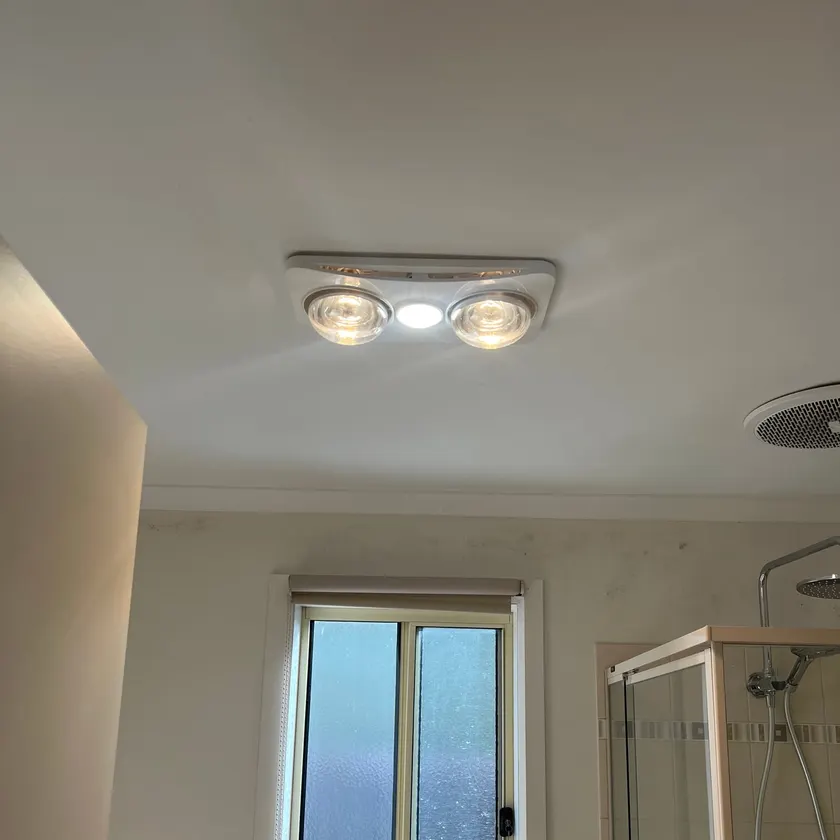
3-in-1 bathroom heat, fan and light units
The 3-in-1 unit is the bathroom heater most Geelong homes have, and replacing a worn-out one is a job we are regularly booked for. Each function has its own switch, so the heat, the fan and the light can run separately.
- Two lamps or four. Two heat lamps suit a small bathroom or ensuite. Four suit a larger room, and they can usually be switched in pairs.
- The fan matters as much as the heat. A unit ducted to the outside clears steam properly. One that blows into the roof space only moves the moisture. Our exhaust fan installation page explains the options.
- Size of the hole. New units are not always the same size as the old one. We match the cut-out where we can, or enlarge it neatly.
- The switch. A 3-in-1 needs a three or four gang switch. If the old switch plate has fewer, extra cable to the switch may be needed.
Talk to a licensed Geelong electrician (REC 30925).
Heated towel rails
A heated towel rail is either plugged into a power point or hard-wired with the cable hidden in the wall. Hard-wired looks cleaner and frees up the power point, and it is the usual choice in a renovation.
- Timing matters. Concealed wiring is simplest before the wall is tiled. In a finished bathroom it can often still be done from the roof space or the room behind, and we check that when we quote.
- Switching. A rail can run from a wall switch outside the wet area or from a timer, so it warms before your shower and turns itself off afterwards. A timer is the easiest way to keep running costs down.
- Position. Where the rail and its switch can go depends on how close they are to the shower and bath. We confirm the spot with you before the cable goes in.
- Solid fixing. Rails get leaned on and pulled, so they are fixed to wall framing, not just the sheet or tile.
Does a bathroom heater need its own circuit?
It depends on the heater and on what else shares the circuit. Bathroom heaters draw far more power than a light or a fan, and a four-lamp unit or a fan heater on a circuit that is already busy can trip the breaker on a cold morning.
Before we fit anything we check the circuit the heater will run from, the cable size and the spare capacity at the switchboard. Where the existing circuit will not carry it, we run a dedicated circuit with its own combined circuit breaker and safety switch (RCD). If the board is full, or is an older fuse board, we will tell you what a switchboard upgrade would involve before you commit to anything.
What happens on the day
- Confirm the unit and the position. We check the heater suits the room, mark where it and its switch will go, and look at access above the ceiling or behind the wall.
- Power off. The circuit is switched off and proved dead.
- Remove the old unit. For a replacement, the old heater comes out and the opening and ducting are checked.
- Fit and wire. The new unit is fixed to framing, wired to its switch or timer, and ducted if it has a fan.
- Test. The circuit is tested, including the safety switch, and each function is run.
- Clean up and certificate. We tidy the room, take the old unit away, and you receive a Certificate of Electrical Safety.
The bathroom can normally be used again as soon as we finish. The power to that circuit is off for part of the visit, and we let you know before it goes off.
Not sure what you need? Tell us what is happening and we will talk it through.
Bathroom heater repairs and common faults
- Heat lamps that keep blowing. One blown lamp is normal wear. Lamps that fail again and again point to a worn lamp holder, heat damage or a loose connection.
- The fan in a 3-in-1 is noisy or has stopped. Dust and age wear the motor. Often the whole unit is due for replacement.
- The heater trips the power. Moisture in the unit, a failing element or an overloaded circuit. Leave it off and have it checked. Our circuit breaker page explains the difference between an overload and a fault.
- A towel rail that stays cold. A failed element, a faulty switch or timer, or no power reaching it.
- Scorch marks or a burning smell. Switch it off at the wall and at the switchboard and call us.
Planning bathroom heating in a renovation
If you are renovating, bring us in before the plaster and tiles go on. With the walls open we can run concealed cable for a towel rail, place the switches where you want them, duct the fan properly and add downlights and shaver or vanity power points in the same visit. We work in with your builder, plumber and tiler: a first visit to run the cables, and a second to fit everything off once the room is finished.
Why choose CabledIN for bathroom heating
- Licensed Victorian Registered Electrical Contractor, REC 30925
- More than 20 years in the trade, based in North Geelong
- Lifetime workmanship warranty
- 2,000+ five-star Google reviews
- A Certificate of Electrical Safety with every job
Call 1300 025 555 or request a quote online.
Recent bathroom heater jobs around Geelong
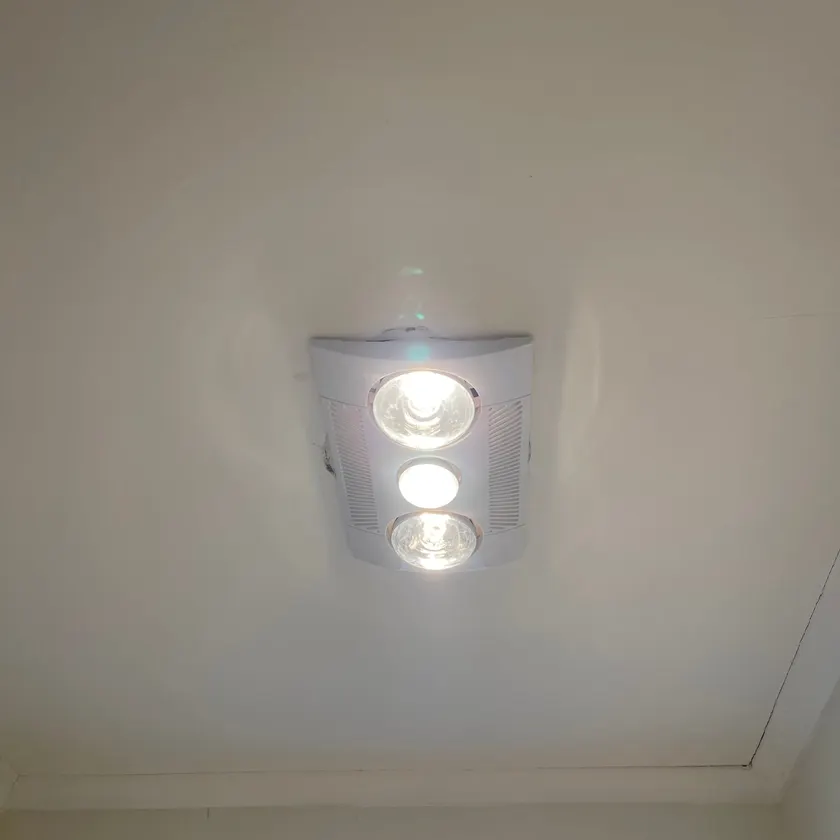
Heat lamps, 3-in-1 units and towel rails fitted by our electricians.
Frequently asked questions
What types of bathroom heaters do you install?
3-in-1 heat, fan and light units, heat lamp units, ceiling fan heaters, wall-mounted strip and panel heaters, and plug-in or hard-wired heated towel rails.
Do I need an electrician for bathroom heater installation in Geelong?
Yes. A heater wired into the house is electrical installation work, which in Victoria must be done by a licensed electrician. You should receive a Certificate of Electrical Safety when the job is finished.
How long does it take to install a bathroom heater?
Replacing a ceiling unit with a similar one usually takes one to two hours. A new heater or towel rail with new wiring takes longer, and we tell you what to expect when we quote.
Do I need to buy the heater before booking?
No. We can supply the unit, or install one you have bought. If you are buying your own, tell us the model when you book so we can check it suits the room and the wiring.
Can you replace my old 3-in-1 heat, fan and light unit?
Yes. We remove the old unit, match or adjust the ceiling opening, reconnect the ducting and switch, and test each function. It is a job we do regularly.
Can a heat lamp be fitted where the old one was?
Yes. A like-for-like swap into the same opening is usually the quickest bathroom heater job. It is still electrical work, so it must be done by a licensed electrician, and you should receive a Certificate of Electrical Safety for it.
Does a heated towel rail need to be hard-wired?
No. Some rails plug into a power point. Hard-wiring hides the cable in the wall and lets the rail run from a wall switch or timer, and it must be done by a licensed electrician.
Can a heated towel rail be put on a timer?
Yes. A timer warms the rail before your usual shower time and turns it off afterwards, so it is not running all day.
Is the installation messy or disruptive?
A ceiling unit swap makes a little plaster dust, which we clean up. The power to that circuit is off for part of the visit. Concealing a cable in a finished wall is more involved, and we explain what it means for your bathroom at the quote.
What should I do to prepare for the installation?
Clear the vanity top and the floor under the work area, and make sure we can reach the roof space access hatch and the switchboard. If you supplied the heater, have it unopened and ready.
Do I need to be home during the installation?
An adult needs to let us in and confirm where the heater and the switch will go. After that you do not need to stay in the room, and we walk you through the controls before we leave.
Still have a question? Ask the CabledIN team.