
- Typical time on site
- One to two hours for a like-for-like swap
- What we connect
- Electric ovens, stoves, ceramic and induction cooktops
- Gas
- Electrical connection only. Gas needs a licensed gasfitter
- Who does it
- Licensed electricians, REC 30925
Oven and cooktop installation in Geelong: what we connect
- Built-in electric ovens. Single wall ovens, under-bench ovens, double ovens and combination steam or microwave ovens.
- Freestanding stoves. Upright cookers with the oven and cooktop in one appliance, including replacing an old stove with a new one in the same gap.
- Electric cooktops. Ceramic and solid hotplate cooktops.
- Induction cooktops. Including the circuit and switchboard work they often need.
- The electrical side of gas appliances. A power point for the ignition of a gas cooktop, or the oven connection on a dual fuel stove. The gas connection itself is a job for a licensed gasfitter.
Appliance connections are regular work for us. Our job records show more than 70 appliance jobs, most in Bannockburn, Lara and Leopold, with 20, 25 and 32 amp circuit protection and 15 and 20 amp outlets among the parts we fit most. For dishwashers, dryers and other fixed appliances, see our appliance installation page.
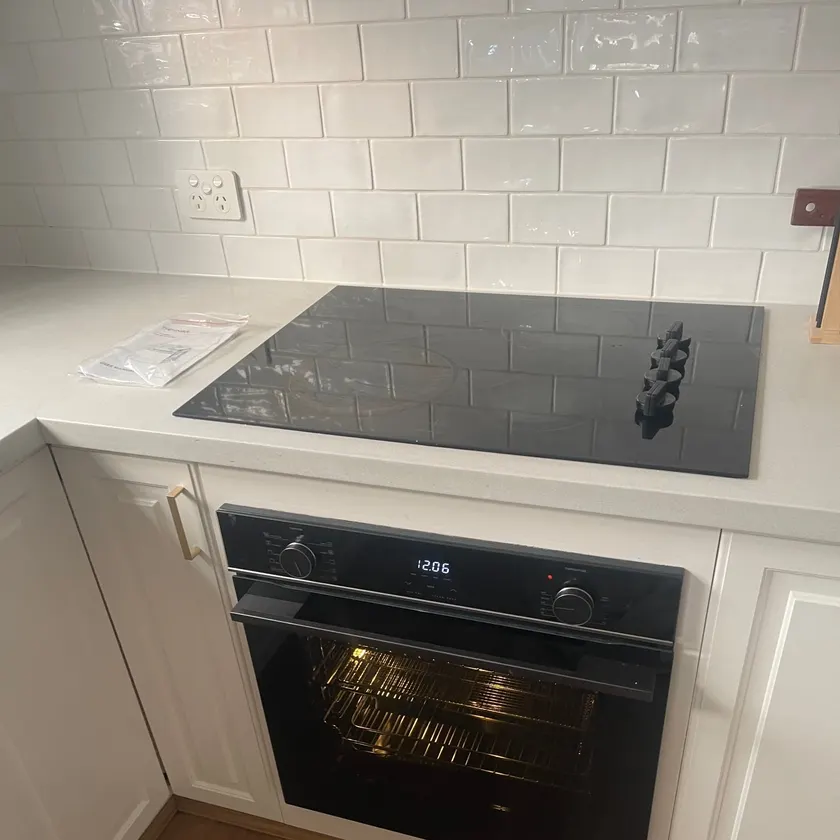
What an oven or cooktop needs from your wiring
Cooking appliances are among the biggest electrical loads in a house. Three things have to be right:
- The circuit. Most ovens and all full-size cooktops are hard-wired to their own circuit from the switchboard. Some smaller ovens are made to plug into a standard power point. The installation instructions for your model say which, and how much current it draws.
- The cable. The existing cable has to be large enough for the new appliance. A cable that suited a 1990s oven may not suit a modern double oven or an induction cooktop.
- The isolating switch. Energy Safe Victoria's guidance is that every cooking appliance with an open cooking surface needs an isolating switch that is visible and readily accessible, and is not mounted on the appliance itself. No switch or power point should sit within 150 mm of the edge of the cooking surface.
Older kitchens often have the switch in the wrong place, or none at all. We fix that as part of the connection.
Talk to a licensed Geelong electrician (REC 30925).
Induction cooktops and your switchboard
Induction is fast, easy to clean and precise, and more kitchens are moving to it. It also asks more of the house than the cooktop it replaces. A full-size induction cooktop can draw considerably more current than a ceramic cooktop, and far more than the single power point a gas cooktop uses for its ignition.
Before you buy, three questions need an answer:
- Is the existing cooktop cable big enough? If not, a new, larger cable has to be run from the switchboard to the kitchen.
- Is there room at the switchboard? The cooktop needs its own circuit breaker and safety switch (RCD). A full board, or an old fuse board, may need a switchboard upgrade first.
- Can the supply to the house carry it? In a home that already runs electric hot water, air conditioning or an EV charger, a large cooktop can push the total load past what the supply was sized for. Powercor lists new appliances among the common reasons households upgrade their supply. Where that applies, we handle the application as part of a mains upgrade.
Many homes need none of this. Some cooktops also have a setting that limits their maximum draw to suit a smaller circuit. We check the model, the cable and the board, and tell you plainly which case you are in.
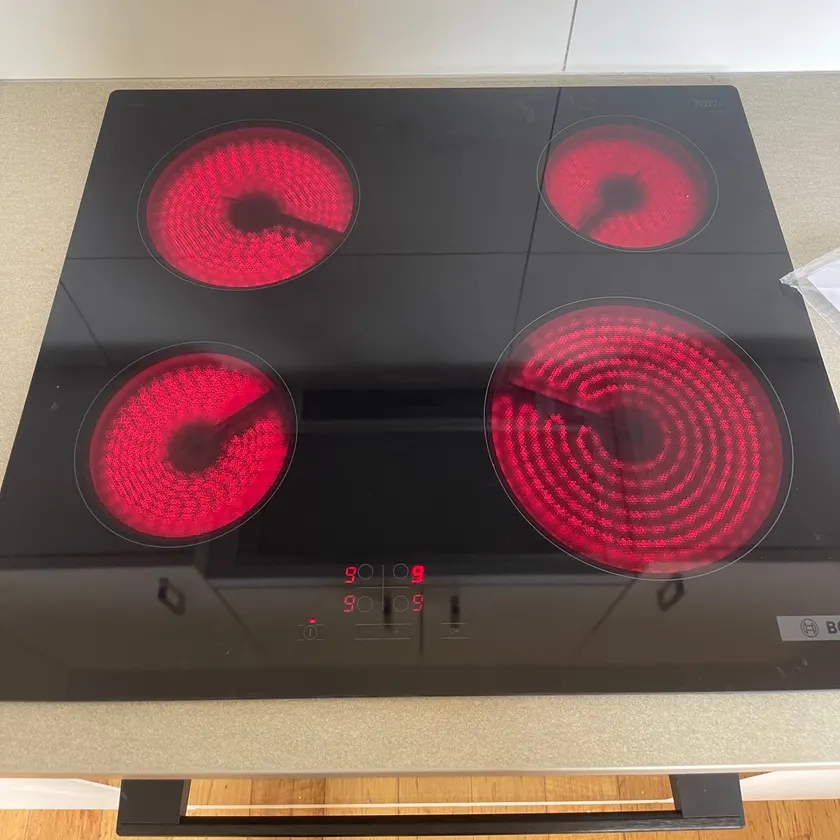
Replacing like for like, or changing appliance type
| Change | What it usually involves |
|---|---|
| Old electric oven to a similar new one | Disconnect, check the circuit, connect and test. Usually the simplest job. |
| Single oven to a double or larger oven | Check the cable and breaker size. May need a larger circuit. |
| Freestanding stove to a new freestanding stove | Often a straight swap if the new stove draws no more than the old one. |
| Freestanding stove to separate oven and cooktop | Usually two connections, and often a second circuit. |
| Ceramic cooktop to induction | Check the cable size and the breaker. Sometimes a new circuit. |
| Gas cooktop to induction | A new dedicated circuit from the switchboard. The gas line is capped by a gasfitter. |
Before you buy: a short checklist
- Measure the cut-out. Compare the cabinet or benchtop opening with the cut-out size in the new appliance's instructions. Changes to cabinetry or stone are work for a cabinetmaker or stonemason, and are best done before we arrive.
- Find the electrical rating. The specification sheet lists the current or power the appliance needs. Send it to us and we can tell you early whether your circuit is likely to suit.
- Check ventilation clearances. Induction cooktops and built-in ovens need the air gaps shown in their instructions.
- Think about what is above it. A new cooktop is a good time to sort out the rangehood.
Not sure what you need? Tell us what is happening and we will talk it through.
What happens on the day
- Check the appliance and the circuit. We read the rating plate, then check the cable, the breaker and the isolating switch.
- Power off. The circuit is switched off and proved dead.
- Old appliance out. The old oven or cooktop is disconnected and lifted out.
- Any circuit work. A new cable, breaker or isolating switch is installed if the job needs one.
- Connect and fit. The new appliance is connected, earthed, slid or lowered into place and secured.
- Test and hand over. The circuit is tested, each element or zone is run, and we show you the isolating switch.
- Certificate. You receive a Certificate of Electrical Safety for the work. Keep it with the appliance paperwork.
Oven and cooktop electrical faults
If the oven or cooktop trips the power every time it is turned on, has gone completely dead, or works on some elements and not others, the cause may be in the appliance or in the wiring that feeds it. Our electricians test the circuit, the isolating switch and the connection, and tell you which side the fault is on. A failed circuit, a burnt connection or a faulty switch we repair on the spot where we can. A new appliance with an internal fault is normally a matter for the manufacturer's warranty.
If you notice a burning smell, scorch marks at the switch or a tingle from the appliance, turn it off at the isolating switch and the switchboard and call our emergency electrician line.
Why choose CabledIN for your oven or cooktop
- Licensed Victorian Registered Electrical Contractor, REC 30925
- More than 20 years in the trade, based in North Geelong
- Lifetime workmanship warranty
- 2,000+ five-star Google reviews
- A Certificate of Electrical Safety with every job
Call 1300 025 555 or request a quote online.
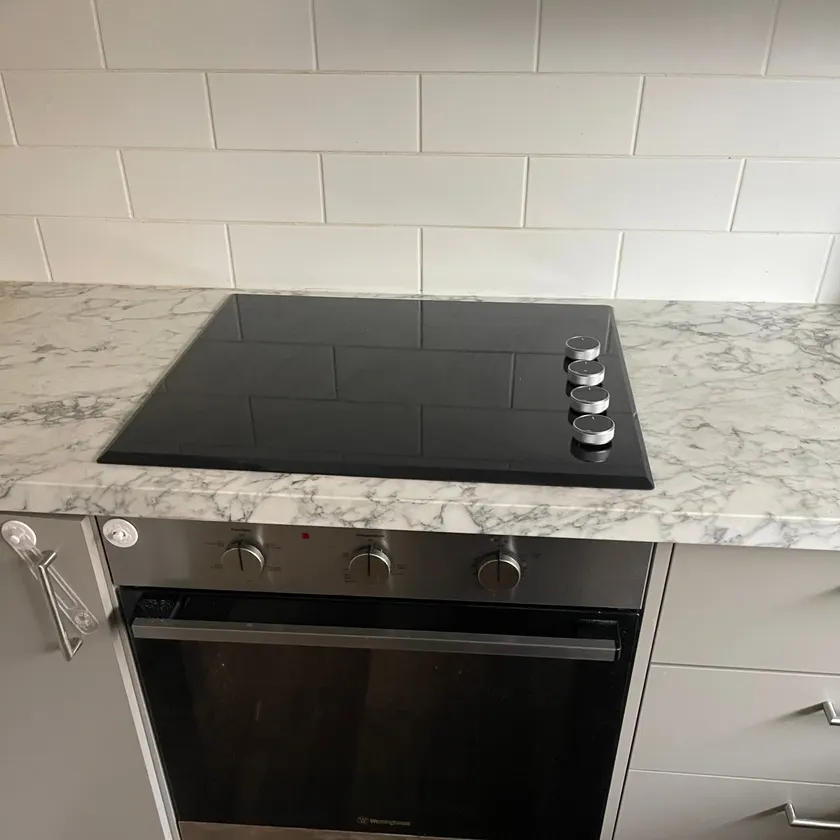
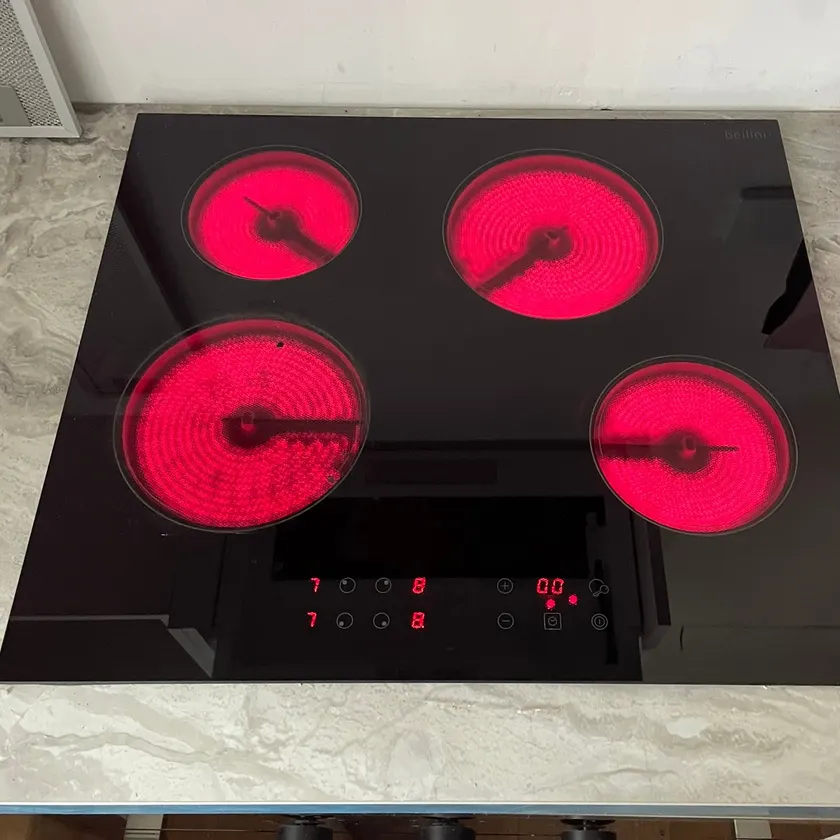
Recent oven and cooktop jobs around Geelong
Ovens, stoves and cooktops connected and tested by our electricians.
What customers say
Thanks was great installation of electric cooktop & great communication throughout as well. Made sure all good before leaving & showed how works too.
Rebecca, Google review
Frequently asked questions
Do I need an electrician for oven and cooktop installation in Geelong?
Yes, if it is hard-wired, and most are. In Victoria that connection must be made by a licensed electrician, and you should receive a Certificate of Electrical Safety for it.
Can I just plug in my new oven?
Only if the manufacturer supplies it with a plug and says it suits a standard power point. Most full-size ovens and all full-size cooktops are hard-wired to their own circuit.
Do I need to upgrade my switchboard for an induction cooktop?
Not always. It depends on the cooktop's rating, the size of the existing cable and whether the board has room for the circuit. We check all three and tell you before you buy, if you send us the model.
Can I replace a gas cooktop with an induction cooktop?
Yes. It needs a new dedicated circuit from the switchboard, because a gas cooktop only has a small power point for its ignition. A licensed gasfitter caps the gas line, and we do the electrical work.
Do you install gas ovens or gas cooktops?
We do the electrical connection only, such as the power point for the ignition or the oven side of a dual fuel stove. The gas connection needs a licensed gasfitter.
How long does it take to install an oven or cooktop?
A like-for-like swap on a suitable circuit is usually one to two hours. If a new circuit has to be run from the switchboard, allow longer. We give you a time when we quote.
Does a cooktop need an isolating switch?
Yes. Energy Safe Victoria's guidance is that a cooking appliance with an open cooking surface needs an isolating switch that is visible, easy to reach and not on the appliance itself. If your kitchen does not have one, we fit it with the cooktop.
Will you take the old oven away?
We disconnect and remove the old appliance from its position as part of the job. Ask us about disposal when you book, as many retailers also collect the old appliance when they deliver the new one.
Why does my oven keep tripping the power?
A failing element is the most common cause, followed by moisture, a damaged cable or a fault in the circuit. Leave the oven off at the isolating switch and have an electrician test it.
Still have a question? Ask the CabledIN team.