
- What we fix
- Elements, thermostats, isolating switches, hot water circuits
- What we do not do
- Tank leaks, valves and pipework. That is a plumber
- Paperwork
- Certificate of Electrical Safety for electrical installation work
- Who does it
- Licensed electricians, REC 30925
Signs your hot water fault is electrical
An electric storage unit heats water with an element, and a thermostat switches that element on and off. When either one fails, or the power stops reaching the unit, you notice it at the tap:
- No hot water at all, and no water on the ground around the tank.
- Lukewarm water, or hot water that runs out much sooner than it used to.
- Water that is far too hot. A thermostat that has stuck on is a scald risk, so turn the unit off at its switch and call.
- The hot water breaker or safety switch trips, often overnight when the unit heats.
- A burnt, melted or buzzing isolating switch beside the unit.
- A tingle from a tap or showerhead. Do not touch it again. Call Powercor on 13 24 12 immediately, then call an electrician.
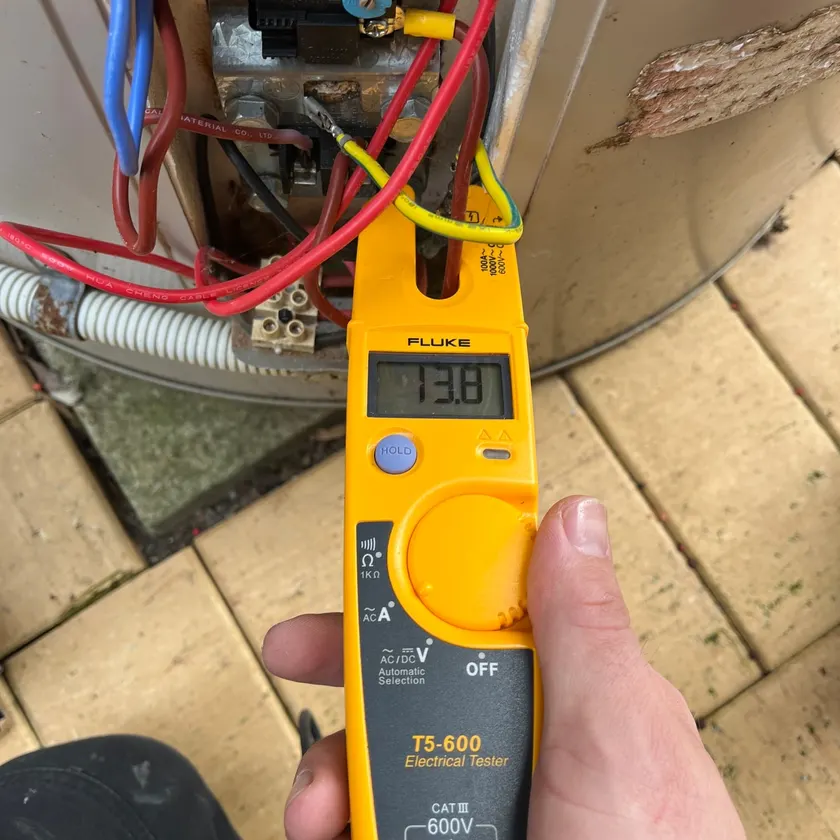
What we repair: elements, thermostats, circuits and isolators
- Heating elements. An element can burn out, or break down and leak current to earth, which trips the safety switch. We test it and replace it with one matched to the unit.
- Thermostats. We replace thermostats that no longer hold temperature, and check the over-temperature cut-out.
- Isolating switches. The switch beside the unit lives outdoors and wears out. We replace it with a weatherproof isolator.
- The hot water circuit. Damaged cable, loose connections at the unit and failed breakers at the switchboard are found and repaired.
- Protection at the switchboard. We fit a combined circuit breaker and safety switch (RCD) to the hot water circuit where it has none.
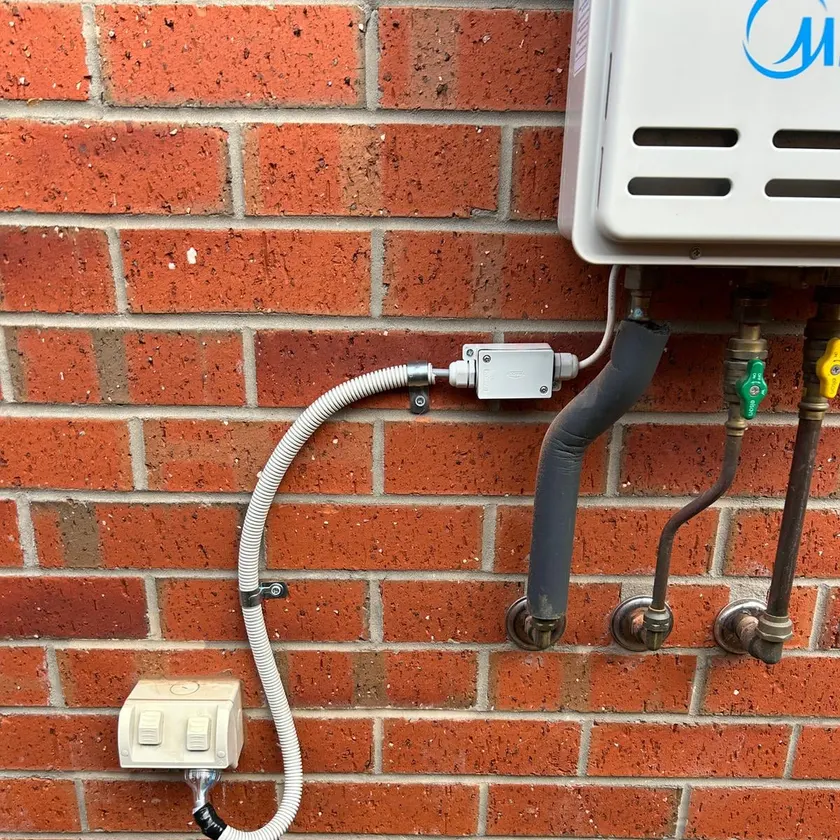
- New and replacement units. When a plumber fits a new electric storage or heat pump unit, we run or reconnect its circuit and fit the isolating switch or outlet beside it.
Our job records include element replacements with test and commission, hot water units put onto a dedicated circuit, and older hot water circuits brought up to today's safety standard, in Bannockburn, Lara and other suburbs across Geelong, the Bellarine and Golden Plains.
Talk to a licensed Geelong electrician (REC 30925).
Safe checks before you call
You can do these without tools and without opening anything:
- Check the switchboard. Look for a breaker or safety switch marked hot water that is off. Reset it once. If it trips again, leave it off and call us.
- Check the isolating switch beside the unit is on. Do not touch it if it looks burnt or melted.
- Look for water around the base of the tank. Water on the ground points to a plumbing fault.
- Think about timing. Some units are on a controlled load tariff and only heat at set times. If the tank ran cold after heavy use, it may recover by itself after the next heating period.
Do not remove the cover on the unit. The terminals behind it are live, and electrical work in Victoria is for licensed electricians only. If your safety switch is the one tripping, our guide on why a safety switch keeps tripping explains how to narrow it down.
Electrician or plumber: who to call
| What you see | Likely cause | Who to call |
|---|---|---|
| No hot water, tank dry outside | Element, thermostat or no power to the unit | Electrician |
| Breaker or safety switch trips | Element leaking to earth, or a circuit fault | Electrician |
| Water too hot | Thermostat | Electrician |
| Burnt isolating switch | Worn switch or loose connection | Electrician |
| Water leaking from the tank or valves | Tank or valve failure | Plumber |
| Low pressure, noisy pipes | Plumbing | Plumber |
| A new heat pump or electric unit going in | A new installation | Plumber for the unit and pipes, electrician for the circuit and connection |
| Tingle from a tap | Possible supply or earthing fault | Powercor on 13 24 12, then an electrician |
We work on the electrical side of electric hot water only. We do not work on gas units.
How an electric hot water repair works
- Tell us the symptoms. The brand, the tank size on the label and what the switchboard is doing all help us bring the right parts.
- Isolate and test. We turn the unit off and test the supply, the thermostat and the element with instruments, so the part that has failed is identified and not guessed.
- Quote. You get the price for the repair before we start it.
- Repair. The failed part is replaced. Changing an element means the tank is drained first and refilled before the power goes back on.
- Test and commission. We test the circuit, confirm the unit is heating and check the safety switch operates.
- Certificate. You receive a Certificate of Electrical Safety for the electrical installation work.
A full tank takes some hours to heat after a repair, so hot water does not return the moment we leave.
Not sure what you need? Tell us what is happening and we will talk it through.
Repair or replace: when the tank is the problem
An element or thermostat is worth replacing when the tank itself is sound. If the tank is leaking or badly corroded, new electrical parts will not save it, and we will say so before you spend money on them. A plumber replaces the tank. We disconnect the old unit electrically, then check the circuit, fit a new isolating switch if it needs one, and connect and test the new unit.
If you are changing to a larger unit or to a heat pump, tell us first. It may need a different circuit, and that is easier to plan before installation day.
Heat pump hot water: the electrical side
A heat pump hot water system is still an electric hot water system. Instead of heating the water with a large element, a fan and a compressor draw heat from the outside air and move it into the tank, much like a fridge working in reverse. A plumber fits the unit and the water connections. We do the electrical side:
- The circuit. The installation manual gives the unit's rating. We check it against the cable and breaker you have, and run a new circuit where the old one does not suit or there is none.
- Plug-in or hard-wired. Some heat pumps are made to plug into a dedicated weatherproof power point beside the unit. Others are wired in through an isolating switch. The manual says which, and we fit what it calls for.
- A backup element. Some models also have an electric element that can boost the tank, for example in very cold weather. It adds to the load, so it counts when we size the circuit.
- Off-peak or all day. Some heat pumps are designed to run on a controlled load (off-peak) circuit that only switches on at set times. Others need power all day. The manual says which, and we wire the unit to suit.
- Protection. We fit a combined circuit breaker and safety switch to a new circuit at the switchboard.
Connecting a hot water unit is non-prescribed electrical work, so there is no separate inspector's visit. You receive a Certificate of Electrical Safety for it, and your copy is due within 30 days.
Changing your hot water system: what the wiring needs
What the electrical side involves depends on what you have now and what is going in:
| Change | The electrical side usually involves |
|---|---|
| Old electric tank to a similar new one, same spot | Disconnect, check the circuit and isolating switch, then connect and test |
| Electric tank to a heat pump, same spot | Check the circuit, the tariff and the connection type against the manual. Sometimes the existing circuit suits |
| Heat pump in a new spot | Extend the circuit, or run a new one, to the new position, with an outlet or isolating switch at the unit |
| Gas hot water to a heat pump or electric tank | A new circuit from the switchboard, because the house may have no hot water circuit at all. A licensed gasfitter disconnects and caps the gas |
Where the outdoor unit goes
A heat pump needs open air around it, so it sits outside, often where the old tank stood. Before the spot is fixed, think about three things:
- Air. The maker's manual sets the clearances around the unit. A tight, closed-in corner may not suit.
- Noise. The fan and compressor make a steady sound while the unit runs. Keep it away from bedroom windows where you can, yours and the neighbours'.
- The cable route. The further the unit sits from the switchboard, the longer the cable run. A spot on the same side of the house as the board is usually simpler.
The switchboard also needs room for the new breaker and safety switch. If it is full or still has fuses, our guide do I need to upgrade my switchboard? explains the options. We check the circuit and the board before installation day, so the plumbing and electrical work can be booked in the right order.
Hot water circuits, safety switches and older switchboards
In many older Geelong homes the hot water circuit runs from a fuse or a breaker with no safety switch. If the board still has fuses, or has no space left, a switchboard upgrade may be the better fix, because a replacement switchboard needs safety switch protection on every circuit, including hot water. Where the board is sound, safety switch installation on the hot water circuit is a small job.
We can also check the hot water circuit as part of an electrical safety check, in your own home or a rented one. If the hot water is one of several things that have stopped working, our electrical fault finding and repairs service traces the cause. If you have lost hot water along with other circuits, or you smell burning at the board, call our 24/7 emergency electrician line.
Recent electric hot water jobs around Geelong
Elements, isolators and hot water circuits repaired by our electricians.
Frequently asked questions
Who does electric hot water repairs in Geelong?
A licensed electrician repairs the electrical parts: element, thermostat, isolating switch and circuit. CabledIN (REC 30925) covers Geelong, the Bellarine, the Surf Coast and Golden Plains. Leaks and valves need a plumber.
Why do I have no hot water all of a sudden?
On an electric unit the usual causes are a failed element, a failed thermostat or a tripped breaker. Check the switchboard for a tripped hot water breaker and reset it once. If it trips again, call an electrician.
Do I need an electrician or a plumber for my hot water system?
An electrician if the tank is dry outside but the water is cold, too hot, or tripping the power. A plumber if water is leaking from the tank, the valves or the pipes.
Why does my hot water system keep tripping the safety switch?
Most often the element has broken down and is leaking current to earth. It can also be a damaged cable or a wet isolating switch. Leave the breaker off and have it tested.
Can I replace a hot water element or thermostat myself?
No. It is electrical work, and in Victoria that is for licensed electricians only. The terminals behind the cover are live, and the work has to be tested afterwards.
How long until the water is hot again after a repair?
The repair is usually done in one visit, but a full tank then takes some hours to heat. Units on a controlled load tariff may not heat until their next heating period.
Why is my hot water only lukewarm?
A thermostat set too low or failing, or one element out of two not working, are the common electrical causes. We test both to find which it is.
Is it worth repairing an old electric hot water system?
If the tank is sound, a new element or thermostat is usually worth doing. If the tank is leaking or badly corroded, replacement makes more sense and we will tell you that upfront.
Do you repair gas hot water systems?
No. We work on the electrical side of electric hot water. Gas units need a licensed gasfitter.
Does a heat pump hot water system need its own circuit?
It needs a circuit that suits its rating, which is usually the hot water circuit or a new dedicated one. The manual says whether it plugs into a weatherproof power point or is wired in with an isolating switch, and we check both against your cable and switchboard.
Can a heat pump hot water system run on off-peak power?
It depends on the model. Some are made to run on a controlled load (off-peak) circuit, and some need power all day. The installation manual says which, and we wire the unit to suit.
Who installs a heat pump hot water system, a plumber or an electrician?
Usually both. A plumber fits the unit and the water connections. A licensed electrician does the circuit, the outlet or isolating switch and the connection, and gives you a Certificate of Electrical Safety.
Still have a question? Ask the CabledIN team.