
- Typical time on site
- One to two hours for a like-for-like swap
- What we fit
- Fixed, canopy, undermount, slide-out and island rangehoods
- Paperwork
- Certificate of Electrical Safety for the electrical work
- Who does it
- Licensed electricians, REC 30925
Types of rangehoods we install
| Type | Where it goes | Worth knowing |
|---|---|---|
| Fixed rangehood | Under a cupboard, visible from the front | The simplest and most common replacement. Often recirculating. |
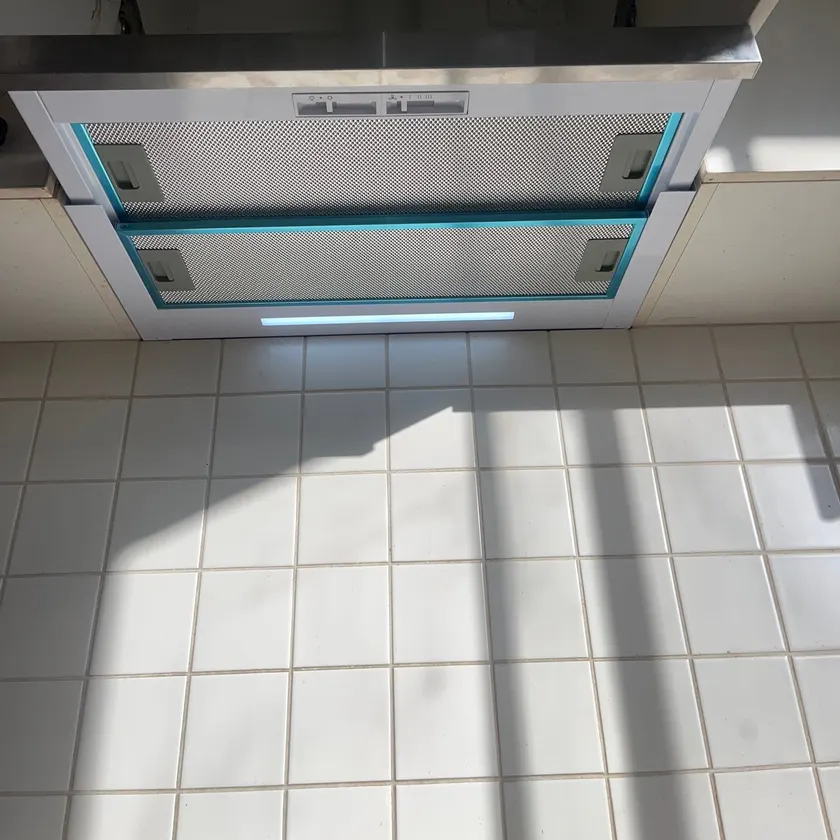
| Slide-out (retractable) | Hidden in the cupboard, pulled out to use | Neat in a small kitchen. Usually turns on when the front is pulled out. |
| Undermount (integrated) | Built up inside the overhead cupboard | Nearly invisible. The cupboard has to be made or altered to suit. |
| Canopy | On the wall with a flue to the ceiling | Strong extraction and a feature in the kitchen. Normally ducted. |
| Island | Hung from the ceiling over an island bench | Needs power and ducting brought across the ceiling, and solid framing to hang from. |
| Downdraft | Rises from the benchtop behind the cooktop | Ducting runs under the bench or floor. Best planned with a new kitchen. |
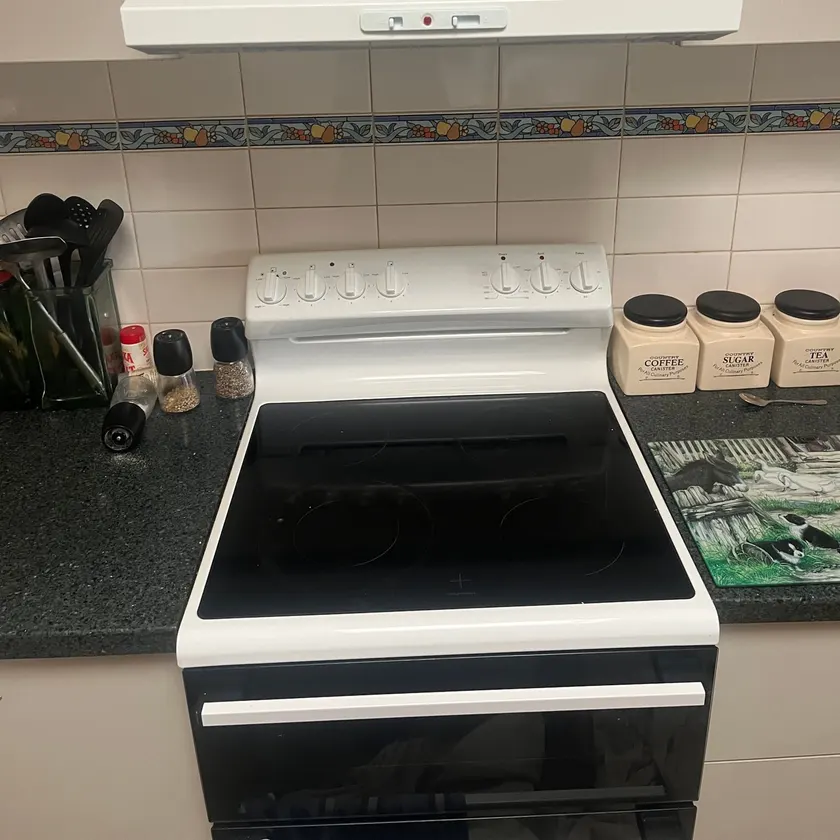
Ducted or recirculating: are all rangehoods vented outside?
No. There are two ways a rangehood deals with what it collects:
- Ducted. Steam, heat and smells are carried through a duct to the outside. This is the better performer, since everything leaves the house.
- Recirculating. Air passes through a grease filter and a carbon filter and is blown back into the kitchen. It removes grease and some odour but not heat or moisture, and the carbon filter has to be replaced regularly. It suits apartments and kitchens on an inside wall where a duct cannot be run.
Many rangehoods can be set up either way. If a ducted rangehood is replacing a recirculating one, the duct route decides how big the job is: straight up through a roof space to an eave or roof vent is simplest, and a short run through an outside wall is simpler again. We check the route when we quote. If a new opening through the roof itself is needed, we tell you then how that part is handled.
Talk to a licensed Geelong electrician (REC 30925).
Which rangehood is best: extraction power and noise?
Extraction power. Rangehoods are rated by the volume of air they move in an hour, shown as cubic metres per hour. A small enclosed kitchen with an electric cooktop needs less than a large open-plan kitchen where cooking smells drift into the living area. Wok cooking, frying and large cooktops all call for more. A rangehood should be at least as wide as the cooktop below it.
Noise. The noise figure on the box is in decibels, usually measured at full speed. Three things keep a rangehood quiet in real use:
- Buying more extraction than you need and running it on a lower speed.
- Ducting that is the diameter the manufacturer specifies, short and with few bends. A squeezed or kinked duct is the most common reason a good rangehood is loud and weak.
- A motor mounted away from the kitchen. Some models put the motor in the roof space or on an outside wall.
Power for a rangehood
Most rangehoods plug into a power point hidden in the cupboard above or inside the flue cover. Some are hard-wired. Either way the power has to be at the right spot, and that is often what turns a simple swap into a slightly bigger job.
- No power point at the rangehood. Common where an old hard-wired unit is being replaced, or where there was never a rangehood. We install a new power point in the cupboard.
- Power point in the wrong place. A canopy rangehood needs it inside the flue, not beside it.
- Island rangehoods. Cable is run through the ceiling to the fixing point.
A rangehood draws little power, so it rarely needs its own circuit. A new cooktop underneath is a different matter. See our oven and cooktop installation page for what an induction cooktop needs.
Height and position above the cooktop
Every rangehood and every cooktop comes with a minimum clearance between the two, set by the manufacturers. Gas cooktops generally need more clearance than electric and induction ones. Mounted too low, a rangehood is a hazard and gets in your way. Mounted too high, it lets steam escape around the sides.
We check both sets of instructions and mount the rangehood within the range they allow, centred over the cooktop. Have the instructions for both appliances on hand when we arrive, or send us the model numbers when you book.
Not sure what you need? Tell us what is happening and we will talk it through.
What happens on the day
- Check the rangehood, the space and the power. We compare the new unit with the cupboard or wall, confirm the height, and check the power and the duct.
- Power off and old unit out. The old rangehood is disconnected and removed.
- Power to the right spot. A power point is added or moved if needed.
- Mount the rangehood. It is fixed to the wall, the cupboard or ceiling framing, level and centred.
- Connect the ducting. The duct is joined and sealed, or the carbon filters are fitted for a recirculating setup.
- Test. We run every fan speed and the lights, and check air is leaving at the outlet.
- Clean up and certificate. The old unit and packaging are removed, and you receive a Certificate of Electrical Safety for the electrical work.
Rangehood repairs and replacement
Before replacing a rangehood that seems weak, wash or replace the filters. A metal grease filter clogged with oil is the usual reason for poor suction, and a carbon filter past its life is the usual reason for lingering smells. Both are owner maintenance jobs covered in the manual.
Call an electrician if the rangehood has no power, the lights or fan work only sometimes, the switches have failed, it trips the power, or the motor hums without turning. We test the power supply and the unit and tell you whether it is worth repairing. On an older rangehood with a failed motor, replacement is usually the better value, and the existing power point and duct can often be reused.
Why choose CabledIN for your rangehood
- Licensed Victorian Registered Electrical Contractor, REC 30925
- More than 20 years in the trade, based in North Geelong
- Lifetime workmanship warranty
- 2,000+ five-star Google reviews
- A Certificate of Electrical Safety for the electrical work
Call 1300 025 555 or request a quote online.
Recent rangehood jobs around Geelong
Rangehoods fitted, wired and ducted by our electricians.
Frequently asked questions
Do I need an electrician for rangehood installation in Geelong?
If the rangehood is hard-wired, or a power point has to be added or moved, yes. In Victoria that work must be done by a licensed electrician. Having the electrician mount the unit as well means one visit and one person responsible.
Do all rangehoods need to be vented outside?
No. Recirculating rangehoods filter the air and return it to the kitchen. Ducting to the outside works better because it removes heat and moisture too, so we recommend it where the building allows.
Can you replace a recirculating rangehood with a ducted one?
Usually, if there is a practical route for the duct to an outside wall, an eave or the roof. We check the route when we quote and tell you what is involved.
How high should a rangehood be above the cooktop?
The manufacturers of the rangehood and the cooktop each set a minimum clearance, and gas cooktops generally need more than electric ones. We mount the rangehood within the range both sets of instructions allow.
How much extraction power do I need?
It depends on the size of the kitchen, whether it is open plan, and how you cook. Large open kitchens, gas burners and frying need more. Choose a rangehood at least as wide as the cooktop.
How long does it take to install a rangehood?
Replacing one with the same type and size is usually one to two hours. New power, new ducting or a change of style takes longer, and we tell you how long when we quote.
Can I supply my own rangehood?
Yes. Check it suits the width of your cooktop and the cupboard or wall space before buying, and send us the model number so we can confirm the power and ducting it needs.
Why is my rangehood noisy or not pulling air?
Clogged filters are the first thing to check. After that, the usual causes are a crushed or undersized duct, a blocked outside vent or a worn motor.
Still have a question? Ask the CabledIN team.