
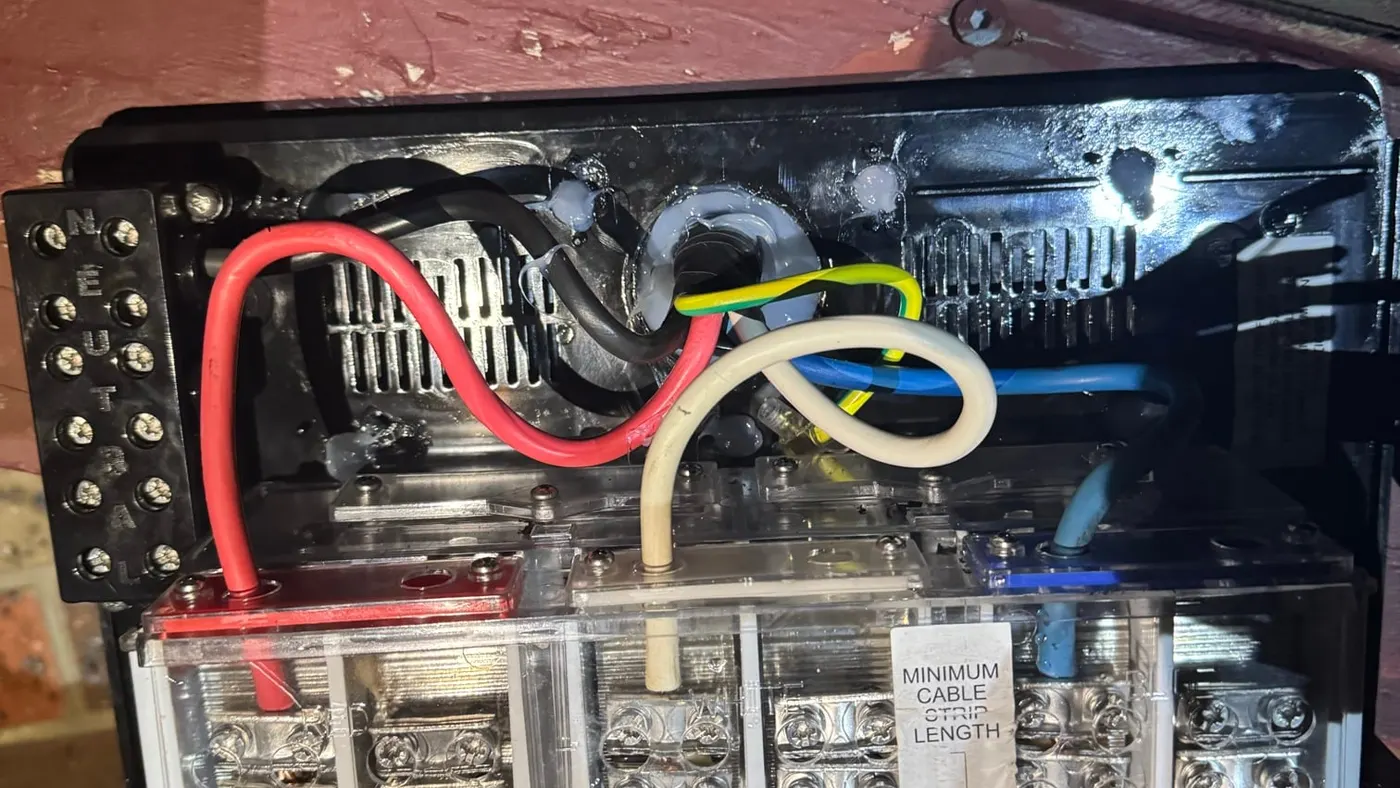
The answer to "do I need three-phase power at home?" is usually no: the Australian Government's Your Home guide says a single-phase connection is adequate for most all-electric households, and three-phase matters only for a few large loads.
As energy.gov.au puts it, three-phase power is a supply that uses five wires instead of three and provides more electricity for more or larger appliances. It can matter for the fastest home EV chargers, electric instantaneous hot water, larger air conditioning and workshop machinery. Only a registered electrical contractor (REC) can apply to Powercor to change your supply, and the work needs a Certificate of Electrical Safety.
- Most homes
- Single-phase: standard for most Australian homes (Your Home)
- Three-phase
- Five wires instead of three, for more or larger appliances (energy.gov.au)
- Who applies to Powercor
- Only a registered electrical contractor (REC)
- Paperwork
- Every supply change needs a Certificate of Electrical Safety
What is three-phase power?
Three-phase power is an electricity supply that comes into your property on five wires instead of three, so it can run more or larger appliances. The federal energy.gov.au site puts it this way: "A single-phase supply provides mains electricity to your property through 3 wires. A three-phase supply uses 5 wires and provides more electricity to run more or larger appliances." It adds that a few properties have a two-phase supply, on four wires.
Your Home says single-phase is standard for most Australian homes, and three-phase is less common. Three-phase matters when one appliance needs a lot of power, or several big ones run together.
Not sure which you have? A licensed electrician can tell from your meter box and switchboard. We check the supply as part of any job that adds a large load.
Which homes might need three-phase power?
Homes with one of a few large loads. The table sets out what Powercor and the Australian Government's Your Home guide say about each.
| Load | What the sources say | Do you need three-phase? |
|---|---|---|
| The fastest home EV chargers | Powercor: the fastest home chargers need three-phase power, so are not suitable for all customers. Your Home: three-phase can in theory charge up to three times faster, if the car and charger can use it | Only for the fastest charging, and only if your car can use it |
| Electric instantaneous hot water | Your Home: these units usually require a three-phase connection, and single-phase units have flow rates suited only to basins, not showers | Usually, for a whole-house unit |
| Larger air conditioning, such as a big ducted reverse-cycle system | Powercor lists larger air-conditioning systems among the reasons people change their supply | Sometimes. The unit's specifications say which supply it needs |
| Workshop machinery | Powercor lists machinery among the reasons people change their supply | Sometimes, depending on the machine |
| An induction cooktop | Your Home: it is unlikely you will need three-phase electricity for the cooktop | Rarely |
| Several big loads at once | Powercor lists increasing how much electricity your property can use as a change in its own right | Not always: a capacity increase or load management may do |
For the loads themselves, see electric hot water installation and shed, garage and granny flat power for a workshop.
Talk to a licensed Geelong electrician (REC 30925).
Can I avoid three-phase with single-phase options?
Often, yes. Before changing the supply, it is worth checking whether the load fits on single-phase:
- Load management: a controller that limits how much power the big appliances draw at the same time, so they share the supply instead of all running flat out. We set up load management, for example on EV chargers.
- A single-phase EV charger: Powercor says a single-phase home charging unit suits people who drive their EV regularly, and Your Home says many EV owners find that charging from a standard power point is all they need.
- Power-sharing appliances: Your Home says some lower-power induction cooktops avoid the need to upgrade the electrical connection by sharing power between zones. Our guide to induction cooktop wiring explains more.
- A capacity increase: Powercor treats increasing how much electricity your property can use as a separate change from moving to three-phase.
The Victorian Government's guide to getting your home EV-ready says your electrician will advise what charging level can be achieved in your home. We look at your switchboard and what you already run before recommending three-phase, and we tell you if single-phase will do.
Who does what: Powercor or your electrician?
Your electrician applies and does the work on your side; Powercor approves the change and does the work on its network. Powercor says alteration applications, including changing between single-phase and three-phase, can only be submitted by a registered electrical contractor (REC), and that all works require a Certificate of Electrical Safety.
| Step | Who does it |
|---|---|
| Check your load, switchboard and supply, and suggest single-phase options | Your electrician |
| Lodge the alteration application through Powercor's eConnect portal | Your electrician (only a REC can) |
| Assess the request, and decide whether the network needs an upgrade | Powercor |
| Arrange the appointment for the works | Your electrician, with Powercor |
| Work on the poles and wires | Powercor |
| Work on your mains, switchboard and wiring | Your electrician |
| Independent inspection of prescribed work, such as consumer mains | An independent electrical inspector |
| Certificate of Electrical Safety | Your electrician |
Powercor says some changes need an upgrade to its network when the existing network cannot support them, and it recommends applying early to allow time to assess and complete the works. Timing and Powercor's own charges depend on your property and on Powercor's assessment. Mike, a customer whose home already had three-phase, wrote that our electrician "helped organise the Powercor side of the job" and came back to "replace the old three-phase mains fuse box".
What does changing to three-phase involve?
An assessment, an application to Powercor, then work on both sides of the connection by appointment. The usual steps are:
- We look at what you want to run, your switchboard and your current supply, and tell you whether single-phase options will do.
- If three-phase is the right answer, we lodge the alteration application with Powercor.
- Powercor assesses it. If its network cannot support the change, it becomes a network upgrade.
- We arrange the appointment with Powercor for the works.
- On your side, the mains and switchboard are upgraded where needed to suit three-phase.
- Prescribed work, such as work on consumer mains, is independently inspected, and we issue a Certificate of Electrical Safety.
Since March 2026, CabledIN has completed more than 60 jobs on consumer mains, underground supply and three-phase power, including homes in Newtown, Highton and Hamlyn Heights. The three-phase work among them has included mains boxes, mains cables, EV charger circuits and balancing the load across the three phases. Our services include overhead and consumer mains upgrades, electrical panel replacement or upgrading, and switchboard upgrades.
Not sure what you need? Tell us what is happening and we will talk it through.
Is three-phase worth it for an EV charger?
Only if you want the fastest home charging and your car can use it. Your Home says three-phase can in theory charge up to three times faster, but you need to make sure the vehicle and the charging station can both use it. Powercor says a single-phase home charger suits people who drive their EV regularly, while the fastest chargers need three-phase power and are not suitable for all customers.
Your Home also says home chargers must be installed by a licensed electrician. We install single-phase and three-phase EV chargers, including the switchboard work and the Powercor application where a job needs them, set up load management, and fit an isolating switch beside each charger. See electric car charger installation and can a normal electrician install an EV charger?
What to do next
Start with what you want to run. List the charger, hot water unit, air conditioner or machine you are planning, then book an electrician to check your switchboard and supply before you buy. CabledIN Electrical Solutions (REC 30925), based in North Geelong, does mains, switchboard, supply and three-phase upgrades, including the Powercor application. We work in homes across greater Geelong, the Bellarine Peninsula, the Surf Coast, Golden Plains and Werribee. Call 1300 025 555; we are open 24 hours, 7 days.
See mains upgrades and Powercor defect repairs, switchboard upgrades and our Geelong electrician page for the suburbs we cover. We price the job once we have seen it, so you know the price before any work starts. Book an electrician on 1300 025 555.
Frequently asked questions
How do I know if my home has three-phase power?
The simplest way is to have a licensed electrician look at your meter box and switchboard. energy.gov.au explains that a single-phase supply uses three wires and a three-phase supply uses five, and Your Home says single-phase is standard for most Australian homes. CabledIN checks your supply as part of any job that adds a large load, such as an EV charger.
Do I need three-phase power for an EV charger?
Not usually. Powercor says a single-phase home charging unit suits people who drive their EV regularly, and only the fastest home chargers need three-phase power. Your Home says three-phase can in theory charge up to three times faster, but only if the car and the charger can both use it. Your electrician can advise what charging level your home can achieve.
Does ducted air conditioning need three-phase power?
Not always. Powercor lists larger air-conditioning systems among the reasons people change their supply, but whether a particular ducted reverse-cycle system needs three-phase depends on the unit, and its specifications say which supply it needs. CabledIN checks the switchboard and supply before an air conditioning install is priced, and tells you if the board has no room.
Who applies to Powercor for three-phase power?
Your electrician. Powercor says alteration applications, such as changing from single-phase to three-phase, can only be submitted by a registered electrical contractor (REC), and the works are done by an appointment your electrician arranges. All works need a Certificate of Electrical Safety. CabledIN Electrical Solutions is REC 30925 and lodges these applications for its customers.
Do I need three-phase power for an induction cooktop?
Probably not. The Australian Government's Your Home guide says a typical single-phase connection is adequate for most all-electric households and that it is unlikely you will need three-phase electricity for the cooktop. Induction cooktops do usually need a new dedicated circuit from the switchboard, and the switchboard may need upgrading if it has no room.
What are the alternatives to upgrading to three-phase?
The main alternatives are load management, which limits how much power big appliances draw at once; a single-phase EV charger, which Powercor says suits people who drive their EV regularly; power-sharing appliances, such as some induction cooktops; and a capacity increase on your existing supply, which Powercor treats as a separate change. An electrician can tell you which fits your home.
Does electric instantaneous hot water need three-phase power?
Usually, for a whole-house unit. The Australian Government's Your Home guide says electric instantaneous hot water systems draw a lot of power and usually require a three-phase connection, which is not available to all homes. Single-phase units are available, but their flow rates are very limited, making them suitable only for basins and not showers.
Still have a question? Ask the CabledIN team.