
Split system heating: is reverse cycle worth it for a Geelong winter? For most homes, yes. A reverse-cycle split system does not make heat the way a bar or fan heater does. It moves heat from the outside air into the room. Energy Rating says that in normal Australian conditions it moves three to five units of heat for every unit of electricity it uses, while a standard electric heater turns one unit into about one unit of heat. It pays off when the system suits the room, runs at a sensible temperature and has its own circuit.
- How it heats
- Moves heat from the outside air into the room
- Heat per unit of electricity
- Three to five units (Energy Rating)
- Winter setting
- 18 to 20 °C (energy.gov.au)
- Electrical work
- Its own circuit and safety switch at the switchboard, plus an outdoor isolator
Why a reverse-cycle split system heats so efficiently
A reverse-cycle air conditioner is a heat pump. In heating mode it absorbs heat from the outside air, even on a cold day, and releases it indoors. In summer it runs the other way to cool the house. Your Home, the Australian Government's guide to sustainable homes, rates heat pumps, including reverse-cycle air conditioners, as the most energy-efficient systems you can buy.
| Heater | How it makes heat | Heat for each unit of electricity |
|---|---|---|
| Reverse-cycle split system | Moves heat from the outside air into the room | Three to five units in normal Australian conditions |
| Bar, fan, convection or radiant heater | Runs current through a heating element | About one unit |
The figures are Energy Rating's. Heating and cooling account for around 40 per cent of household energy use in Australia, so the gap adds up. One caution: a reverse-cycle system makes less heat as the outside air gets colder, so size it for cold mornings, not mild afternoons.
Single split, multi-head or ducted reverse cycle: which suits your home?
All three heat and cool. The difference is how many rooms they reach.
| Type | How it works | Best for |
|---|---|---|
| Single split system | One indoor unit on the wall and one outdoor unit, joined by refrigerant pipes | One room or an open-plan living area |
| Multi-head split system | Two or more indoor units run from one larger outdoor unit, each with its own remote | Several rooms from one outdoor unit |
| Ducted reverse cycle | A hidden indoor unit, usually in the roof space, feeds a vent in each room through ducts, often in zones | Heating and cooling most or all of the home |
Your Home rates wall-mounted split systems as the most efficient type, and energy.gov.au notes that ducted systems use a larger fan and lose some energy through the ductwork, so they cost more to run. A ducted system works best with zones that shut off empty rooms. We install all three: see split system, multi-head and ducted installs.
Talk to a licensed Geelong electrician (REC 30925).
How to size a split system for winter heating
Energy Rating puts it plainly: a system that is too small works harder and may not hold the temperature, and one that is too big costs more to buy and to run. Size depends on:
- The room. Floor area and ceiling height. Open-plan areas and raked ceilings need more capacity than the floor area suggests.
- Windows, shade and insulation. Window size and direction, shading, and how well the room holds its heat.
- The cold. Energy Rating's advice for a cool climate is a system that can cope in the cold. In Geelong a reverse-cycle system often does most of its work as a heater, so we size it for cold mornings as well as hot days.
When you compare models, check the heating capacity in kilowatts (kW), not only the cooling figure. The Zoned Energy Rating Label shows heating at two outdoor temperatures, and the colder one is the better guide to a frosty morning. Our installation page has a rough kW guide by room size, and we confirm the size on site.
Variable-speed compressors: steady heat without the stop-start
The compressor in the outdoor unit does the work of moving heat. A fixed-speed compressor runs at full power or not at all, so it heats hard, stops, lets the room cool and starts again.
A variable-speed compressor speeds up or slows down to match what the room needs. energy.gov.au says this technology is now available in many reverse-cycle air conditioners, can reduce running costs, particularly over longer operating periods, and generally gives faster heat-up times and a more comfortable temperature. That suits winter, when heating often runs for hours. If you are not sure whether a model has one, ask us when we quote.
Where the indoor and outdoor units go, including a double-storey home
The indoor unit goes high on a wall where it can reach the whole room without blowing straight onto a bed or the couch. Warm air collects under the ceiling, so a ceiling fan with a reversing switch helps move it back around the room.
The outdoor unit needs:
- A solid base or wall brackets.
- Clear space above it for airflow, as energy.gov.au advises.
- Shade from direct sun where possible, especially the afternoon sun.
- A quiet spot. Energy Rating notes that outdoor noise matters near a window, a bedroom or a neighbour's house.
- A sensible distance. Your Home notes the indoor unit can sit up to 15 metres from the outdoor unit. Shorter pipe runs are simpler.
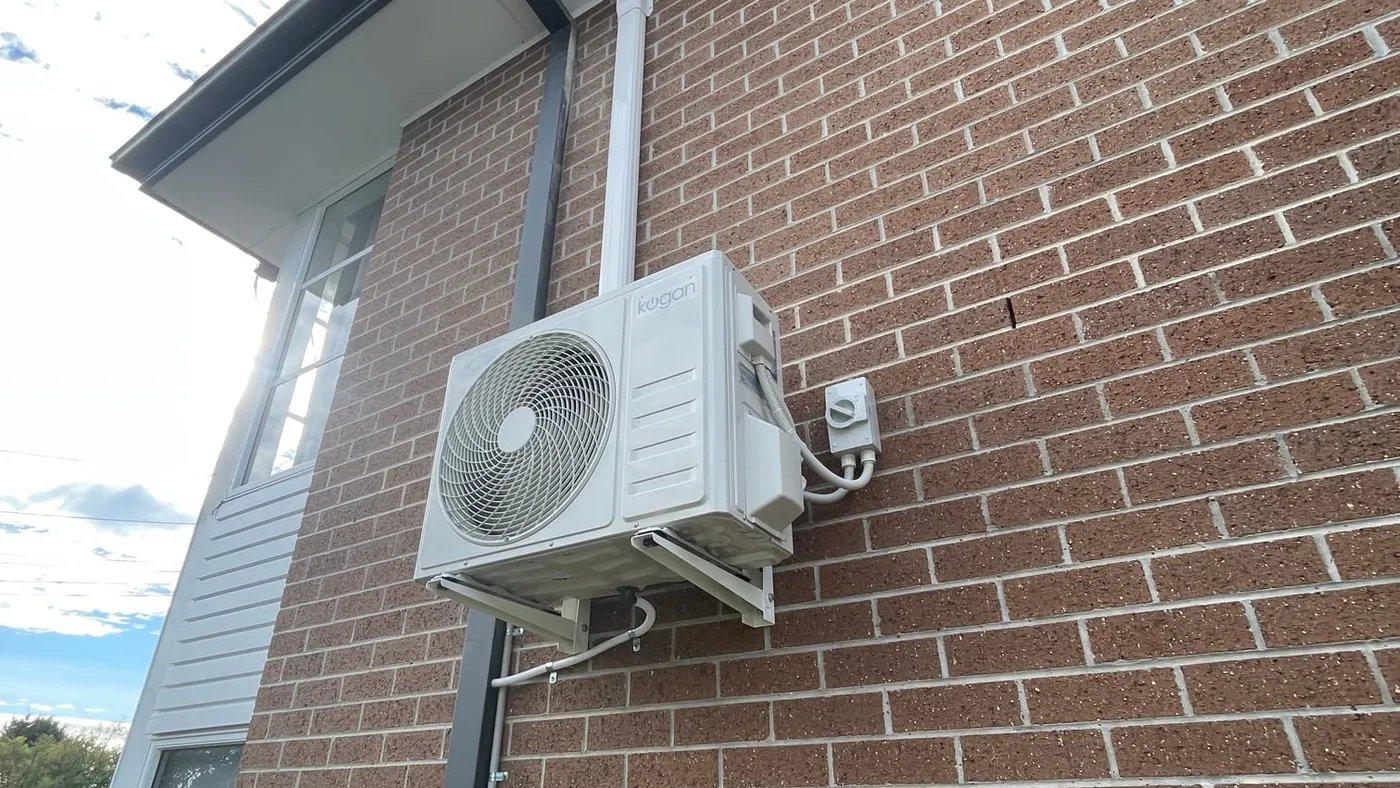
Double-storey homes. For an upstairs room, the outdoor unit usually sits on the ground below, with the pipework run down the outside wall inside a pipe cover, or it goes on wall brackets. The choice depends on the wall, the pipe route and safe access later. We mark both positions with you before anything is fixed.
Not sure what you need? Tell us what is happening and we will talk it through.
The electrical side: its own circuit, an isolator and a certificate
Every air conditioner we install gets:
- Its own circuit from the switchboard, protected by its own safety switch. A fault in the unit then trips only the air conditioner, and the rest of the house stays on.
- A weatherproof isolator beside the outdoor unit.
- A circuit and isolator sized to the unit's rating. An air conditioner is one of the biggest loads in most homes.
Switchboard capacity. Older homes may not have room on the switchboard for another circuit, or may still have ceramic fuses and no safety switches. We check the switchboard and the existing load before we quote, and if it needs work we tell you then, not on the day. A switchboard upgrade can be part of the same job.
Licences and certificates. The electrical connection must be done by a licensed electrician. In Victoria, installing the system itself is plumbing work, done by a licensed plumber who is also licensed to handle refrigerant. Our team holds all three licences, and you receive a Certificate of Electrical Safety and a plumbing Certificate of Compliance.
Install day: what happens and how long it takes
A single split system is usually installed in one visit, and a wall unit with the outdoor unit directly behind it often takes around half a day. Multi-head and ducted systems take longer, and so do long pipe runs, upstairs rooms and jobs that need switchboard work. We tell you what to expect when we quote.
On the day we mark the positions with you, mount the indoor unit, run the pipework, drain and cable through the wall, and vacuum the pipework before the refrigerant is released. Then we wire it in, run it in heating and cooling, and show you how to take out the filters.
Getting the most heat this winter: settings and safe checks
Settings that save energy.
- Set it to 18 to 20 °C. energy.gov.au and Your Home both recommend this range for winter. Each extra degree adds about 5 to 10 per cent to the energy used.
- Heat only the rooms you use, close doors to the rest of the house and draw the curtains in the evening.
- Use the timer. Your Home advises against leaving heating on overnight or while you are out. Set the timer or the app to start it a little before you get home.
Checks before winter. Clean the filters the way the manual describes, because Energy Rating says dirty filters significantly reduce airflow and efficiency. Clear leaves and clutter from around the outdoor unit.
A pause on a frosty morning can be normal. Energy Rating explains that below about 5.5 °C outside, frost forms on the outdoor coils and the system runs a defrost cycle. Some models stop heating while they do.
When to switch it off. If your air conditioner trips the safety switch, smells of burning or has scorch marks around the isolator, switch it off at the switchboard and do not use it. Call our 24/7 emergency electricians, and see why a safety switch keeps tripping. If you also use portable heaters, energy.gov.au warns against plugging them into power boards or double adaptors, as that can cause overheating and fire.
What to do next
If you heat one or two main rooms through winter, a correctly sized reverse-cycle split system on its own circuit is one of the most efficient ways to do it, and it cools the same rooms in summer. Note which rooms need heat most, take a photo of your switchboard with the door open, and book a visit.
CabledIN (REC 30925) installs reverse-cycle air conditioning in homes across Geelong, with more than 20 years' experience, a lifetime workmanship warranty and 2,000+ five-star Google reviews. See air conditioning installation in Geelong, call 1300 025 555 or send us your details online.
Frequently asked questions
Is reverse cycle heating cheaper to run than an electric heater?
Usually, yes. Energy Rating says a reverse-cycle system moves three to five units of heat for each unit of electricity, while a bar, fan or convection heater makes about one. Your bill still depends on the size, the setting and the hours it runs.
What temperature should I set my split system to in winter?
Between 18 and 20 °C, as energy.gov.au and Your Home recommend. Each extra degree adds about 5 to 10 per cent to the energy it uses.
Why does my split system stop heating on cold mornings?
Often it is a defrost cycle. Below about 5.5 °C outside, frost forms on the outdoor coils and the system pauses to clear it. If it trips the safety switch or smells of burning, switch it off at the switchboard.
Should I leave my split system on all day in winter?
Your Home advises against leaving heating on overnight or while you are out. Set the timer or the app to start it a little before you get home.
Can one split system heat a whole house?
Usually not. A single split system suits one room or an open-plan area. For several rooms, a multi-head split system or ducted reverse cycle with zones is the better fit.
Does a split system need its own circuit?
Every air conditioner we install gets its own circuit and safety switch, plus a weatherproof isolator beside the outdoor unit. If your switchboard has no room or still has fuses, we tell you when we quote.
How long does it take to install a split system?
A single split system is usually installed in one visit. Multi-head and ducted systems, and jobs that need switchboard work, take longer. We tell you what to expect when we quote.
Should I clean my split system filters myself?
Yes, the way the manual describes. Energy Rating says dirty filters significantly reduce airflow and efficiency. Follow the manual for anything beyond the filters, and leave the electrical parts to an electrician.
Still have a question? Ask the CabledIN team.